The EK-ST50H is a development kit designed by AcSiP Technology Corp. for the ST50H module, a System-in-Package (SiP) solution. This kit serves as a comprehensive platform for evaluating and developing applications based on the ST50H, integrating various connectors, power management, and debugging interfaces to facilitate a smooth development experience. The user guide, dated 2021/01/20, provides detailed information on the PCB layout, connector descriptions, and schematic diagrams, which are crucial for understanding and utilizing the kit effectively.
Function Description
The EK-ST50H development kit primarily functions as an evaluation board for the ST50H SiP module. It provides access to the module's pins through standard connectors, allowing developers to interface with external peripherals, sensors, and other components. The kit incorporates a USB-to-UART bridge, enabling seamless communication with a host PC for programming, debugging, and data logging. Power management features are integrated to provide stable power to the ST50H module and connected components, with options for different power input sources. An RF SMA connector is included for connecting an external antenna, which is essential for testing and developing wireless applications. The board also features a reset button and power LEDs for basic control and status indication.
Important Technical Specifications
The EK-ST50H PCB layout reveals several key technical specifications and components:
Connectors:
- ST50H Power Supply Connector: This connector provides power to the ST50H module. Key pins include GND, 3V3, VDDPA, VDDRF, VDD, 5V, and VIN.
- 5V Power Input Selection Connector: This allows selection of the 5V power input source, with options for USB_5V, 5V_VIN, and E5V.
- Arduino Connectors: The board is designed with Arduino-compatible headers, providing a familiar interface for many developers. These headers expose various GPIOs, power pins (3V3, 5V, GND), and special function pins (IOREF, NRST).
- UART Port Connector: Dedicated pins (PA3_RX, PA2_TX) are available for UART communication, facilitating serial data exchange.
- Micro-USB Connector: This connector serves multiple purposes, including power input (USB_5V) and providing a USB-to-UART bridge for communication with the host PC.
- SMA Connector (RF IN/OUT): This is a crucial connector for wireless applications, allowing the connection of an external antenna for RF signal transmission and reception.
- FTDI Chip FT230XQ: This integrated chip acts as a USB to Basic UART converter, enabling the micro-USB port to provide serial communication capabilities. The datasheet for this chip can be found at https://www.ftdichip.com/Products/ICs/FT230X.html.
Power Supply:
- The board supports a 5V power input, with a warning that the voltage applied to VIN should be less than 11.5V.
- An integrated DC-to-DC converter (U101, XC6210B332MR) converts the +5V input to +3.3V, which is a common operating voltage for many microcontrollers and peripherals.
- A 5V power supply selector (U8, LD1117S50TR) manages the 5V rail.
- Power LEDs (D102 for 5V-PW-LED and D101 for 3.3V-PW-LED) indicate the presence of these power rails.
ST50H Module Pinout:
The ST50H module itself has a detailed pinout, accessible through the various connectors. Key pins include:
- Power: VDDPA, VDDRF, VDD, VBAT, VREF, VDDA, VSMPS.
- GPIOs: PA0, PA1, PA2, PA3, PA4, PA5, PA6, PA7, PA9, PA10, PA11, PA12, PA13 (SWDIO), PA14 (SWCLK), PA15, PB1, PB2, PB3, PB4, PB5, PB6, PB7, PB8, PB9, PB10, PB11, PB12, PB13, PB14, PB15, PC1, PC2, PC3, PC4, PC5, PC6.
- Special Functions: IOREF, NRST, BOOT0.
- USB: USB_TX, USB_RX.
Low-pass Filter for EMI Test:
The RF section includes a low-pass filter circuit for EMI (Electromagnetic Interference) testing. This circuit consists of:
- Inductor: Murata LQG15HS1N5S02D (1.5nH, L102).
- Capacitors: Murata GRM1555C1HR50BA01D (0.5pF, C125 and C126).
This filter helps in reducing unwanted high-frequency noise, which is critical for maintaining signal integrity and compliance with regulatory standards for wireless devices.
Usage Features
- Arduino Compatibility: The presence of Arduino-compatible headers simplifies prototyping and allows developers to leverage the vast ecosystem of Arduino shields and libraries.
- Flexible Power Input: The ability to select between USB power, external 5V VIN, or E5V provides flexibility in powering the board during development and deployment.
- Integrated USB-to-UART: The FTDI FT230XQ chip provides a convenient way to communicate with the ST50H module via a standard USB cable, eliminating the need for external serial converters.
- RF Connectivity: The SMA connector allows for easy attachment of an external antenna, making the kit suitable for developing and testing wireless applications that utilize the ST50H's RF capabilities.
- Reset Button: A dedicated reset button provides a simple way to restart the ST50H module, which is useful during debugging and testing.
- Power Indicators: The 5V and 3.3V power LEDs offer visual confirmation of the power status, aiding in troubleshooting power-related issues.
- Software Control of PA0 and PA1: The user guide notes that PA0 and PA1 pins in ST50H are controlled by Acsip's software, and thus these pins on the PCB are designated as NC (No Connect) pins. This implies that direct hardware control of these pins might be overridden or managed by the firmware provided by AcSiP.
Maintenance Features
- Clear Labeling: The PCB is well-labeled with connector names, pin functions, and component designators, which simplifies identification and troubleshooting.
- Modular Design: The use of standard connectors (Arduino headers, micro-USB, SMA) allows for easy replacement of external components or expansion with additional modules.
- Detailed Documentation: The provided user guide, with its PCB connector descriptions and schematic diagrams, is a crucial resource for understanding the board's functionality and for maintenance purposes. It helps in identifying components, understanding signal paths, and diagnosing issues.
- Open-Source Information (FTDI Chip): The reference to the FTDI chip's datasheet (https://www.ftdichip.com/Products/ICs/FT230X.html) provides access to detailed technical information for a key component, which can be valuable for advanced debugging or integration tasks.
- EMI Filter: The integrated low-pass filter for EMI testing suggests a design consideration for robust operation in various environments, potentially reducing the need for external filtering solutions in some applications.

 Need help?
 General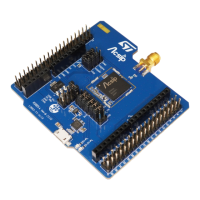

 To Next Page