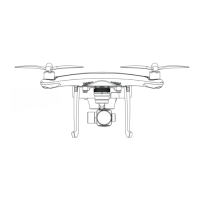
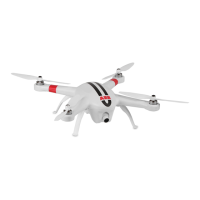
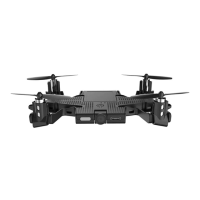
The AEE AP9 is a high-tech electronic quadcopter designed for aerial photography and flight. It integrates a flight control system, allowing users to capture clear and stable aerial videos and photos with ease. The device is suitable for outdoor low-altitude or large indoor spaces, offering simple and flexible operating procedures, stable, and reliable performance, making it ideal for both amateur and commercial photography.
Function Description:
The AP9 quadcopter is equipped with a built-in flight control system and motors. It supports basic flight maneuvers such as climb, descend, roll, and pitch, along with advanced features like failsafe protection and low battery level alarms. The quadcopter can operate in two main modes: GPS mode and Normal mode. In GPS mode, when all joysticks are in the neutral position, the quadcopter hovers at a fixed point. In Normal mode, it remains level but may drift horizontally. The device comes with a transmitter that allows real-time control.
Important Technical Specifications:
- Quadcopter Battery: 5300mAh LiPo, 11.1V.
- Quadcopter Weight: 1.4kg / 3.09lbs.
- Hovering Accuracy: Horizontal: ±2.5m / 8.2ft, Vertical: ±0.8m / 2.62ft.
- Maximum Tilt Angle: 30°.
- Maximum Climb Speed: 6 m/s (19.69ft/s).
- Maximum Descent Speed: 4 m/s (13.12ft/s).
- Maximum Flight Speed: 20m/s (65.62ft/s) (not recommended).
- Diagonal Length: 450mm / 1.48ft.
- Flight Time: 20 minutes.
- Transmitter Data Transfer Distance: >700m (2296ft).
- Transmitter Working Hours: 8 hours.
- Transmitter Operating Current / Voltage: 150mA / 6V.
- Transmitter Battery: 4 AA Batteries.
- Propellers: 10-inch, with black and gray color propeller nuts.
Usage Features:
- Easy Assembly: The AP9 requires simple installation steps before flight and aerial photography. Propellers are designed for self-tightening during flight, but users should ensure they are attached in the correct position (gray nuts for motor shafts without "P" marks, black nuts for motor shafts with "P" marks).
- Camera Compatibility: The quadcopter can mount two types of camera frames: Q45 for AEE S50/S51/S60/S71/S70/OM51S/OM60S/OR60S/OR71S/S40 series cameras, and Q44 for Gopro G3 cameras. Cameras are purchased separately.
- Transmitter Control: The transmitter features two joysticks for controlling elevation, yaw, pitch, and roll. The left joystick controls throttle (up/down) and yaw (left/right rotation), while the right joystick controls roll (left/right movement) and pitch (forward/backward movement).
- Flight Modes: GPS mode allows for fixed-point hovering, while Normal mode provides more direct control. The S4 switch on the transmitter toggles between GPS mode, Normal mode, and a reserved function.
- Compass Calibration: Essential before first-time use and when flying in new locations or after physical structural changes. The calibration procedure involves rotating the quadcopter horizontally and vertically.
- Motor Start/Stop: Motors are started by toggling both joysticks to specific corners (Combination Joystick Command - CSC) and stopped by holding the left joystick in the lowest position for 3 seconds after landing, or by performing CSC after landing.
- Failsafe Protection: If the quadcopter loses connection with the transmitter (e.g., due to power-off, exceeding range, obstructions, or signal interference), it automatically enters Failsafe mode. In this mode, it slows down, hovers, and if control is not regained within 2 seconds, it initiates an automatic return to the Home Point (the location where GPS signal was first successfully scanned). The quadcopter will ascend to 25 meters if its current altitude is lower, then return, hover for 5 seconds, and land.
- Low Battery Level Alarm: The system provides two levels of low battery alarms. Level 1 (under 50% battery) triggers slow blinking of arm indicators and an alarm sound from the transmitter, allowing a few minutes of normal flight. Level 2 (under 20% battery) triggers fast blinking and initiates Failsafe mode with automatic landing. Users are advised to land as soon as possible to prevent damage.
Maintenance Features:
- Battery Care: The quadcopter battery is specifically designed with charge and discharge management. Users should only use the dedicated AEE charger. For long-term storage, discharge the battery to 40%-50% and store it in a specified box, recharging every three months to maintain battery life. Batteries should be replaced after 300 discharge cycles or if they swell or are damaged.
- Propeller Inspection: Before each flight, users must check that propellers and motors are installed correctly and firmly. Aged, chipped, or broken propellers should be replaced immediately. Only original AEE propellers are recommended for optimal performance and safety.
- Pre-flight Checks: Before every flight, ensure the transmitter and quadcopter are fully charged, propellers are correctly assembled, and all equipment is working properly. Verify motors start correctly (propellers should be removed for safety during this check).
- Troubleshooting: The manual provides solutions for common issues, such as transmitter joystick neutral position errors and tips for smooth landing. For persistent problems, users are advised to contact AEE customer support or an authorized dealer.
- Environmental Requirements: Flights should be conducted in open areas, away from tall buildings, steel structures, power lines, trees, and water surfaces to avoid electromagnetic interference and physical obstacles. Avoid severe weather conditions (strong winds, snow, rain, fog). The product is not intended for use in the Antarctic or Arctic Circles and must comply with local laws and regulations regarding restricted flight zones.

 Need help?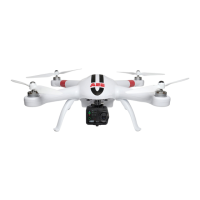

 To Next Page


 General