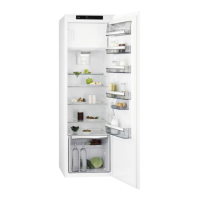
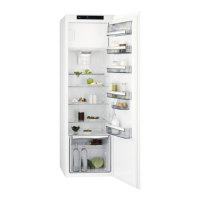
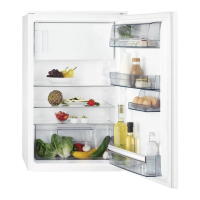
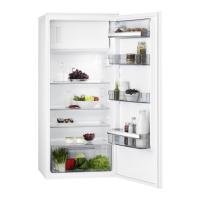
This document is a user manual for the AEG SFE6881VAS refrigerator, providing comprehensive instructions for its installation, operation, maintenance, and troubleshooting. The appliance is designed for household and similar applications, including farmhouses, staff kitchen areas in shops and offices, and residential environments like hotels and bed and breakfasts.
Function Description
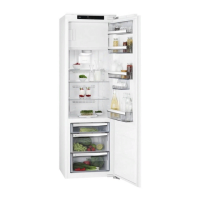
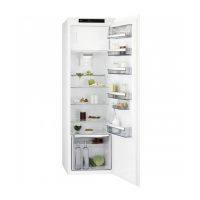
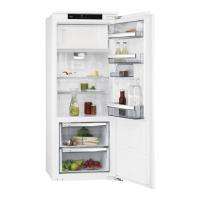
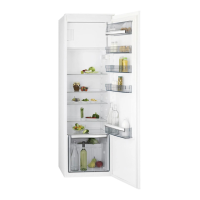
The AEG SFE6881VAS is a refrigerator designed to store fresh and frozen food. It features a refrigerator compartment for fresh food and a freezer compartment for long-term storage of frozen and deep-frozen items. The appliance uses isobutane (R600a) as a refrigerant, which is a natural gas with high environmental compatibility. The temperature inside the appliance is automatically regulated, but users can adjust it to their desired level using a temperature regulator. The freezer compartment is frost-free, meaning it prevents the build-up of frost on internal walls and food during operation.
Usage Features
The refrigerator offers several features to optimize food storage and user convenience:
- Temperature Regulation: Users can adjust the internal temperature by turning a regulator clockwise for lower temperatures or counter-clockwise for higher temperatures. A medium setting is generally recommended for optimal performance.
- Freezing Fresh Food: The freezer compartment is suitable for freezing fresh food. For faster freezing, the temperature regulator can be set to higher settings to achieve maximum coldness. However, users are cautioned that this may cause the refrigerator compartment temperature to drop below 0°C, requiring a reset to a warmer setting.
- Storage of Frozen Food: When starting the appliance or after a period of disuse, it is recommended to run it on higher settings for at least two hours before placing products in the freezer compartment. In case of accidental defrosting due to power failure, food should be consumed quickly or cooked and then refrozen after cooling, especially if the power has been off longer than the specified "rising time."
- Thawing Food: Deep-frozen or frozen food can be thawed in the refrigerator compartment or at room temperature, depending on the time available. Small pieces can even be cooked directly from frozen, though this will take longer.
- Movable Shelves: The refrigerator walls are equipped with runners, allowing shelves to be positioned at different heights to accommodate various food package sizes. Users are advised not to move the glass shelf above the vegetable drawer to ensure proper air circulation.
- Variable Storage Box: This model includes a variable storage box that can be moved sideways for flexible organization.
- Door Shelves: Door shelves can be repositioned at different heights by gradually pulling them up until they come free and then reinserting them as required.
- Energy Saving Hints: To save energy, users are advised to set the appliance to a medium temperature, avoid opening the door frequently or for extended periods, and ensure proper air circulation around food. The most efficient use of energy in the fresh food compartment is achieved with drawers in the bottom part and evenly distributed shelves.
- Fresh Food Refrigeration Hints: To maintain food freshness, it's recommended not to store warm food or evaporating liquids, to cover or wrap food (especially strong-flavored items), and to ensure air circulation. Specific storage guidelines are provided for different food types, such as meat, cooked foods, fruits, vegetables, butter, cheese, and bottles.
- Freezing Hints: For optimal freezing, only top-quality, fresh, and thoroughly cleaned food products should be frozen. Dividing food into small portions enhances freezing and thawing efficiency. Food should be wrapped in airtight aluminum foil or polythene. To prevent temperature increases in already frozen food, fresh unfrozen food should not be placed directly next to it. Lean foods store better and longer than fatty ones, while salt reduces storage life. Users are warned not to eat ice cubes, water ices, or ice lollies immediately from the freezer to avoid frostbite. Labeling packs with the freezing date is recommended for tracking storage time.
- Frozen Food Storage Hints: Users should ensure commercially frozen food is adequately stored by the retailer and transferred to the freezer as quickly as possible from the store. Defrosted food should not be refrozen and the storage period indicated by the manufacturer should not be exceeded.
Maintenance Features
Regular maintenance is crucial for the appliance's longevity and performance:
- General Warnings: Before any maintenance, the appliance must be unplugged from the mains socket. The cooling unit contains hydrocarbons, so maintenance and recharging should only be performed by authorized technicians. Accessories and parts are not suitable for dishwasher cleaning.
- Cleaning the Interior: Before first use, the interior and all internal accessories should be washed with lukewarm water and neutral soap to remove any new product smell, then dried thoroughly. Abrasive powders, chlorine, or oil-based cleaners should not be used as they can damage the finish.
- Periodic Cleaning: The appliance should be cleaned regularly. The interior and accessories should be cleaned with lukewarm water and neutral soap. Door seals should be checked and wiped clean regularly to ensure they are free from debris. After cleaning, rinse and dry thoroughly. If accessible, the condenser and compressor at the back of the appliance should be cleaned with a brush to improve performance and save electricity. Users are cautioned not to pull, move, or damage any pipes or cables inside the appliance, and not to damage the cooling system.
- Defrosting the Refrigerator: Frost is automatically eliminated from the refrigerator evaporator during normal use when the compressor stops. The defrost water drains into a special container at the back of the appliance, where it evaporates. It is important to periodically clean the defrost water drain hole in the middle of the refrigerator compartment channel to prevent water overflow onto food.
- Defrosting the Freezer: The freezer compartment is frost-free and does not require manual defrosting. However, if frost layers reach 3-5 mm thickness, manual defrosting is recommended. To defrost, switch off the appliance or unplug it, remove stored food and wrap it in newspaper in a cool place. To speed up the process, a pot of warm water can be placed in the freezer compartment. Users are warned not to use sharp metal tools or mechanical devices to scrape off frost to avoid damaging the evaporator. About 12 hours before defrosting, setting a lower temperature can build up sufficient chill reserve. After defrosting, the interior should be dried thoroughly, the appliance switched on, and the temperature regulator set to maximum coldness for two to three hours before returning food.
- Periods of Non-Operation: If the appliance will not be used for long periods, it should be disconnected from the electricity supply, all food removed, defrosted (if necessary), cleaned, and the door left open to prevent unpleasant smells. If the appliance is to remain switched on, someone should check it periodically to prevent food spoilage in case of a power failure.
- Replacing the Lamp: The appliance is equipped with a long-life LED interior light. To replace it, disconnect the plug from the mains socket. Spread both sides of the transparent cover slightly to unhook and detach it by pulling in the direction of the arrows. Replace the lamp with one of identical characteristics, specifically designed for household appliances. Reassemble the cover, connect the plug, and ensure the light switches on when the door is opened. Original spare parts are strongly recommended.
- Closing the Door: To ensure proper door closure, clean the door gaskets, adjust the door if necessary (refer to assembly instructions), and replace defective door gaskets by contacting the Authorized Service Centre.

 Need help?
 General

 To Next Page