Need help?
Do you have a question about the Aeon Labs Aeotec Bypass and is the answer not in the manual?
Illustrates bypass connection in a 3-wire setup.
Illustrates bypass connection in a 2-wire setup.
Step-by-step guide to connecting the bypass to bulb wires.
Advises on proper disposal of electrical appliances and collection systems.
Lists product certifications, such as RoHS.
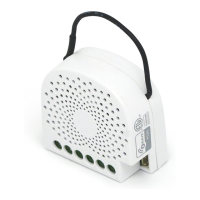
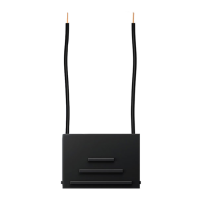
The Aeotec Bypass, developed by Aeon Labs, is a capacitive device specifically designed to enhance the performance of the Aeotec Nano Dimmer, particularly when used with certain types of lighting. Its primary function is to address common issues that arise when the Nano Dimmer is connected to LED lights or energy-saving compact fluorescent lamps (CFLs).
One of the key problems the Bypass aims to solve is the flickering of LED lights. When LED lights are dimmed, especially at lower levels, they can sometimes exhibit an undesirable flickering effect. The Bypass works to prevent this, ensuring a smoother and more consistent dimming experience. Similarly, for compact fluorescent lamps, the Bypass can mitigate the issue of glowing even when the lamp is turned off. This residual glow can be an annoyance, and the Bypass helps to ensure that turned-off CFLs are truly off.
The Bypass also plays a crucial role in scenarios where the Nano Dimmer is installed using a 2-wire system. In such installations, if the connected load is very low power (e.g., an LED light or CFL within 4W), the Nano Dimmer may not receive sufficient power from the AC supply to operate optimally. In these instances, the Bypass acts as a "dummy load." By providing this additional load, it helps the Nano Dimmer draw enough power from the supply, ensuring its stable and reliable operation. This is particularly important for maintaining the functionality of the Nano Dimmer in low-power lighting setups.
Installation of the Bypass requires careful attention to safety. Before any installation work begins, it is imperative to shut off the main circuit breaker or fuse to prevent electrical shock. The Bypass is typically installed in parallel with the bulb load. For a 3-wire system, the Bypass connects across the Live and Neutral lines, in parallel with the bulb, and the Nano Dimmer is wired with its L, N, OUT, COM, S1, and S2 terminals connected to the appropriate lines and a touch panel. In a 2-wire system, the Bypass is also connected in parallel with the bulb load, with the Nano Dimmer wired to the Live and Neutral lines, and its OUT, COM, S1, and S2 terminals connected to the bulb and a touch panel.
To prepare the Bypass for connection, the insulated part of the bulb's connection wires needs to be peeled off using a wire stripper or wire knife, exposing the metal part. The Bypass is then connected to these exposed metal parts of the bulb's two connection wires. Once the connections are made, it is essential to use insulation tape to wrap the connection points. This step is critical for safety, as it prevents electric leakage and protects against electric shock.
In some 3-wire system installations, there's an alternative method for connecting the Bypass. If needed, it can be directly connected to the Nano Dimmer's "N" (Neutral) and "OUT" terminals. This offers flexibility in wiring depending on the specific installation requirements and configuration of the Nano Dimmer.
Regarding maintenance, the device itself is designed for indoor use in dry locations. It is not suitable for use where it would be directly exposed to water, and it should not be immersed in water. When not in use, it is recommended to store the Bypass indoors. These guidelines help ensure the longevity and safe operation of the device.
The Aeotec Bypass is a practical accessory for users of the Aeotec Nano Dimmer, offering solutions to common lighting issues and ensuring stable operation in various wiring configurations, particularly with low-power LED and CFL loads. Its design focuses on ease of integration and improved lighting performance, contributing to a more reliable and enjoyable smart home lighting experience.
 General
| Compatibility | Z-Wave |
|---|---|
| Maximum Load | 300W (Incandescent), 150W (CFL/LED) |
| Communication Protocol | Z-Wave |
| Operating Frequency | 908.42 MHz |
| Voltage | 120V AC |
| Power Supply | 120V AC |
| Operating Temperature | 0°C to 40°C / 32°F to 104°F |
| Certifications | FCC |
| Product Type | Dimmer Bypass |

 To Next Page