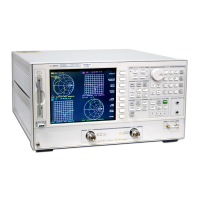
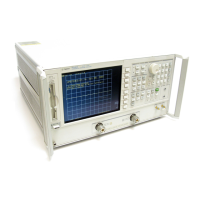
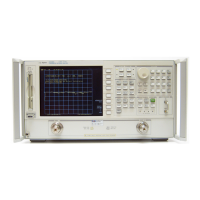
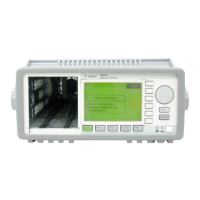
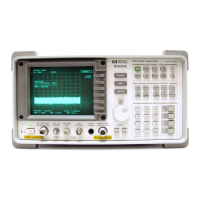
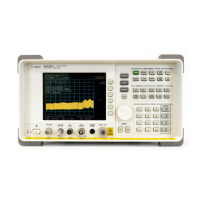
This document describes how to perform pulsed measurements using the Agilent 8720ES and 8753ES network analyzers, offering a cost-effective alternative to more specialized pulsed measurement systems. It details the theoretical basis for pulsed measurements, outlines two primary modes of operation—low PRF (Pulse Repetition Frequency) and high PRF measurements—and provides practical examples for both transmission and reflection measurements. The document also covers calibration considerations to ensure accuracy and discusses the advantages and limitations of using these analyzers for pulsed applications.
Function Description
The Agilent 8720ES and 8753ES network analyzers are designed to characterize the frequency responses of various RF and microwave components. While primarily used for continuous wave (CW) signals, this product note demonstrates their capability to measure pulsed RF signals under specific conditions. The core function involves measuring S-parameters (scattering parameters) of a device under test (DUT), which describe how electrical power is transmitted through or reflected from a network.
For pulsed measurements, the analyzers operate by either sampling a wide pulse (low PRF) or by focusing on the central spectral line of a continuous pulse train (high PRF). In low PRF mode, the analyzer can capture the shape of a pulse over time (pulse-profile mode) or measure the DUT's frequency response at a specific point within each pulse (point-on-pulse mode). In high PRF mode, the analyzer effectively treats the pulse train as a single, continuous frequency, albeit at a reduced power level due to pulse desensitization.
The internal architecture of the analyzer, as depicted in the block diagram, includes a source, transfer switch, couplers, samplers (A and B), IF (Intermediate Frequency) filters, and an ADC (Analog-to-Digital Converter). The RF signal from the source passes through the transfer switch and port 1 coupler to the DUT. Transmitted signals go through the DUT, port 2 coupler, and into sampler B, while reflected signals return through port 1 coupler into sampler A. These signals are then down-converted to an IF, filtered by a variable bandwidth IF filter, and digitized for further digital processing. The IF bandwidth filter plays a critical role in determining the analyzer's response to pulsed signals, especially in high PRF measurements where it selects specific spectral lines from the pulse train.
Usage Features
The Agilent 8720ES and 8753ES offer several usage features for pulsed measurements, provided certain conditions are met.
- External Modulation: Since standard network analyzers lack modulating circuitry, the RF source must be externally modulated to generate pulsed signals.
- Triggering: For low PRF measurements, external triggering is essential. The analyzer triggers on a falling edge, so the external trigger signal may need to be inverted to align with the RF pulse. An adjustable external delay is required to ensure sampling occurs at the desired point within the pulse. The maximum external trigger rate for the 8720ES is approximately 250 Hz.
- Pulse Width and PRF Constraints:
- For single or randomly timed pulses (low PRF), the pulse width must exceed 400 microseconds.
- For continuous pulse trains (high PRF), the minimum pulse width must exceed 500 nanoseconds, and the PRF must be 20 Hz or greater. The maximum PRF is limited to about 2 MHz due to pulse distortion.
- Measurement Modes:
- Low PRF Pulse-Profile Mode: Useful for observing the pulse shape over time and determining characteristics like pulse droop. The source operates at a CW frequency, and the analyzer triggers once at the beginning of a sweep.
- Low PRF Point-on-Pulse Mode: Ideal for determining the frequency response of the DUT when it cannot be powered up for long periods. The source is tuned, the RF is pulsed, and the analyzer triggers on each individual pulse after a predetermined time delay.
- High PRF Mode: Suitable for continuous pulse trains where the pulse is narrower than the analyzer's response time. In this mode, the analyzer focuses on the central spectral line of the pulse train, effectively treating it as a continuous signal with reduced power (pulse desensitization).
- Reflection Measurements: For valid reflection measurements in pulse-profile mode or at high PRF, an external coupler between the pulse modulator and the DUT, or the 8720ES configurable test set (Option 014), is recommended. Option 014 provides external access to the RF signal path before the transfer switch and couplers, allowing the pulse modulator to precede the port 1 coupler, thus removing it from the reflected signal path.
- Calibration Options: The analyzers support various calibration types to improve accuracy:
- Response Calibration (Normalization): Corrects for frequency response error, suitable for transmission measurements.
- Enhanced Response Calibration: A newer feature that corrects for both frequency response error and source match, reducing ripple in the response.
- Full Two-Port Error Correction: Provides the highest accuracy by correcting for errors at both ports, including frequency response, source match, load match, transmission tracking, reflection tracking, and optionally, cross talk. This method requires more calibration standards and takes longer but offers comprehensive error correction.
- Modulation during Calibration: Generally, it is best to calibrate with the modulator pulsing as it will be during the measurement, whenever possible, to eliminate a variable. However, for low PRF pulse-profile mode, the modulator should be biased on continuously during calibration to avoid overcompensation by the error correction algorithm. For high PRF reflection measurements, the modulator must be pulsing to prevent large directivity terms from masking the DUT's response.
Maintenance Features
While the document does not explicitly detail maintenance features, it implies that the Agilent 8720ES and 8753ES are robust instruments designed for reliable operation within specified parameters. The emphasis on proper calibration procedures and understanding the instrument's response to different signal types suggests that maintaining measurement accuracy is a key aspect of their use.
The document highlights the importance of ensuring the analyzer is completely set up with all hardware (pulse modulator, triggering circuit, etc.) and instrument settings complete before starting a calibration. This ensures that no additional errors are introduced into the system after calibration. Regular calibration, as described, is a form of preventative maintenance for measurement accuracy.
The mention of "Agilent Technologies' Test and Measurement Support, Services, and Assistance" at the end of the document indicates that users can rely on Agilent for support, including calibration, extra-cost upgrades, out-of-warranty repairs, and on-site education and training. This suggests that the devices are supported by a comprehensive service network to ensure their long-term functionality and accuracy. The global warranty and commitment to support for at least five years beyond production life further underscore the expected reliability and maintainability of these instruments.


 To Next Page
 General