The AgriMetal Pull-Type Turbine Debris Blower, Model 270, is a robust piece of equipment designed for efficient debris management in turf care and other large-area cleaning operations. Its primary function is to quickly and effectively blow away leaves, grass clippings, trash, and other debris using a high-velocity air stream. The machine is mounted on a trailer for mobility and is powered by a gas engine, making it suitable for use with a towing vehicle such as a tractor, golf cart, or utility cart.
Function Description:
The core function of the AgriMetal Debris Blower is to generate a powerful air stream that moves various types of debris. The air stream's direction can be precisely controlled to the right, left, or down, thanks to a movable discharge duct. This directional control is managed via a wireless control module, which also allows the operator to adjust the engine RPM (Revolutions Per Minute) from the towing vehicle. An electric motor facilitates the rotation of the chute to the desired position, enhancing operational flexibility. The blower is particularly effective for cleaning fairways, large open areas, parking lots, and paved surfaces, as well as for drying wet areas. When cleaning large areas, the recommended strategy is to start at the opposite side of the desired debris accumulation and blow towards the receiving side, adjusting the duct position as needed. For paved surfaces, the operator should blow only the areas requiring cleaning and operate at a speed sufficient to move debris, directing the air stream with care due to its high velocity.
Important Technical Specifications:
The Model 270 Pull-Type Turbine Debris Blower boasts several key mechanical specifications:
- Engine: 27 HP Kohler Command Pro, providing ample power for generating a strong air stream.
- Drive: Direct, ensuring efficient power transfer from the engine to the fan.
- Fan Design: Axial Flow, optimized for high-volume air movement.
- Fan Size: 14" Diameter.
- Number of Fins: 25, contributing to the fan's efficiency in moving debris.
- Chute Rotation: 360°, offering comprehensive directional control of the air stream.
- Chute Outlet Size: Oblong 9.5" x 14" (24cm x 35cm).
- Unbreakable Chute: Standard, indicating durability and resistance to damage.
- Tire Size: 18 x 9.5-8, providing stability and mobility on various terrains.
- Gas Tank Capacity: 24 L (6 US Gal), allowing for extended operation without frequent refueling.
- Wireless Remote Control: Standard, a crucial feature for convenient operation from the towing vehicle.
- Length Without Drawbar: 60" (152 cm).
- Length With Drawbar: 104" (264 cm).
- Width: 47" (119 cm).
- Height: 40" (102 cm).
- Machine Weight: 500 lbs (227 kg).
- Shipping Weight: 550 lbs (249 kg).
- Shipping Dimension: 50" x 50" x 46" (127 cm x 127 cm x 117 cm).
Usage Features:
The AgriMetal Debris Blower is designed for user-friendly operation with an emphasis on safety.
- Operator Orientation: Directions (left, right, front, rear) are defined from the perspective of the tractor driver's seat, facing the direction of travel.
- Pre-Operation Checklist: Before each use, operators are advised to lubricate the machine, check bearing freedom, ensure all guards and shields are in place, clean the blower intake screen, and verify engine oil and fuel levels.
- Starting Procedure: Involves stopping the tow vehicle, setting the park brake, removing the ignition key, moving the throttle to 1/4 position, starting the engine with the ignition switch, allowing it to warm up, increasing throttle to mid-range, starting the tow vehicle, and then using the wireless controller to set duct position and engine RPM.
- Stopping Procedure: Requires slowing and stopping the tow unit, reducing blower engine speed to low idle, stopping the tow unit engine, setting the park brake, removing the ignition key, and finally using the blower engine's ignition switch to turn it off.
- Emergency Stopping: Involves stopping forward motion, stopping the tow unit engine, setting the park brake, slowing the blower engine to low idle, turning the blower engine off, and removing ignition keys.
- Duct Position Control: The wireless control module allows for easy adjustment of the duct to direct air to the left or right, or down, with 360° rotation capability. The machine ignition switch must be in the "RUN" position for duct movement.
- Blower Engine Operating RPM: The blower engine should be run at a fast enough speed to effectively perform the job.
- Blowing Strategy: Always try to blow with the wind to prevent material from being lifted and blown over a wider area.
- Attaching/Unhooking: The machine should be attached to a tow vehicle on a level, dry area free of debris. The hitch should be aligned with the drawbar, and the clevis bracket can be reversed to level the frame if needed. A drawbar pin with a retainer and a safety chain are essential for secure attachment.
- Transport Safety: Operators must comply with local laws, use flashing amber lights and an SMV emblem when driving on roads under 20 mph (32 kph), and reduce speed on rough surfaces. The tow vehicle must have sufficient mass to control the blower.
- Refueling Safety: Handle fuel with care, refuel outdoors, allow the engine to cool for 5 minutes, and avoid smoking or open flames during refueling.
Maintenance Features:
Regular maintenance is crucial for the longevity and trouble-free service of the AgriMetal Debris Blower.
- Servicing Intervals:
- 8 Hours or Daily: Clean blower air intake screen, check engine oil level, check fuel level.
- 100 Hours: Change engine oil, clean air cleaner, check tire pressure (pressurize to 25 psi maximum).
- 200 Hours: Change engine oil filter.
- Annually: Change in-line fuel filter, clean machine.
- Cleaning Air Cleaner: Involves reviewing the engine's Operator's Manual, placing controls in neutral, stopping the engine, removing the ignition key, removing the air cleaner cover and foam, blowing dust and debris out of the foam with an air hose, and then reinstalling the foam and cover.
- Changing Engine Oil and Filter: Requires reviewing the engine's manual, placing controls in neutral, stopping the engine, removing the ignition key, allowing the engine to cool (but remain warm), placing a pan under the drain plug, removing the drain plug to allow oil to drain, installing and tightening the drain plug, disposing of used oil properly, removing the old oil filter, applying a light coat of oil to the new filter's O-ring, installing and tightening the new filter, filling the crankcase with specified oil, running the engine for 1-2 minutes to check for leaks, and topping up oil as needed.
- Changing In-Line Fuel Filter: Involves clearing bystanders, stopping the engine, removing the ignition key, allowing the engine and machine to cool, turning off the fuel valve, placing a container under the filter for spilled fuel, releasing spring clips, replacing the filter, reinstalling hoses and clips, and opening the fuel valve.
- Storage: At the end of the season, the machine should be thoroughly washed, all water drained, grease points lubricated, entangled material removed, run at low RPM to dry, paint nicks touched up, and stored in a dry, level, enclosed area if possible, or covered with a waterproof tarp. Planks can be placed under the hitch and tires for added support.
- Troubleshooting: A dedicated section provides solutions for common issues like engine not starting, inability to move debris, machine vibration, remote control malfunction, and duct not turning. It also includes instructions for reprogramming the remote control and receiver.
- Safety Sign Maintenance: Safety signs should be kept clean and legible, and replaced if damaged or missing.
The AgriMetal Pull-Type Turbine Debris Blower is a professional-grade machine designed for high performance and durability, with comprehensive safety and maintenance guidelines to ensure reliable operation.

 Need help?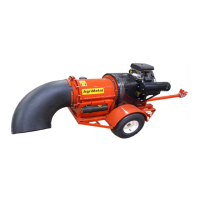

 To Next Page
 General