The ZEUS All-in-One 3D Printer is a versatile desktop manufacturing device that integrates 3D printing, 3D scanning, and 3D copying functionalities, along with a fax feature for transmitting 3D models. Designed for ease of use, it aims to provide a comprehensive solution for rapid prototyping and small-scale production.
Function Description:
The core functionality of the ZEUS printer revolves around its ability to:
- 3D Print: Create three-dimensional objects from digital models using Fused Filament Fabrication (FFF) technology. It supports various filament types, with the included filament being a "Premium Quality" type, likely PLA or ABS, given the commonality in desktop 3D printing.
- 3D Scan: Digitize physical objects into 3D models. This is achieved using a built-in scanner, likely a laser or structured light scanner, which captures the geometry of an object placed on the turntable. The device includes a "Scanner Calibration Pattern" to ensure accurate scans.
- 3D Copy: Combine the scanning and printing capabilities to replicate physical objects. Users can scan an object and then immediately print a copy of it without needing to transfer files to an external computer for processing.
- 3D Fax: Transmit 3D models digitally, presumably to another ZEUS printer or a compatible receiving device. This feature allows for remote manufacturing or sharing of designs.
Important Technical Specifications (Inferred):
While specific numerical specifications like build volume, print resolution, or scan accuracy are not explicitly stated in the provided pages, several aspects can be inferred:
- Printing Technology: Fused Filament Fabrication (FFF) / Fused Deposition Modeling (FDM).
- Filament Compatibility: Uses spooled filament, likely 1.75mm or 2.85mm diameter, given the common standards. The "Premium Quality 3D FILAM" suggests a focus on reliable material.
- Connectivity:
- Wi-Fi: Supports wireless network connection via an included "Wifi dongle." This enables file transfer and potentially remote control.
- Ethernet: Provides an alternative wired network connection for robust data transfer.
- USB: Allows for direct file transfer from a USB drive.
- User Interface: Features an integrated touchscreen control panel for direct operation, file selection, and settings adjustment. The UI shows options for "G-code," "STL," and "PLY" files, indicating support for standard 3D model formats.
- Build Plate: A removable glass plate is used as the print surface, which requires a "thin layer of glue" for adhesion.
- Power: Standard AC power input, with an included power supply.
Usage Features:
The ZEUS printer is designed with a strong emphasis on user-friendliness, guiding the user through setup and operation with clear visual instructions.
- Quick Start Guide: The provided document is a "QUICK-START GUIDE," indicating a streamlined setup process.
- Intuitive Setup: The initial steps involve unpacking, removing protective elements, and connecting power, all clearly illustrated. The "Remove test printout" step suggests a factory calibration or initial test print.
- Filament Loading: A straightforward process of unwrapping, feeding through a tube, and pushing down, with a note to "Wind excess back onto spool" for neatness.
- On-Device Control: The touchscreen interface allows users to "Select a file," "Select print," and manage various settings directly on the device, reducing reliance on external software for basic operations.
- Print Preparation: Requires manual application of glue to the glass plate for print adhesion.
- Print Monitoring: The UI shows real-time temperature (e.g., "29.4°C") and axis positions (X, Y, Z), suggesting monitoring capabilities.
- Scanning Workflow: Involves placing an object on the turntable and initiating a scan, with "scan tips" available in the UI. The "Scan powder + applicator" suggests that some objects might require a light coating for optimal scanning results, especially those that are transparent, reflective, or very dark.
- Network Integration: Easy connection to local Wi-Fi networks using the dongle or via Ethernet, with clear steps for selecting networks and entering passwords. The device provides IP addresses for accessing "Pydio" (a file management system) from a computer browser for file transfer.
- File Management: Supports various file transfer options: USB, Wi-Fi, and Ethernet. The Pydio interface (login: aio, password: aiorobotics) provides a web-based method for managing files.
- Test Print: Includes a recommended "Box" test file with an estimated print time of "> 8 mins," allowing users to quickly verify printer functionality.
- Modular Design: The "Lift glass plate then remove printout" step highlights the ease of removing finished prints and preparing for the next job.
Maintenance Features (Inferred):
While explicit maintenance instructions are not detailed, some aspects can be inferred from the design and included accessories:
- Print Bed Maintenance: The removable glass plate simplifies cleaning and re-application of adhesive. The "Spatula (printout remover)" is a crucial tool for safely detaching prints without damaging the build surface or the print itself.
- Scanner Calibration: The "Scanner Calibration Pattern" is a key maintenance tool for ensuring the accuracy and reliability of the 3D scanning function over time. Regular calibration would be essential.
- Filament Management: The instruction to "Wind excess back onto spool" promotes good filament hygiene, preventing tangles and potential feeding issues.
- Software Updates: The "System menu" shows "Current Version: 0.23.30," implying that the device's firmware can be updated, which is a common maintenance practice for improving performance, adding features, and fixing bugs.
- General Cleaning: As with any 3D printer, regular cleaning of the print head, build area, and optical components (for the scanner) would be necessary, though specific tools or procedures are not shown. The "Scan powder + applicator" might also imply cleaning of the turntable or scanner lens after use.
In summary, the ZEUS All-in-One 3D Printer positions itself as a comprehensive and user-friendly solution for desktop additive manufacturing, integrating multiple functionalities into a single, accessible device. Its design emphasizes ease of setup, operation, and network connectivity, making it suitable for users seeking an integrated 3D printing, scanning, and copying experience.

 Need help?
 General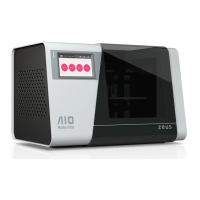

 To Next Page