Door Control Unit User Manual
Updated until firmware 404p - 8 -
5) Installation
Important Note: It is highly suggested that a professional locksmith or lock installer be used
when installing the locks and other access control equipment.
Fail Safe Type Locks
The Fail Safe type locks would be used in office buildings or where you would not want
the doors to remain locked if the power is cut.
A) Overview and Installing the door locks
Electromagnetic Type Door Locks or EM Locks (Fail Safe Type)
Overview
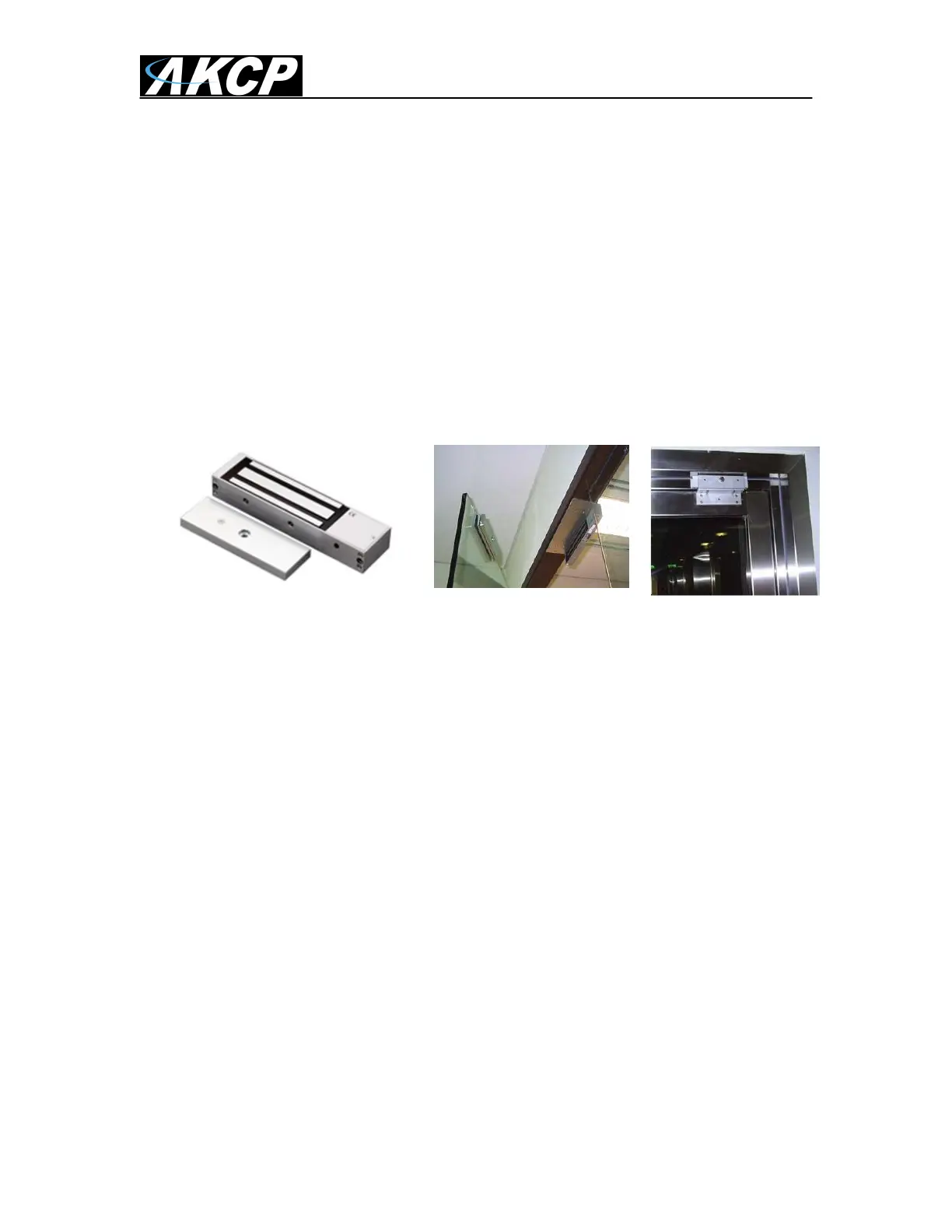
An electromagnetic lock, magnetic lock, or maglock is a locking device that consists of an
electromagnet and an armature plate. By attaching the electromagnet to the door frame
and the armature plate to the door, a current passing through the electromagnet attracts
the armature plate, holding the door shut.
Unlike an electric strike a magnetic lock has no interconnecting parts and is therefore not
suitable for high security applications because it is possible to bypass the lock by
disrupting the power supply. Nevertheless, the strength of the AKCess Pro magnetic
locks compares well with that of conventional door locks and they cost less than
conventional light bulbs to operate.
We highly recommend using a dedicated UPS to provide backup power to the DCU and
to the EM door locks so that in case of a power interruption the doors will remain locked
and your security is retained.
Technical comparison
Magnetic locks possess a number of advantages over conventional locks and electric
strikes. For example, their durability and quick operation can make them valuable in a
high-traffic office environment where electronic authentication is necessary.
Advantages
Easy to install: Magnetic locks are generally easier to install than other locks since
there are no interconnecting parts.


 To Next Page
 Loading...