
 Need help?
Do you have a question about the Alecto ACS-31 and is the answer not in the manual?
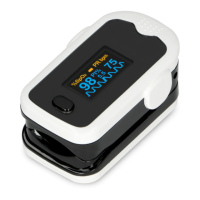
The Alecto ACS-31 is a portable, non-invasive pulse oximeter designed for spot-checking functional oxygen saturation of arterial hemoglobin (SpO2) and pulse rate (PR) in adult patients. It is suitable for use in both clinical institutions and home environments.
The device operates on the principle of shining an infra-red light through the skin. The reflected light is then compared with the emitted light to analyze the color of red blood cells. This color measurement reflects the amount of oxygen in the blood, providing a percentage of oxygen found in the blood. The device also measures pulse rate, expressed in beats per minute (PRbpm), and the Perfusion Index (PI), which is the ratio of pulsatile blood flow to non-pulsatile blood flow. The PI values indicate pulse strength, ranging from 0.02% for very weak pulses to 20% for strong pulses. A pulsating bar graph on the display visually represents the strength of the heartbeat or heart rate.
The ACS-31 features an alarm system that can be configured to alert users when blood oxygen levels or pulse rates exceed adjustable upper or lower thresholds. These alarms can be set for both high and low SpO2 and PR values. The device automatically turns off 15 seconds after the clip is removed from the finger, conserving battery life.
Getting Started: The ACS-31 comes with two AAA batteries, a wrist strap, and a protective case. To begin, users need to install the batteries by sliding off the battery cover, inserting the two supplied batteries according to their positive and negative poles, and then replacing the cover.
Wearing the Device: To fasten the wristband, a thin cord is pushed through a hole on the ACS-31 to form a loop. The thick part of the strap is then threaded through this loop and pulled all the way through, tugging slightly to tighten it.
Taking a Measurement: For a measurement, the user opens the clip and places a finger, preferably the middle finger, on the ACS-31 with the nail facing upwards, gently pushing it towards the back of the oximeter. The device is then turned on by pressing the on/off button. To ensure accurate readings, it is important to avoid bright lights, remove artificial nails or nail polish, wash hands before use, ensure hands are warm for good blood circulation, and remain still and quiet before and during the measurement. The display reading direction can be changed by repeatedly pressing the on/off button. It is crucial not to move the finger during the measurement.
Display Readings: The display shows the "% SpO2" (percentage of oxygen in the blood), "PRbpm" (pulse rate per minute), and the Perfusion Index (PI). Depending on the selected reading direction, a pulsating bar graph indicates heartbeat strength or heart rate.
Setting Alarms: To set an alarm, the ACS-31 is turned on by quickly pressing the on/off button. Holding the on/off button for more than one second opens the settings menu. Users can then release the button to view the settings. A star at the end of a line indicates the active setting. Quick presses of the on/off button move the star to the next line, while pressing and holding the button changes the setting of the current line. Settings include SpO2 high and low limits, PR high and low limits, sound reminder on/off, beep on/off, demo mode, restore factory settings, and display brightness.
Cleaning and Storage: The ACS-31 is a non-sterile device and is not intended for sterilization. The black rubber finger sleeve should be cleaned before and after each use with medicinal alcohol (greater than 95%). The exterior of the tester can be cleaned with a damp cloth. It is important to note that the ACS-31 is not waterproof and should not be immersed in water. For storage, the pulse oximeter should be kept out of reach of children, preferably in its included case, in a dry place.
Battery Management: The batteries provide over 20 hours of continuous use. If the device will not be used for more than two months, the batteries should be removed to prevent damage from leakage. Batteries should be replaced when the battery indicator on the display shows they are running low. Always use two identical AAA alkaline batteries. Rechargeable batteries are not recommended due to their lower voltage.
Calibration and Service: The ACS-31 does not require calibration. It comes with a 24-month warranty, and any service or maintenance should only be performed by the service department of Alecto.
Environmental Disposal: If the device needs to be discarded, it should be handed over to the supplier for environmentally friendly disposal. Empty batteries should also be returned to the supplier or disposed of in an environmentally-friendly manner, in accordance with local regulations, and not with normal household waste.
 General
| Measurement Method | Oscillometric |
|---|---|
| Cuff Size | 22 - 32 cm |
| Display | LCD |
| Units | mmHg |
| Accuracy | ±3 mmHg |
| Memory | 60 measurements |

 To Next Page
