Need help?
Do you have a question about the Allied AutoVent 2000 and is the answer not in the manual?
Time cycled, constant flow, gas-powered ventilators with adjustable rates and volumes.
Designed for transport and emergency medical use.
Manual uses illustrations and narrative for features.
Defines three types of statements: WARNING, CAUTION, and NOTE.
Time cycled, constant flow, gas-powered ventilators with adjustable rates.
Delivers controlled/spontaneous breaths; includes demand valve, indicator, alarm, exhalation valve.
Located on top, displays bright green during inspiration, clear during expiration.
Audible alarm for high airway pressure; also provides air entrainment.
Connects Patient Valve to Control Module; supplies gas and actuator.
Internal diaphragm allowing patient exhalation after inspiratory cycle.
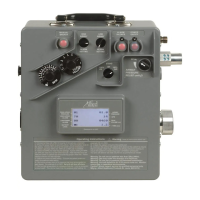
Compact, durable, easy-to-use module for paramedic/transport operations.
Standard DISS male oxygen connector for high-pressure gas delivery.
Connects Control Module to Patient Valve Assembly via DISS and unique connector.
Sets ventilator rate from 8-20 BPM (AV 2000) or 8-27 BPM (AV 3000).
Adjusts breath volume from 400-1200 ml (AV 2000) or 200-1200 ml (AV 3000).
Allows selection of Adult (1.5s) and Child (0.75s) inspiratory time on AV 3000.
Twin polyurethane hose for connection between modules.
Part L496 allows PEEP; connects flex tube to patient valve assembly.
Lists parts for AV 2000 and AV 3000, including part numbers.
Read instructions, pay attention to warnings, cautions, notes.
Procedures for attaching a pin index or CGA 540 regulator to a cylinder.
Connecting oxygen supply line and tubing to Control Module and Patient Valve Assembly.
Check connections for leaks; handle cylinders carefully.
Using quick release connectors for wall outlet connection.
Connecting high-flow blender to source gases and Control Module.
Setting controls, counting cycles, occluding outlet to check alarm.
Check for obstructions, set volume based on body weight.
Setting BPM, Tidal Volume, Inspiratory Time; monitoring chest rise.
Procedures for mask and endotracheal/tracheostomy tube use.
Wipe down with detergent and alcohol solutions; do not submerge.
Clean with soap, immerse in disinfectant, rinse, dry, and inspect.
Autoclavable or sterilize with solution; disassemble, clean, inspect parts.
Store in clean, dry area within temperature range (-40°F to 160°F).
Lists indications, probable causes, and solutions for common problems.
Addresses pressure limit alarms, failure to cycle, and alarm failures.
Details warranty period, LSP obligations, exclusions, and disclaimers.
Lists adjunct equipment with model numbers for ordering.
Lists flow, pressure, resistance, dead space, supply pressure, temp, fittings.
Lists pressure range, temp, frequency, tidal volume, flow rate, times, weight.
Lists material, pressure, flow capacity, fittings, temperature for regulators.
Chart showing tidal volume adjustments for different altitudes.
Table showing estimated cylinder depletion times based on settings.
Details warranty period, LSP obligations, exclusions, and disclaimers.


 To Next Page
 General