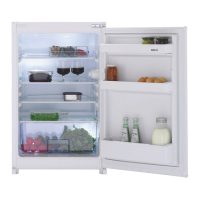
This document is a user manual for an Altus refrigerator, model ABM335*. It provides detailed instructions on the refrigerator's operation, safety, installation, and maintenance.
Function Description
The Altus ABM335* refrigerator is designed for household use, specifically for storing food and beverages at appropriate temperatures. It features multiple compartments, including a freezer and a fridge, each with independent temperature controls. The refrigerator is equipped with an internal and external indicator panel (depending on the model) to display temperature settings, operational modes, and warnings. Key functions include:
- Temperature Control: Users can set the temperature for both the fridge and freezer compartments.
- Quick Cool/Freeze: These functions rapidly cool or freeze items, useful for new groceries or large quantities of food.
- Vacation Function: This mode sets the fridge to a higher temperature to save energy when the user is away, while the freezer continues to operate normally.
- Energy Saving Function: Automatically activates when doors are kept closed for an extended period, turning off display symbols (except the energy-saving symbol) to conserve power.
- Water Dispenser: Some models include a water dispenser for easy access to clean drinking water.
- HarvestFresh: This feature, available in some models, uses a three-color light system (blue, green, red) to simulate a 24-hour sun cycle, preserving the vitamin content of fruits and vegetables.
- Odor Filter: An odor filter system helps maintain a fresh interior by removing unwanted smells.
Important Technical Specifications
- Model: ABM335*
- Capacity: The water tank for the dispenser (if present) has a capacity of 3 litres.
- Temperature Range:
- Freezer compartment: -24°C to -16°C
- Fridge compartment: 1°C to 8°C
- Electrical Connection: The appliance requires a grounded plug and should be connected to a power outlet with appropriate voltage and current specifications.
- Refrigerant: The type of gas used in the refrigeration system is specified on the label inside the refrigerator.
- Dimensions: Specific dimensions are provided in a diagram, including height, width, and depth for models ABM335, 670, 1725, 600, 1038, and 130.
- Compliance: The refrigerator complies with WEEE Directive 2012/19/EU for proper disposal and recycling.
Usage Features
- Indicator Panels: Both internal and external indicator panels provide visual feedback on the refrigerator's status. The internal panel typically includes indicators for temperature, quick cool/freeze, vacation mode, and economy mode. The external panel allows temperature adjustments and function control without opening the door.
- Door Shelves: Adjustable door shelves allow for flexible storage.
- Egg Tray: A dedicated tray for storing eggs.
- Crisper: A special compartment designed to keep vegetables fresh by maintaining optimal humidity.
- Ice Maker/Ice Container: Some models include an ice maker or ice container for producing and storing ice cubes.
- Water Dispenser Usage:
- Fill the water tank with clean drinking water only; other liquids can damage the dispenser and void the warranty.
- Press the lever with a cup to dispense water.
- The water dispenser is not intended for long periods of disuse; it is recommended to dispense water regularly to ensure freshness.
- Reversing the Doors: The manual provides a detailed numerical procedure for reversing the door swing, which can be useful for adapting the refrigerator to different kitchen layouts.
- Placement: The refrigerator should be placed in a well-ventilated area, away from direct sunlight, heat sources, and extreme cold. It should not be installed near appliances that emit heat, such as ovens or radiators.
- Food Storage Guidelines:
- Freezer: Store food in airtight containers or packaging. Do not refreeze thawed food.
- Fridge: Store fresh food in appropriate compartments. Do not overload the refrigerator.
- Water Dispenser: Do not fill with anything other than clean drinking water.
- HarvestFresh: This feature helps preserve vitamins in fruits and vegetables.
- Odor Filter: The filter helps maintain a fresh interior.
Maintenance Features
- Cleaning:
- Interior: Clean the interior regularly with a solution of baking soda and lukewarm water. Avoid abrasive cleaners.
- Exterior: Wipe down the exterior with a soft cloth and mild detergent.
- Water Tank and Dispenser: Components of the water tank and dispenser should be removed and cleaned regularly. They are not dishwasher safe.
- Door Seals: Clean door seals to ensure a tight seal and prevent food particles from accumulating.
- Condenser: The condenser at the back of the refrigerator should be cleaned periodically to ensure efficient operation.
- Defrosting: The freezer compartment defrosts automatically in most models.
- Troubleshooting: The manual includes a comprehensive troubleshooting section to address common issues such as the refrigerator not operating, condensation, noise, and temperature problems. It advises users to check simple solutions before contacting authorized service.
- Disposal of Old Refrigerator: The appliance should be disposed of according to local regulations for electrical and electronic equipment, preferably by taking it to a collection point for recycling. Packaging materials should also be recycled.
- Light Bulb Replacement: If the refrigerator has an incandescent bulb, it should be replaced by an authorized service agent. LED illumination is typically long-lasting and does not require frequent replacement.
- Door Open Warning: An alarm sounds if the refrigerator door is left open for too long, helping to prevent energy loss and food spoilage.

 Need help?
 General

 To Next Page