The LAND SPOT+ Family REST API User Guide provides comprehensive information for communicating with SPOT+ pyrometers using the REST API. This guide is essential for users looking to integrate SPOT+ pyrometers into their systems for non-contact temperature measurements.
Function Description
The AMETEK Land's SPOT+ range consists of fully-featured smart pyrometers designed for non-contact temperature measurements. These pyrometers are available in various temperature ranges and models, offering local display and onboard analog I/O. They support multiple communication options over Ethernet, including Embedded Webserver, Modbus TCP/IP, REST API (http), and EtherNet/IP.
The REST (REpresentational State Transfer) API is a protocol for Ethernet communication via HTTP GET and POST or PUT requests. It is used to access and control the pyrometer's functions and data over a network. The SPOT+ embedded webserver allows for initial instrument configuration, setting parameters such as the IP address or process window correction, which remain fixed after initial commissioning. Information on the configuration of the SPOT+ using the embedded webserver is given in the SPOT+ User Guide.
REST API commands take the form of an HTTP PUT or GET command directed to a URL on the SPOT+ thermometer webserver. The SPOT+ returns a JSON file or a single parameter, depending on the request.
The SPOT+ API has three JSON nodes: output, buffer, and control. Images can also be read directly from the SPOT+, already parsed as JPG files. Available parameters are listed in Section 2, and their available commands are given in Section 3 of this document.
Important Technical Specifications
The SPOT+ pyrometers offer a range of technical specifications depending on the specific model (Mono, Ratio, or Application Instruments).
Key Output Values:
- temperature: Target temperature output, after time functions and instrument mode calculations have been applied. Values 0-6500 in degrees C or F (depending on instrument configuration), reported to 1 decimal place. Over and under-range values are transmitted as 6553.5 and 6553.6 respectively.
- itemperature: Internal temperature of the instrument. Values from 0 to 100C or 212F (depending on instrument configuration) reported to 1 decimal place.
- alarmstatus: Alarm status byte. Any value >0 causes the CMB relay configuration to be closed if normally open (or vice versa, depending on instrument configuration). Individual bits are set to 1 if the alarm is configured and the alarm threshold is exceeded:
- Bit 0: low ambient temperature
- Bit 1: high ambient temperature
- Bit 2: low target temperature
- Bit 3: high target temperature
- Bit 4: low signalpc
- d1temperature (Ratio and Application specific models): Measured temperature from the Mono1 channel of a Ratio or Application SPOT+. Values 0-6500 in degrees C or F (depending on instrument configuration), reported to 1 decimal place.
- d2temperature (Ratio and Application specific models): Measured temperature from the Mono2 channel of a Ratio or Application SPOT+. Values 0-6500 in degrees C or F (depending on instrument configuration), reported to 1 decimal place.
- signalpc (Ratio and Application specific models): Infrared signal strength as a percentage of that expected from a blackbody target of the same temperature as the target. Reduced signal strength can be due to target emissivity less than 1 or obscuration of the sight path. Values integer % values from 0-100 %.
- e1out (Application specific models): Target emissivity for the shorter wavelength channel calculated by an Application pyrometer. Values from 0 to 1.2 reported to 3 decimal places.
- e2out (Application specific models): Target emissivity for the longer wavelength channel calculated by an Application pyrometer. Values from 0 to 1.2 reported to 3 decimal places.
Fast Temperature Output Buffer:
- buffer: Rolling 100 item buffer of temperature measurements, for use with fast response times. Every output interval, the latest temperature measurement is copied to the next position in the buffer, and this position is saved as the buffer pointer. Values 0-6500 in degrees C or F (depending on instrument configuration), reported to 1 decimal place.
- pointer: Position in the buffer of the most recent measurement. Integer values 0-99.
Camera Images:
- image: Most recent image from the SPOT+ visible light camera, in jpg format.
Control Parameters:
- emissivity1: User-entered emissivity value to correct measurements of a Mono pyrometer, or the Mono1 channel of a Ratio or Application Pyrometer. Values from 0.05 to 1.2 in steps of 0.001.
- emissivity2 (Ratio and Application specific models): User-entered emissivity value to correct measurements of the Mono2 channel of a Ratio of Application Pyrometer. Values from 0.05 to 1.2 in steps of 0.001.
- Bgdtemperature: User-entered value of background temperature to correct target temperature measurements. Integer values of 0 to 6500 in degrees C or F (depending on instrument configuration). Note that background temperature correction is not available in Ratio mode.
- focus: Focus distance from the front of the instrument to the target. Integer values from 300 to 10000 in mm.
- led: Command to start or stop the LED flashing. Writing a 1 will start the LED flashing. Writing a 0 will stop it flashing, if it was flashing. Alternatively the LED will timeout 30s after the last instruction to start flashing.
- cmdin: Trigger command that can be used to reset the Peak Picker or initiate Sampling, depending on instrument configuration. Writing a 1 will activate and writing a 0 will clear the digital command input.
- errorcode: Hexadecimal number ??
- info: A string detailing instrument type, mode and current settings, as displayed on the info page of the instrument and webserver.
- appnumber (Application Pyrometers Only): The index of the current App Mode. Integer values from 1 up to the number of Apps that are installed on the instrument.
- appoffset (Application Pyrometers Only): The calibration offset to the current App. Integer values from -2000 to 2000.
- reftemperature (Ratio or Application specific models): Reference temperature used to adjust the emissivity of a Mono or Ratio pyrometer, or tune the current App of an Application pyrometer by setting a calibration offset value. Integer temperature values from 0 to 6500 degrees in C or F, depending on instrument configuration.
Error Responses:
- 400 Bad Request: [parameter] not recognised
- 401 Unauthorized: Unauthorized access
- 403 Forbidden: [value] out of range
- 404 Not Found: [node] not recognised
Usage Features
The SPOT+ REST API allows for flexible and remote interaction with the pyrometer.
Reading Data:
- Read Multiple Values: A GET request to
http://[ipaddress]/output returns a formatted JSON file containing all parameters relevant to the particular instrument. For example, a Mono instrument might return {"temperature":512.1, "itemperature":41.2, "alarmstatus":0}. Ratio and Application instruments return additional individual channel measurements and measured infrared signal strength.
- Read Single Parameter: A GET request to
http://[ipaddress]/output?p=[parameter] returns the value of a specific parameter. For example, http://[ipaddress]/output?p=temperature would return 512.1.
- Read Image Stream: A GET request to
http://[ipaddress]/image returns the camera image in standard JPG format.
- Read Temperature Buffer: A GET request to
http://[ipaddress]/buffer returns the rolling 100-item temperature buffer and the current pointer position.
Writing Data (Control Input):
- Write Single Parameter: A PUT request to
http://[ipaddress]/control?p=[parameter] with a BODY containing the desired value writes a single parameter. For example, PUT http://[ipaddress]/control?p=emissivity1 BODY=0.76 sets the emissivity.
- Control LED: The LED can be turned on or off using
PUT http://[ipaddress]/control?p=led BODY=1 (on) or BODY=0 (off).
- Command Input: Trigger commands like resetting the Peak Picker or initiating Sampling can be sent using
PUT http://[ipaddress]/control?p=cmdin BODY=1.
Ethernet Security Settings:
The SPOT+ Webserver and REST API communication support two security modes: Secure or Open.
- Open Communications: In this mode, the SPOT+ behaves like earlier SPOT models, freely accepting instructions from any source. No padlock symbol is shown on the webserver.
- Secure Communications: This is the recommended setting for SPOT+ control over Ethernet in secure applications. Several security features are enabled:
- A handshake is required when a control application first tries to write a parameter. The REST application must know the SPOT+ password.
- The password is hashed and used in authentication, but not transmitted in its entirety except during password change via the webserver. The hashed authentication code changes with every write to prevent packet copying attacks.
- Only one application can actively control a SPOT+, allowing reads but not writes from a second source.
- Writes are limited to 1 per second to prevent password blitzing or denial of service attacks.
- Incorrect password attempts are counted.
SPOT+ pyrometers are shipped in the 'Secure' state. The security mode can be switched via the back panel of the display, or via the webserver. In Secure Mode, a password is required to change settings on the SPOT+. The default password is the serial number of the instrument, but this should be changed on first use.
Maintenance Features
The manual emphasizes safety and proper handling for maintenance.
Safety Warnings:
- WARNING: Indicates a potentially hazardous situation which, if not avoided, could result in death or personal injury.
- CAUTION: Indicates a potentially hazardous situation which, if not avoided, could result in minor or moderate injury to the user or users, or result in damage to the product or to property.
- NOTE: Indicates a potentially hazardous situation which, if not avoided, could result in damage or loss of data.
Signs and Symbols:
- Caution, risk of electric shock: Indicates potential electrical hazards.
- Caution, attention to possibility of risk of damage to the product, process or surroundings. Refer to instruction manual: General warning to consult the manual for specific instructions.
- Caution, hot surface: Indicates a surface that may be hot and cause burns.
- Protective Conductor Terminal: Identifies the terminal for connecting the protective earth conductor.
- Observe precautions for handling electrostatic discharge sensitive devices: Reminds users to take ESD precautions when handling sensitive components.
Equipment Operation:
- Use of this instrument in a manner not specified by AMETEK Land may be hazardous. Read and understand the user documentation supplied before installing and operating the equipment. The safety of any system incorporating this equipment is the responsibility of the assembler.
Protective Clothing, Face and Eye Protection:
- It is possible that this equipment is to be installed on, or near to, machinery or equipment operating at high temperatures and high pressures. Suitable protective clothing, along with face and eye protection must be worn. Refer to the health and safety guidelines for the machinery/equipment before installing this product.
- Users are advised to wear protective gloves, eye protection, safety boots, protective clothing, and face protection.
Electrical Power Supply:
- Before working on the electrical connections, all of the electrical power lines to the equipment must be isolated. All the electrical cables and signal cables must be connected exactly as indicated in these operating instructions. If in doubt, contact AMETEK Land.
Storage:
- The instrument should be stored in its packaging, in a dry sheltered area.
- The maximum storage temperature is 10°C (18°F) higher than the maximum operating temperature.
- The minimum storage temperature is 10°C (18°F) lower than the minimum operating temperature.
- Refer to the Technical Specification for details of the operating temperature limits.
Unpacking:
- Check all packages for external signs of damage. Check the contents against the packing note.
Lifting Instructions:
- Where items are too heavy to be lifted manually, use suitably rated lifting equipment. Refer to the Technical Specification for weights. All lifting should be carried out in accordance with local and national regulations.
Return of Damaged Goods:
- IMPORTANT: If any item has been damaged in transit, this should be reported to the carrier and to the supplier immediately. Damage caused in transit is the responsibility of the carrier not the supplier.
- DO NOT RETURN damaged instrument to the carrier as the carrier will not then consider a claim. Save the packing with the damaged article for inspection by the carrier.
Return of Goods for Repair:
- If you need to return goods for repair, please contact our Customer Service Department for details of the correct returns procedure.
- Any item returned to AMETEK Land should be adequately packaged to prevent damage during transit.
- You must include a written report of the problem together with your own name and contact information, address, telephone number, email address, etc.
Design and Manufacturing Standards:
- The Quality Management System of Land Instruments International is approved to BS EN ISO 9001 for the design, manufacture and on-site servicing of combustion, environmental monitoring and non-contact temperature measuring instrumentation.
- Registered ISO 9001 Management System approvals apply in the USA.
- USA Calibration Laboratory: UKAS 0034.
- USA Calibration Laboratory: ANAB Accredited ISO/IEC 17025.
- National Accreditation Board for Testing and Calibration Laboratories approvals apply in India.
Operation of radio transmitters, telephones or other electrical/electronic devices in close proximity to the equipment while the enclosure doors of the instrument or its peripherals are open, may cause interference and possible failure where the radiated emissions exceed the EMC directive.
The protection provided by this product may be invalidated if alterations or additions are made to the structured, electrical, mechanical, pneumatic, software or firmware components of this system. Such changes may also invalidate the standard terms of warranty.
Copyright:
- This manual is provided as an aid to owners of AMETEK Land's products and contains information proprietary to AMETEK Land. This manual may not, in whole or part, be copied, or reproduced without the expressed written consent of AMETEK Land.

 Need help?
 General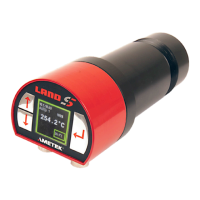

 To Next Page