The provided manual describes the AMP Kohler Series Air Compressor, model AKAC120. This equipment is designed to compress air for various applications, though it explicitly states it is NOT intended or approved for supplying breathing air. The manual emphasizes the importance of reading and understanding its entire contents before operation due to potential hazards, including physical injury or death if improperly used.
Function Description
The AMP Kohler Series Air Compressor is a robust piece of equipment powered by a Kohler engine (specifically, the rh265-3124 model, for which a separate manual is provided). Its primary function is to generate and store compressed air. The compressor system includes several key components that work together to achieve this:
- Engine: The Kohler engine provides the power to drive the compressor pump.
- Compressor Pump: This component is responsible for drawing in ambient air and compressing it. The manual specifies that the pump requires 30SAE oil and provides instructions for filling and checking its level.
- Air Tanks: The compressed air is stored in these tanks. The manual mentions that each tank has a drain petcock at the bottom for draining moisture, which should be done daily to prevent corrosion.
- Hose and Regulator: These components control the release of compressed air from the tank. A 3/8-inch hose and a regulator with a minimum rating exceeding the compressor's maximum working pressure are recommended. The regulator allows users to control the amount of air pressure released at the hose outlet.
- ACM Safety Valve: This critical safety feature is designed to release excessive pressure if the maximum pressure in the tank is exceeded. The manual stresses the importance of never tampering with this valve and replacing it if it leaks or becomes stuck.
- Discharge Tube: This tube carries compressed air from the pump to the check valve. Users are warned that this tube becomes very hot during operation and should not be touched.
- Unloader Valve: Used to release all pressure from the tanks and pump for starting, facilitating easier engine ignition.
- Check Valve: A one-way valve that allows air to enter the tank but prevents it from flowing back out.
- Belt Guard: This guard covers the drive belt and pulley, protecting users from moving parts. The manual explicitly states that the unit should never be operated if this guard is damaged or removed.
- Handle: Provided for moving the compressor.
Usage Features
The manual provides clear instructions for starting and operating the air compressor, with a strong emphasis on safety.
- Outdoor Use Only: A critical safety warning states that the unit must NEVER be used inside any building, enclosure, or recreational vehicle (RV) due to the danger of carbon monoxide poisoning, fire, or explosion. A minimum clearance distance of 3 feet is required around the unit.
- Pre-Operation Checks: Before starting, users must check oil levels (engine and pump), the air filter, and the gasoline supply. The ACM Safety Valve should also be tested by pulling its ring and allowing it to snap back.
- Starting Procedure:
- Move the manual throttle/choke lever to the "start" position.
- Put the unloader valve in the "open" position.
- Gently pull the starter grip until resistance is felt, then pull the cord briskly.
- Return the starter cord gently into the recoil housing.
- Move the throttle/choke lever to the desired RPMs.
- Close the unloader valve once the engine starts.
The manual notes that multiple pulls of the recoil start may be necessary and advises opening the ACM Safety Valves on each tank if the unit has trouble starting (especially if it was pre-tested).
- Safety Warnings: The manual highlights several hazards:
- CO Poisoning: Emphasizes running the compressor OUTDOORS, at least 20 feet from homes, windows, vents, and air intakes.
- Injection Injury: High-pressure air can pierce skin.
- Flying Debris: Compressed air can cause debris to fly.
- Electric Shock: Warns against operating in wet conditions.
- Fire/Explosion: Sparks can ignite flammable materials.
- Burns: Hot surfaces (pump, engine, discharge tubing) can cause burns.
- Unpacking: Users are instructed to inspect the compressor for transit damage and tighten all bolts, screws, and fittings before operation. Damaged units should not be operated.
Maintenance Features
Regular maintenance is crucial for the longevity and safe operation of the AMP Kohler Series Air Compressor. The manual provides a detailed maintenance schedule and instructions for various tasks.
- Maintenance Schedule:
- Daily: Check oil levels (pump), drain condensate, and ensure belt guards are secure.
- Every Month/30 Hours: Check the air filter, check for oil leaks, and replace the air filter.
- Every 6 Months/30 Hours: Change the pump oil.
- Oil Management (Compressor Pump): The pump requires 30SAE oil, filled to the middle or top of the red dot in the sight glass. Overfilling can cause damage and spills.
- Engine Oil Change: The first engine oil change should occur after 5 hours of operation, and subsequent changes every 30 hours. Detailed steps are provided: remove oil cap/dipstick, place a container under the drain bolt, unscrew the bolt, drain oil, reinstall bolt, refill oil (20 ounces capacity), and reinstall dipstick. Used oil must be disposed of properly.
- Fuel Management:
- Only gasoline fuel should be used.
- Do not overfill; leave room for fuel expansion.
- Never fill fuel indoors, when the engine is hot or running, or while smoking.
- Air Filter Maintenance: The air filter should be checked monthly and replaced if engine performance decreases or exhaust color changes. It should never be cleaned with detergent or cleaning solvents, and the engine should never run without an air filter.
- Belt Tension Adjustment: Belts tend to stretch. The manual describes how to adjust tension: remove the belt guard, loosen the engine brace and fasteners, shift the motor to align the belt (using a straight edge), and then tighten fasteners. The belt should deflect about 1/2 inch with five pounds of pressure.
- Tank Inspection: Regular inspection for cracks around welds is advised. If a crack is detected, pressure must be removed immediately, and the tank replaced. The manual explicitly states that tanks should never be repaired or modified.
- Storage: Before storage, tanks should be drained, and hoses disconnected and hung with the open end down to allow moisture to drain. The unit should be stored in a cool, dry place.
- Spark Plug Maintenance: Instructions include removing the spark plug cap, cleaning the area, removing the plug, inspecting for damage, cleaning with a wire brush, and replacing if damaged (recommended spark plug: NGK-BPR6ES). The gap between electrodes should be .027"-.030". Specific tightening instructions are given for new and old plugs.
- Troubleshooting: A comprehensive troubleshooting table is included, listing common problems (e.g., engine not starting, low discharge pressure, overheating pump, excessive belt wear, engine stalls) with possible causes and corresponding solutions. For engine-specific issues, users are directed to the Kohler Engine manual.
Overall, the manual provides essential information for the safe and effective operation and maintenance of the AMP Kohler Series Air Compressor, emphasizing user safety and proper care to ensure optimal performance and longevity.

 Need help?
 General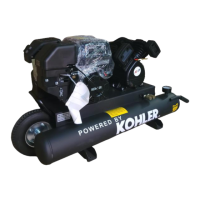

 To Next Page
