Initial Tuning
Once the MIDI and audio connections have been made it may be necessary to tune
in the VCOs to the rest of your music set-up. Allow a five minute warm up time as these
are true analogue VCOs – that’s why they sound so great!
There are many controls and patches on this synth that can affect one or all of the
VCOs! If just one of these extra controls is in action, then you might think odd things
are going on with tuning. So ensure every parameter that can affect the pitch of the
VCOs are cancelled or zeroed.
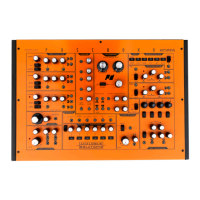
First set up the controls of Ample to make a simple sound.
Centre all the Tune controls.
Play, say, middle C on the keyboard. Using a digital keyboard as a reference, adjust
the tuning of VCO1 until it plays in tune with your reference.
Turn up VCO2 so both VCOs can be heard. Using the tune control of VCO2, tune it
to VCO1.
Finally, turn up VCO3 so all VCOs can be heard. You may prefer to turn down VCO2
at this point so you just hear VCOs 1 and 3. Using the tune control of VCO3, tune it to
VCO1.
This synth is truly analogue - and uses an old VCO circuit design to give it its great
sound. DON’T expect DCO or DSP style precision pitch.
The pitch will be in tune but have subtle shifts across the octaves due to their
vintage design. The drift right be more noticeable at high octaves. This is in part what
adds to the character and warmth of the sound. That’s the whole point!


 To Next Page