This document is an owner's manual for the ANLU AG-HA-2500N Gasoline Generator. It provides instructions for operation, maintenance, and troubleshooting.
Function Description:
The ANLU AG-HA-2500N is a gasoline-powered generator designed to produce electrical power. It is intended for various applications where a portable power source is required. The manual emphasizes safety precautions due to the toxic nature of exhaust gases and the flammability of gasoline. It also warns against operating the generator in unventilated areas or connecting it to household circuits.
Important Technical Specifications:
The generator's specifications are detailed in a table:
- Type: AG-HA-2500N
- AC voltage: 230V/50Hz
- AC output (COP): 2000W
- Power factor: 1.0
- Speed: 3000 r/min
- Performance class: G1
- Quality class: B
- Weight: 36kg
- Max. temperature: 40°C
- IP rating: IP23M
- Max. Altitude: 1000 m
- Oil Capacity: 0.6L
- Recommended Spark Plug: BP6ES, SPR6ES (NGK) or F6TC, F6RTC (LD)
- Spark Plug Gap: 0.7~0.8mm (0.028~0.031 in)
- Recommended Engine Oil: 4-stroke oil, SAE10W-40 for general, all-temperature use. Other viscosities (20W-40, 20W-50, 10W-30) can be used depending on ambient temperature.
Usage Features:
The manual outlines the steps for starting and stopping the generator, as well as guidelines for connecting electrical loads.
Starting the Engine:
- Disconnect any load from the AC socket and turn off the AC circuit breaker.
- Turn the fuel valve to the "ON" position.
- Turn the wind-block color rod (choke handle) to the "CHOKE" position.
- Turn the engine switch to the "ON" position.
- Pull the starting handle slightly until resistance is felt, then pull it with full strength.
- Once the engine temperature increases, pull back the wind-block door rod to the "OPEN" position.
Operating Methods:
- Ensure proper grounding of the generator.
- When connecting multiple loads, connect from high electric current to low electric current successively.
- Guidelines for extension cords:
- For a cross-section of 1.5mm², total length should not exceed 60m.
- For a cross-section of 2.5mm², total length should not exceed 100m.
- The manual provides a table for estimating starting and rated wattages for various electrical equipment (bulbs, heating, TV, fluorescent lamps, refrigerators, fans) to help users connect them appropriately to avoid overloading. For example, a bulb and heating setting have a starting and rated watt of X1, while a TV is 100W. A fluorescent lamp has X1 starting and X1.5 rated, and a refrigerator has X3~5 starting and X2 rated.
Stopping the Engine:
- Turn the AC circuit breaker to the "OFF" position.
- Turn the engine switch to the "OFF" position.
- Turn the fuel valve to the "OFF" position.
- For emergency stops, turn the engine switch to "OFF".
Troubleshooting:
The manual includes flowcharts for troubleshooting common issues such as the engine not starting and no electricity at the AC receptacles or DC terminals.
- Engine not starting: Checks include fuel level, engine switch position, fuel valve position, engine oil level (oil alert lamp), and spark plug condition. If these checks fail, the user is advised to take the generator to an authorized dealer.
- No electricity at receptacles: Checks include AC circuit breaker position and electrical appliance/equipment defects.
- No electricity at DC terminals: Checks include DC circuit breaker position.
Maintenance Features:
The manual provides a detailed maintenance schedule and instructions for key components.
Regular Service Period:
A table outlines maintenance tasks and their frequency:
- Daily / 20 Hrs: Engine oil inspection, air cleaner element inspection.
- Every 3 months / 50 Hrs: Engine oil change, air cleaner element cleaning (more frequently in dusty areas).
- Every 6 months / 100 Hrs: Fuel filter cleaning, spark plug maintenance.
- Every year / 300 Hrs: Valve clearance adjustment, combustion chamber and valve cleaning, fuel line inspection (replace if necessary).
- Every 100 operating hours: Spark arrester cleaning.
- Tasks like valve clearance adjustment, combustion chamber/valve cleaning, and fuel line inspection should be performed by a servicing dealer unless the user has proper tools and mechanical proficiency.
Specific Maintenance Procedures:
- Changing Oil:
- Drain oil while the engine is warm.
- Remove drain plug and filler cap, drain oil, and retighten the plug.
- Refill with recommended oil (0.6L capacity) and check the level using the dipstick.
- Caution: Used motor oil can cause skin cancer with prolonged contact. Wash hands thoroughly after handling. Dispose of used oil responsibly at a service station, not in trash or on the ground.
- Air Cleaner Service:
- Warning: Never use gasoline or low flash point solvents for cleaning the air cleaner element due to fire/explosion risk.
- Caution: Never run the generator without the air cleaner to prevent rapid engine wear.
- Unsnap the cover spring, remove the cover and element.
- Wash the element in a non-flammable or high flash point solvent and dry thoroughly.
- Soak the element in clean engine oil and squeeze out excess oil.
- Reinstall the element and cover.
- Spark Plug Service:
- Caution: The spark plug must be securely tightened to prevent overheating and damage to the generator. Never use a spark plug with an improper heat range.
- Remove the spark plug cap.
- Clean dirt from around the spark plug base.
- Use the supplied wrench to remove the spark plug.
- Inspect the spark plug for cracks or chips; discard if damaged. Clean with a wire brush if reusing.
- Measure the plug gap (0.7~0.8mm) with a feeler gauge and adjust by bending the side electrode if necessary.
- Attach the plug washer and thread the plug in by hand to prevent cross-threading.
- Tighten a new spark plug 1/2 turn with a wrench; a used plug requires 1/8 to 1/4 turn.
- Fuel Filter Service:
- Turn the fuel valve "OFF". Remove the filter cup.
- Clean the cup thoroughly.
- Reassemble, ensuring the rubber gasket is not damaged.
- Warning: After installing the filter cup, check for leaks and ensure the area is dry before starting the engine.
Transporting/Storage:
- Warning: Turn the engine switch "OFF" and keep the generator level during transport to prevent fuel spillage and ignition.
- For extended storage:
- Store in an area free of excessive humidity and dust.
- Drain the fuel:
- With the fuel valve "OFF", remove and empty the filter cup.
- Turn the fuel valve "ON" and drain gasoline from the fuel tank into a suitable container.
- Replace the filter cup and tighten securely.
- Loosen the carburetor drain screw and drain gasoline from the carburetor into a suitable container.
- Slowly pull the starter grip until resistance is felt (piston on compression stroke, intake and exhaust valves closed) to protect against internal corrosion.
The manual includes a crossed-out wheeled dustbin symbol, indicating that electrical appliances should not be disposed of as unsorted municipal waste. Users should contact local government for collection facilities. Improper disposal can lead to hazardous substances leaking into groundwater. Retailers are legally obligated to take back old appliances when new ones are purchased. The appliance is not intended for use by persons with reduced physical, sensory, or mental capabilities, or lack of experience, unless supervised. Children should be supervised to ensure they do not play with the appliance.

 Need help?
 General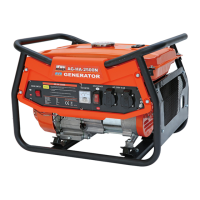

 To Next Page
