This document outlines the user and service manual for a Mini Heat Pump designed for swimming pools, branded AQUA FORTE PROFESSIONAL WATER PRODUCTS. It provides comprehensive instructions for installation, operation, and maintenance, ensuring safe and efficient use of the device.
The primary function of this device is to heat swimming pool water, making it suitable for comfortable swimming. It operates as a heat pump, efficiently transferring heat from the ambient air to the pool water. The unit is designed to be user-friendly, with a clear control interface and straightforward operational procedures.
Usage Features:
The heat pump is equipped with an LED wire controller, serving as the main interface for operation. This controller features a simple button layout, including an "on/off" key, up and down arrow keys for temperature adjustment, and an "M" key for accessing and setting parameters.
- Power Control: The "on/off" key allows users to easily turn the heat pump on or off from the main interface.
- Temperature Adjustment: The up and down arrow keys enable users to adjust the target water temperature for the pool. This allows for precise control over the desired water warmth.
- Parameter Checking and Setting: The "M" key is crucial for advanced control. Pressing it for 5 seconds allows users to enter the parameter-checking status, where various operational parameters can be reviewed. The up and down arrow keys are used to navigate through different parameters. To modify a parameter, the "M" key is pressed again to enter the setting status, after which the arrow keys can change the value. Another press of the "M" key confirms the new value and returns to the parameter-checking status.
- Temperature Unit Switching: For user convenience, the unit supports switching between Fahrenheit and Celsius temperature displays. This can be done by long-pressing the "M" key for 5 seconds while the unit is in shutdown state. The selected unit (F for Fahrenheit, C for Celsius) will be displayed on the main interface for 3 seconds after the switch.
- Reset Function: In case of incorrect settings or a need to revert to factory defaults, a reset operation is available. By simultaneously pressing the "M" key and the "on/off" key for 10 seconds, all parameter values can be restored to their default settings.
- Status Indicators: The LED controller provides visual feedback on the unit's operational status. A red light indicates that the unit is in heating mode, while a green light flashing signifies that the unit is undergoing a defrosting cycle. This helps users quickly understand the current state of the heat pump.
- Safety Features: The manual emphasizes several safety considerations. It warns against improper installation, which could lead to fire, electric shock, or water leakage. It also highlights the importance of proper grounding and using professional tools for electrical work. The unit should not be operated with wet hands, and flammable gases or other electrical appliances should be kept away from the power wire. Cleaning the unit while it is powered on is strictly prohibited due to the high-speed fan and risk of electric shock. In case of a problem or fault code, the unit should be turned off immediately.
- Installation Guidelines: The manual provides detailed instructions for installation, stressing that it must be carried out by a qualified engineer. Key considerations include choosing a well-ventilated location, ensuring a stable and flat concrete floor, providing a water drainage device, and maintaining adequate space around the unit for repair and maintenance. It also advises against installing the unit near sources of oil, flammable gases, corrosive products, or high-frequency equipment. To minimize noise, the unit should be placed in a less noise-sensitive area.
- Water Flow Management: The system relies on proper water flow. The installation layout diagram illustrates the connection of the heat pump to the swimming pool via a water pump and filter, ensuring a continuous circulation of water for heating. It is crucial to ensure that there is sufficient water flow before the unit starts to run.
- Refrigerant Type: The unit utilizes R32 as its refrigerant gas, which is a new refrigerant gas.
Maintenance Features:
Regular maintenance is essential to ensure the longevity and optimal performance of the Mini Heat Pump. The manual outlines several key maintenance practices:
- Water Supply System Check: Users should regularly inspect the water supply system to prevent air from entering the water system. Air in the system or low water flow can significantly reduce the heat pump's performance and reliability.
- Pool and Filtration System Cleaning: To prevent damage to the unit, it is important to regularly clean the swimming pool and its filtration system. A dirty or clogged filter can impede water flow and strain the heat pump.
- Winterization: If the heat pump is to be shut down for an extended period, especially during winter, it is crucial to discharge all water from the bottom of the water pump. This prevents freezing and potential damage to the unit.
- Water Flow Confirmation: Before restarting the unit after any period of inactivity, users must check the water flow to confirm that there is enough water circulating through the system.
- Protective Covering: During winter, after the unit has been properly conditioned and prepared for the cold season, it is recommended to cover it with a special winter heat pump cover. This provides additional protection against harsh weather conditions and helps preserve the unit.
- Professional Repair: The manual explicitly states that the unit should only be removed and repaired by a professional technician. Improper movement or maintenance by untrained individuals can lead to water leakage, electric shock, or fire.
- Refrigerant Leak Check: After any installation or repair, it is important to confirm that there are no refrigerant leaks. Insufficient refrigerant can prevent the unit from working properly.
- Electrical Connection Safety: Before any operation involving the electrical components, the power supply to the heat pump must be disconnected. The manual provides a step-by-step guide for connecting the power supply cable, emphasizing the need to detach the electrical side panel, insert the cable into the unit port, and connect it to the terminal block.
- Pre-Running Test Inspection: Before initiating a running test, a thorough inspection is required. This includes confirming correct unit installation, verifying that the power supply voltage matches the unit's rated voltage, checking piping and wiring, ensuring air inlet and outlet ports are unblocked, confirming proper drainage and venting, checking the leakage protector, inspecting piping insulation, and verifying that the ground wire is correctly connected.
- Running Test Checks: During the running test, several items need to be checked: ensuring the unit current is normal, verifying that each function button on the control panel operates correctly, confirming the display screen is normal, and checking for any leaks in the entire heating circulation system. Additionally, the condensate drain should be checked for normal operation, and any abnormal sounds or vibrations during running should be investigated.

 Need help?
 General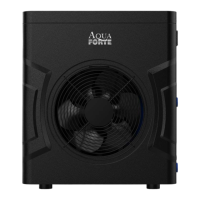

 To Next Page