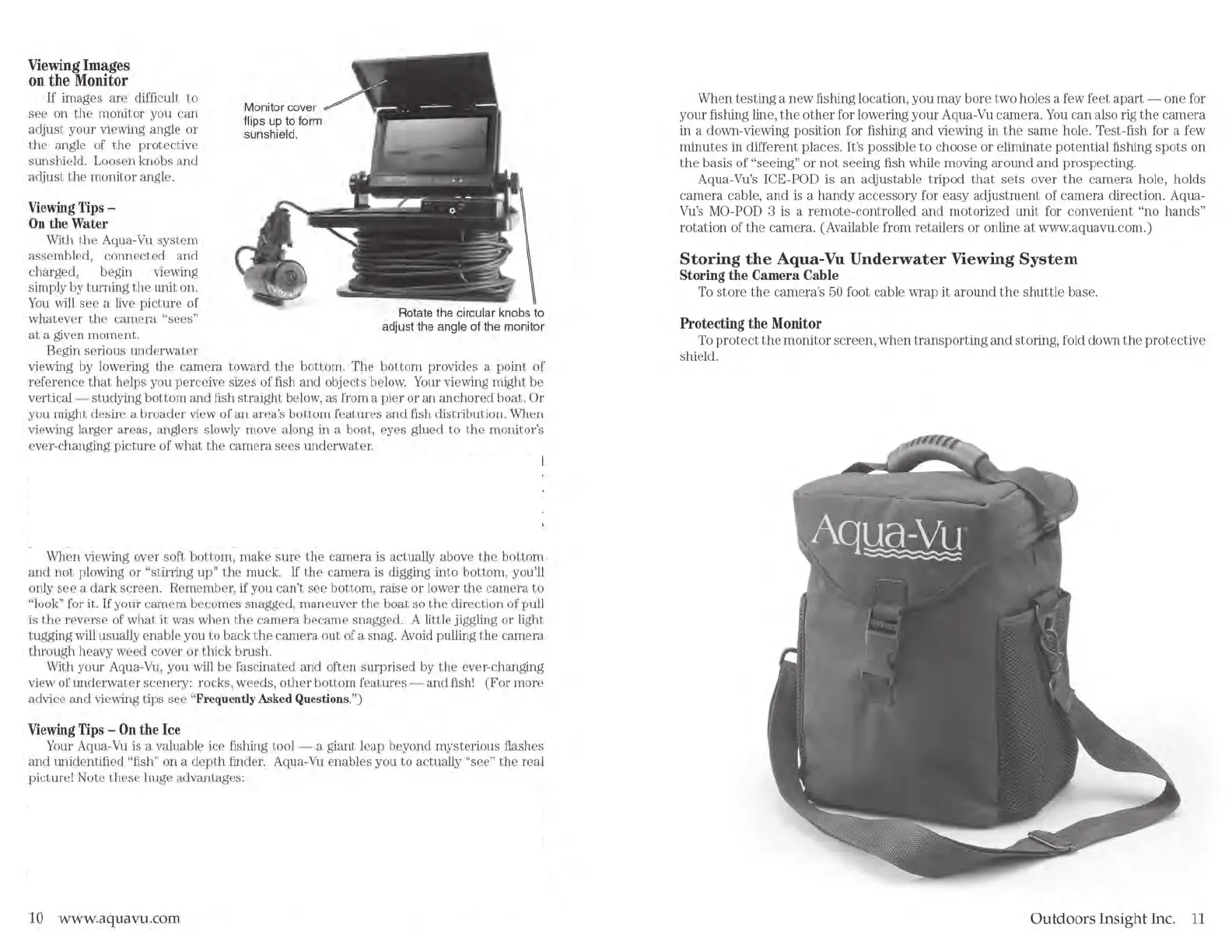
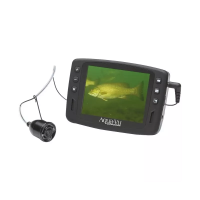
Identify sh species and size. Viewing actual sh with an Aqua-Vu camera solves
mysteries about what depth nder signals really show.
View bottom structure and distinguishing features. Observe weed lines and weed
characteristics, sand versus muck, big rocks versus small rocks, and transitions from one
bottom type to another. That’s a big help in precisely locating your shing holes and placing
your ice shing house!
Sharpen your shing techniques — watch your bait and see how approaching sh react
to it. Learn what baits, lures, colors, and jigging actions attract sh and trigger strikes.
Identify sh species and size. Viewing actual sh with an Aqua-Vu camera solves
mysteries about what depth nder signals really show.
View bottom structure and distinguishing features. Observe weed lines and weed
characteristics, sand versus muck, big rocks versus small rocks, and transitions from one
bottom type to another. That’s a big help in precisely locating your shing holes and placing
your ice shing house!
Sharpen your shing techniques — watch your bait and see how approaching sh react
to it. Learn what baits, lures, colors, and jigging actions attract sh and trigger strikes.
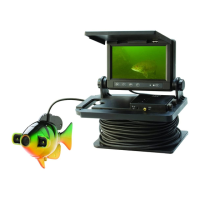
In most waters, sh relate to bottom structure. So, while drifting or slow-trolling, you’ll
need to guide the camera over the ups and downs of bottom contours. You will quickly
learn how to “swim” the camera over bottom terrain. With cable in hand, simply raise or
lower the camera, paying out more or less cable, depending on depth and boat speed. As
you move along, you should see on your monitor screen a continous picture of the passing
bottom and the sh-holding zone just above it.


 To Next Page