
 Need help?
Do you have a question about the Archos Neon Series and is the answer not in the manual?
Navigate to Settings, Backup & reset, Factory data reset. Erase phone storage and confirm reset.
Turn off device, use buttons to enter recovery menu, select Wipe data/factory reset, and confirm.
After reset, select 'Reboot system now' to restart the device and complete the process.
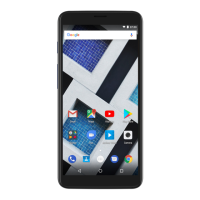
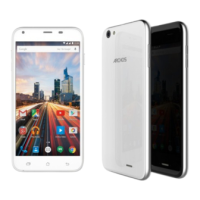
The ARCHOS 50d Neon is a mobile device designed for everyday use, offering a range of functionalities typical of a modern smartphone. Its primary function is to provide a portable platform for communication, entertainment, and productivity, running on the Android operating system. The device aims to deliver a user-friendly experience, allowing individuals to access various applications, browse the internet, capture media, and manage their daily tasks efficiently.
The core function of the ARCHOS 50d Neon revolves around its Android interface, which serves as the gateway to a multitude of features. Users can make and receive calls, send text messages, and connect with others through various communication apps. The device supports internet browsing, enabling access to information, social media, and online services. For entertainment, it allows for media consumption, including playing music, watching videos, and engaging with mobile games. The integrated camera system facilitates photo and video capture, allowing users to document moments and share them. Beyond these, the device supports a wide array of applications available through the Google Play Store, catering to diverse needs such as navigation, productivity, health tracking, and more. The device's design emphasizes portability, making it a convenient companion for on-the-go usage. Its internal storage allows for saving personal files, apps, and media, while the option to erase this data ensures privacy and prepares the device for new ownership or a fresh start.
The ARCHOS 50d Neon is designed for intuitive interaction. Users primarily navigate the device through its touchscreen interface, tapping icons, swiping through menus, and typing on a virtual keyboard. Physical buttons, such as the ON/OFF button and Volume buttons, provide additional control for power management, screen activation, and volume adjustment. These buttons also play a crucial role in accessing advanced functionalities like the recovery menu, which is essential for troubleshooting and maintenance.
The device offers two main methods for reinitialization, catering to different user scenarios. The first method, accessible directly from the Android interface, is ideal when the device is functioning normally but the user wishes to perform a factory data reset. This involves navigating through the "Settings" app, selecting "Backup & reset," and then "Factory data reset." This process allows users to selectively erase internal storage data, ensuring that personal files like music and photos are removed alongside app data. This is particularly useful when preparing the device for sale or transfer to another user, as it helps protect personal information.
The second method for reinitialization is designed for situations where the device is unresponsive, frozen, or experiencing severe software issues that prevent access to the Android interface. This method involves a sequence of button presses to enter the Android system recovery menu. The process begins with turning off the device, then a specific combination of pressing the ON/OFF button and repeatedly pressing the Volume - button until the bootlogo appears. Subsequently, holding the ON/OFF button and pressing the Volume + button once brings up the recovery menu. This low-level access is critical for resolving deep-seated software problems that cannot be addressed through the standard Android settings.
Once in the recovery menu, users utilize the Volume buttons to navigate through the options and the ON/OFF button to confirm selections. Key options include "Wipe data/factory reset" and "Yes -- delete all user data," which are essential for performing a complete reset. After the reset is complete, the "Reboot system now" option restarts the device, bringing it back to its initial factory state.
A significant usage feature, especially with Android 5.0 and later, is the device's linkage to a Google account. If a device is reset from the recovery menu, the original Google account used during the initial setup must be re-entered to regain full access. This security measure, known as Factory Reset Protection (FRP), helps prevent unauthorized use of stolen devices. Therefore, users planning to resell their device are advised to use the first reinitialization method (via Android settings) to properly unlink their Google account before the reset, ensuring a smooth transition for the new owner.
The ARCHOS 50d Neon incorporates several maintenance features, primarily centered around its reinitialization capabilities, which are crucial for maintaining optimal performance and addressing software issues. The ability to perform a factory data reset serves as a powerful troubleshooting tool. If the device becomes frozen, unresponsive, or exhibits persistent software glitches, a reset can often resolve these problems by clearing corrupted data and restoring the system to a clean state. This is akin to a fresh installation of the operating system, eliminating many common software-related performance degradations.
Before performing any reinitialization, a critical maintenance step is data backup. The device's documentation strongly recommends backing up all important data, as the reset process will irrevocably delete all user data, including apps, photos, videos, and documents. This emphasizes the importance of regular backups to cloud services or external storage to prevent data loss.
Another important maintenance consideration is battery charge. The device requires sufficient battery charge to successfully complete the reinitialization process. This prevents the device from powering off unexpectedly during a critical operation, which could potentially lead to further software corruption or render the device inoperable.
The two distinct reinitialization methods offer flexibility in maintenance. The in-interface reset (Method 1) is a user-friendly option for routine maintenance, such as clearing out old data or preparing the device for a new user, without requiring advanced technical steps. It also ensures proper handling of the Google account linkage for resale purposes. The recovery menu reset (Method 2) is a more robust maintenance tool, designed for severe software issues where the device's primary interface is inaccessible. This method allows users to bypass a corrupted Android system and perform a deep-level format, effectively giving the device a complete software overhaul.
The documentation also highlights the importance of understanding the implications of the Google account linkage (Android 5.0 and above). For maintenance purposes, if a user performs a recovery menu reset, they must be prepared to re-enter the previously associated Google account credentials. This is a security feature, but it also becomes a maintenance step that users need to be aware of to regain full functionality after a reset. If the device is being prepared for a new owner, using the in-interface reset method (Method 1) is crucial to properly remove the Google account association, simplifying the setup process for the next user and avoiding potential FRP lockouts.
In essence, the ARCHOS 50d Neon's maintenance features are designed to empower users to manage their device's software health, troubleshoot common problems, and prepare the device for different ownership scenarios, all while emphasizing the importance of data backup and battery readiness.
 General
| Operating System | Android |
|---|---|
| Front Camera | 2 MP |
| RAM | 1GB |
| Rear Camera | 5MP |
| Resolution | 854 x 480 pixels |
| Processor | Quad-Core |
| Expandable Storage | Yes, via MicroSD card up to 32 GB |
| Weight | 140g |




 To Next Page
