The ARES 1-Liter Vacuum Brake Fluid Bleeder is a specialized tool designed for bleeding automotive hydraulic brake systems on most vehicles, including those with disc or drum brake systems. This operations manual provides comprehensive instructions and warnings to ensure safe and effective use of the product.
Function Description
The primary function of this device is to create a vacuum that draws brake fluid from a vehicle's brake system, facilitating the removal of old fluid and air bubbles. This process is crucial for maintaining proper brake performance and safety. The tool is designed to work with an air compressor, which provides the necessary air supply to generate the vacuum. It includes a transparent hose, allowing the user to monitor the fluid's visibility during the draining process, ensuring that all air bubbles are purged and new fluid is flowing. A convenient hose hanging hook is also integrated for ease of use.
Important Technical Specifications
- Working Pressure: 71 - 113 PSI
- Maximum Air Pressure: 113 PSI
- Air Consumption: 180 L/min
- Vacuum: 60%
- Tank Capacity: 1 Liter (1L)
- Inlet Size: 1/4" BSP
These specifications indicate that the bleeder is designed for efficient operation within standard workshop air pressure ranges, offering a substantial vacuum for effective fluid extraction. The 1-liter tank capacity is suitable for most brake bleeding tasks without frequent emptying.
Usage Features
The ARES brake fluid bleeder is designed for straightforward operation, but adherence to the instructions is critical for safety and effectiveness.
- Preparation: Before starting, the vehicle's brake fluid reservoir lid must be removed to prevent vacuum from occurring in the system, which could lead to incomplete purging of air. The tool should be connected to a suitable air compressor, ensuring a secure connection for a constant air supply.
- Bleeding Sequence: The bleeding process should always begin with the wheel furthest from the master cylinder and proceed to the closest. This typically involves the following order: passenger rear, driver rear, passenger front, and driver front, although users should always follow the manufacturer's recommended bleeding sequence for the specific vehicle.
- Connection to Brake Nipple: The black rubber hose connector is mounted onto the brake nipple of the wheel. The bleeder screw on the brake caliper or wheel cylinder is then opened approximately 1/4 turn counterclockwise.
- Vacuum Activation: The brake bleeder's trigger is activated, creating a vacuum that draws brake fluid from the system through the transparent hose into the bleeder's tank.
- Fluid Monitoring and Refilling: Throughout the process, the brake fluid level in the vehicle's reservoir must be continuously monitored and topped off as necessary with new brake fluid. The transparent hose allows the user to observe the fluid for air bubbles. Bleeding continues until no air bubbles are visible in the clear hose, indicating that the system is free of air.
- Completion: Once the fluid runs clear and free of bubbles, the bleeder screw is firmly seated, the brake nipple is closed, and the rubber hose connector is removed. The trigger is depressed to remove any remaining brake fluid from the clear hose. This process is repeated for all four wheels.
- Fluid Changing: For a complete fluid change, the bleeding procedure is repeated until the master cylinder reservoir reaches its minimum level. The reservoir is then refilled with new brake fluid, and bleeding continues until new fluid is visible in the clear hose.
- Post-Procedure: After bleeding, it is recommended to apply anti-seize to the brake bleed nipples to prevent seizing or breakage during future maintenance. Crucially, the brake pedal must be tested to ensure proper brake function before driving the vehicle.
Maintenance Features
While the manual does not detail specific maintenance for the bleeder tool itself, it emphasizes critical aspects related to the brake system and fluid handling:
- Inspection: Before each use, the condition of the testing equipment should be inspected, and any damaged equipment should not be used.
- Cleanliness: The working area must be kept clean, dry, and free from unrelated materials.
- Fluid Handling: Brake fluid is corrosive and can damage automobile paint and other surfaces. Any spills should be flushed with water immediately. Users must read and follow the fluid manufacturer's warnings.
- Disposal: Used/waste parts and chemicals, including old brake fluid, must be handled according to local regulations.
The manual includes a comprehensive list of warnings to ensure user safety and proper tool operation:
- Always read instructions carefully.
- This bleeder is for hydraulic brake systems only.
- Do not use damaged equipment.
- Ensure adequate lighting in the working area.
- This product is not a toy; keep children and unauthorized persons away.
- Keep the working area clean and free from unrelated materials.
- Do not allow untrained persons to use this tool.
- Always wear eye protection (OSHA and ANSI Z87.1 standards) and gloves.
- Do not allow the tool to interfere with normal engine moving parts.
- Be aware that engine exhaust contains carbon monoxide.
- Follow manufacturer's recommended bleeding sequence.
- Brake fluid is hazardous; read and follow fluid manufacturer's warnings.
- Brake fluid is corrosive; flush spills with water immediately.
- Test brake pedal action before driving after bleeding/fluid change.
- The product comes with a LIMITED LIFETIME WARRANTY against defects in material and workmanship, excluding normal wear and tear, misuse, abuse, and certain consumable parts.
The ARES 1-Liter Vacuum Brake Fluid Bleeder is a robust and essential tool for automotive maintenance, designed for efficiency and safety when used according to the provided guidelines.

 Need help?
 General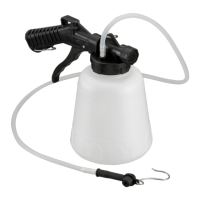

 To Next Page