11
Emergency Lowering
In the unlikely event that the control handset fails to
operate the hoist, with a patient still supported by
the sling, provision for lowering has been made,
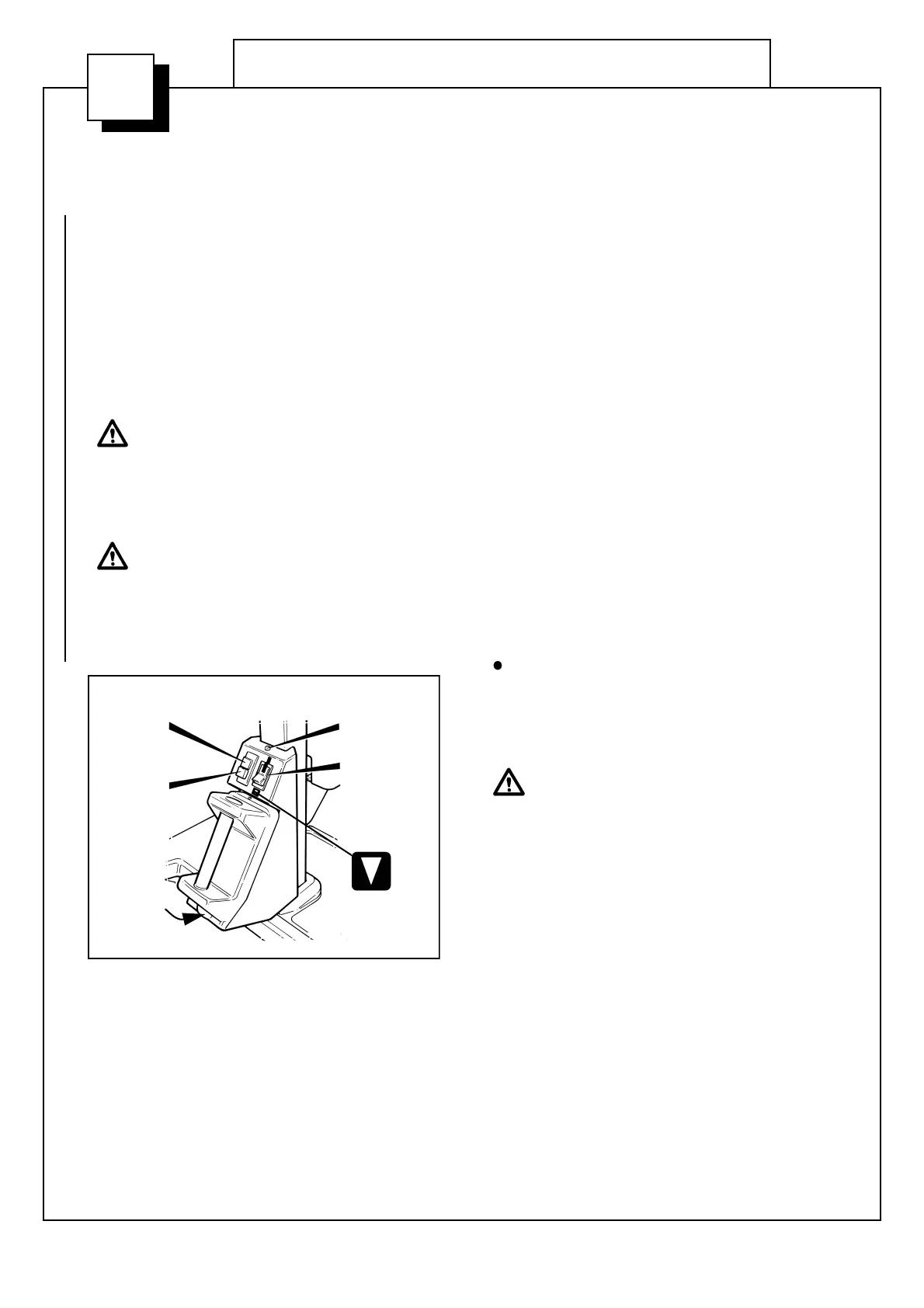
using the “emergency lowering switch”, situated at
the top right of the battery compartment.A label
situated below the switch is for quick and easy
recognition (See fig. 21). If pressure is released
from the switch during use, lowering will stop. Only
use this switch in an emergency, do not use it for
normal function lowering.
The emergency lowering switch will only
operate while the green reset button is in.
The “automatic stop function” of the jib
will not operate while using the emergency
lowering button, so caution must be
exercised if this facility has to be used.
If the emergency lowering switch has to be
operated, the usage indicator seal will be
broken, this identifies that the switch has
been used, the hoist must then be
withdrawn from use immediately and the
Arjo Servoice Department or their
appointed distributor contacted.
Emergency Stop Button
If, in an emergency, you have to immediately stop
any powered movement, (other than by releasing
pressure on the control handset button), press the
“emergency stop button”, situated at the top left of
the battery compartment. (See fig. 21).
Once the emergency stop button has been operated,
the green reset button will have to be re-engaged by
pressing it in, before any powered movement can be
utilised.
System Overload Fuse (resettable)
If the chassis legs (open/close) function or the lifting
arms (raise or lower) function fail to operate when
pressing the appropriate button on the control
handset:-
Check that the ‘Green’ reset button is pressed in and
check the battery pack is in a good state of charge, if
the functions still fail to operate, check the system
overload fuse (situated under the battery
compartment). If the fuse has operated the switch
section will protrude from its mount, press the
switch in to reset. If the ‘cut out’ operates again
withdraw the hoist from use and contact Arjo
Service Department.
General Information
If the Sara 2000 is being used for “standing
practice”, (accustoming the patient to the upright
posture after long periods in bed), or for other
reasons of instability, keep the sling sufficiently
tight to give support, but without restricting
movement.
Note: The Sara 2000 is designed for quick,
easy transfers from one sitting position to
another, and to elevate a patient for toileting,
repositioning, changing of incontinence pads,
wound dressings, standing practise, etc.
The Sara 2000 is not intended for long
periods of suspension.
Emergency
stop button
Reset
button
Battery state
indicator
light
Emergency
lowering
switch
(covered with usage
indicator seal)
P.1067f/2
Fig. 21
System
overload
fuse
(resettable)
Emergency
lowering label
D
Using your Sara 2000 - continued


 To Next Page
 Loading...