This document serves as an operation manual for an Artusi built-in refrigeration appliance, specifically a fridge with an integrated icebox. It provides comprehensive instructions for installation, operation, maintenance, and troubleshooting, ensuring users can maximize the appliance's performance and longevity.
Function Description
The Artusi refrigeration appliance is designed for household use, primarily for short-term food storage. It maintains temperatures between 0-10°C in the fridge compartment and is suitable for storing frozen food in the icebox. The appliance is intended to be built into kitchen cabinetry.
Usage Features
- Temperature Control: The fridge features a simple temperature control system with settings from 1 (warmest) to 5 (coldest). Users can adjust the temperature by pressing an "adjust" button, cycling through these settings. The time taken to reach a new temperature depends on the magnitude of the change from the previous setting.
- Switching On/Off: The appliance can be switched on or off by pressing and holding the power button for approximately 5 seconds. When connected to a power supply, indicator lights below the setting numbers illuminate to show the current temperature setting.
- Food Storage Guidelines (Fridge):
- Liquids should always be covered.
- Hot foods must be allowed to cool to room temperature before being placed in the fridge.
- Items should not rest against the rear wall, as this is a wet wall that forms ice droplets during normal use, which could cause items to freeze to the wall.
- Food should be clean and dry before storage.
- Wrapping or covering food helps prevent moisture loss, keeps food fresh, and avoids unpleasant odors.
- Foods to be used soon should be stored at the front of shelves to prevent deterioration from prolonged door opening.
- The fridge should not be overfilled to allow for proper air circulation.
- Thawing frozen foods in the fridge compartment can help maintain low temperatures and save energy.
- The coldest area in the refrigerator chamber is directly above the vegetable drawers, ideal for delicate and highly perishable foods like fish, meat, poultry, sausage products, ready meals, dishes/baked goods with eggs or cream, fresh dough, cake mixtures, and pre-packed vegetables requiring approximately 4°C storage.
- The warmest area is in the top section of the door, suitable for butter and cheese.
- Food Storage Guidelines (Freezer/Icebox):
- The freezer compartment is designed exclusively for frozen food.
- Hot or warm foods must be fully cooled before freezing.
- Follow food packaging instructions for frozen food storage; if none, store for no more than three months.
- Store food in small packages (ideally under 0.5kg) to reduce freezing time and improve quality after thawing.
- Wrap food before freezing, ensuring it is dry to prevent sticking.
- Label food with type, storage date, and expiry date.
- Thawed food should not be refrozen unless completely cooked. Defrost only the required amount to prevent waste.
- Bottled or canned drinks should not be stored in the freezer due to explosion risk.
- The maximum fresh food freezing capacity is approximately 2kg per 24 hours.
- Do not attempt to freeze more than the maximum amount.
- If the appliance lacks a freezer compartment (indicated by no stars), it is not suitable for freezing foodstuffs.
- Adjustable Shelves: Fridge shelves can be moved to accommodate different storage needs. To adjust, lift the front section, pull outwards, and then slide back into the desired slot before lowering the front.
- Crisper Access: The crisper cover shelf is split for easy access to the crispers. For root vegetables with leaves (e.g., carrots, turnips), remove the leaves to prevent nutrient absorption.
- Door Reversal: Both the fridge and icebox doors can be reversed to suit kitchen layout. This process involves carefully removing hinges and cover caps, relocating them to the opposite side, and ensuring proper door seal after reassembly. A hair dryer can be used to expand compressed door seals for a tight fit.
- Built-in Design: The appliance is specifically designed for built-in installation, integrating seamlessly into kitchen units.
Maintenance Features
- Cleaning:
- Always disconnect the appliance from the power supply before cleaning or maintenance.
- The fridge and crisper sections should be cleaned with a solution of bicarbonate of soda and lukewarm water. Abrasive products or detergents should not be used. Rinse and dry thoroughly.
- Shelves, drawers, and balconies should be hand-washed with a mild solution of washing-up liquid and water; they are not dishwasher safe.
- The water drain hole at the back of the fridge compartment and the evaporating tray require periodic cleaning to prevent defrosted water accumulation. A cleaning rod is provided for the drain hole. Ensure the drainage channel is clear of debris. If iced over, use warm (not boiling) water to clear the blockage.
- For prolonged periods of non-use, unplug and clean the appliance, leaving doors slightly ajar to prevent mildew and odors.
- Defrosting the Fridge: The fridge is self-defrosting. Water runs through a channel at the back and evaporates from a tray. The cleaning tool should be used to keep the channel clear. Frosting on the back wall is normal for wet wall fridges and does not indicate a malfunction.
- Defrosting the Icebox: Defrosting is recommended at least once a year or when ice build-up exceeds 1/4 inch to maintain efficiency and reduce energy consumption. The safest method is to switch off the appliance and leave the doors open until all ice melts. Place old towels at the base to catch water. Avoid using sharp objects, hair dryers, or heat guns, as these can cause irreversible damage. Removing ice chunks during defrosting can speed up the process.
- Troubleshooting: The manual includes a troubleshooting section to address common issues such as the appliance not working, working inefficiently, or being noisy. It advises checking power, fuses, thermostat settings, door closure, cooling system cleanliness, ventilation, and appliance level. It also notes that bubbling/gurgling noises from cooling gas are normal.
- Door Seal Check: If water collects in the fridge or excessive ice forms in the icebox, check the door seals for proper resistance, kinks, debris, or damage. Replace seals if necessary.
- Light Bulb Replacement: If the LED lighting fails, it must be replaced by an authorized service agent. Contact Customer Care to arrange a service visit.

 Need help?
 General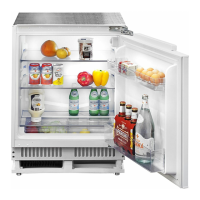

 To Next Page