Gree GMV6 DC Inverter VRF Units Service Manual
4.2.4 Outdoor Unit Status Query
The following functions can be queried:
Indoor unit engineering SN query
Online indoor unit qty query
Outdoor unit barcode query
After the unit is powered, you can query the function setting status, historical fault record, indoor unit
engineering number and real-time parameter of the unit in any status. The query method is as follows:
On the master unit, press and hold the SW2 down button for over 5 seconds. The master unit
displays the current function setting status, and other modules display based on their current status.
Press the SW1 up button and the SW2 down button on the master unit to select the corresponding query.
The default selection is A6.
In function query status, if there are two levels of menus, you can press the SW4 back button to
return to the previous level. Press the SW4 query button again to exit query status.
In function query status, if you do not press any button on the master unit in 5 minutes, the system
will automatically exit the current screen and the unit will resume displaying the current status.
4.2.4.1 n6 Fault Query
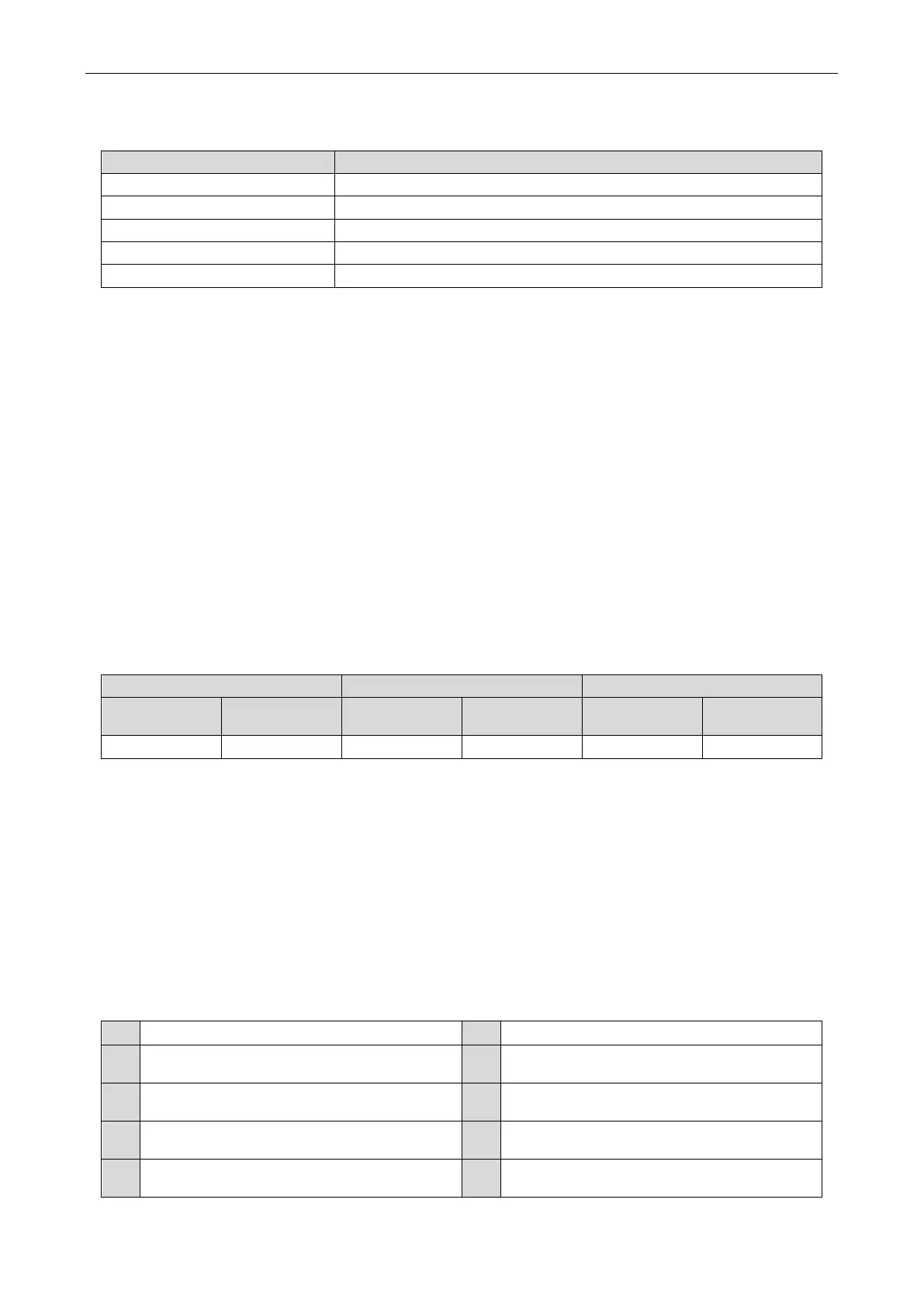
Press the SW1 up button and the SW2 down button to select fault query. The master unit displays
as follows:
Function Code Display status
Current
Display status Current status Display status
Press the SW3 confirm button on the master unit to confirm the selection.
Introduction:
This function is used to query historical faults in the system. Up to five historical faults can be stored
in the order of time.
Operations:
In fault query status, press the SW1 up button and the SW2 down button. LED3 circularly displays
the code and address of the faulty module in history in the order of time (at an interval of 1s), and LED2
displays the fault sequence number. If there is no historical fault, LED2 and LED3 display "00" by default.
Up to five latest historical faults can be queried. Faults that can be stored and queried are as follows:
1 High pressure protection 20 Inverter compressor over-current protection
2 Low pressure protection 21
Current detection circuit fault of the inverter
3 Lack-of-refrigerant protection 22
Loss of synchronization protection for the inverter
4 Air discharge low temperature protection 23
Communication fault between the primary
controller and inverter compressor driver
5 Over low pressure ratio protection 24
Over temperature protection for the inverter
compressor driver module.


 To Next Page
 Loading...