
 Need help?
Do you have a question about the Ascension SY-HVA-350-SL and is the answer not in the manual?
Manufacturer liability, manual reading, installation modes, technician requirements, voltage, duct connection, gas appliance ventilation, cooktop distance.
Two or more people required for installation/moving to prevent physical injuries.
Domestic use for kitchen fumes, no naked flames, flame intensity, deep fat fryer monitoring, child supervision.
Information on required GU10 halogen/LED lamps and how to change them.
Instructions for cleaning stainless steel and painted surfaces of the ventilator unit.
Detailed measurements and diagrams of the unit's physical size and attributes.
Instructions for safely connecting the unit's electrical wiring by qualified personnel.
Procedures for installing the exhaust duct for air evacuation to the outside.
Steps for installing the unit in a ductless configuration using a conversion kit.
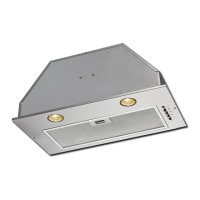
This document serves as an instruction manual for the Ascension Kitchen Ventilation Range Hood Ventilator, model SY-HVA-350-SL, manufactured by Castlewood by AMS. It provides comprehensive guidelines for installation, operation, and maintenance to ensure efficient performance and longevity of the appliance.
The Ascension Range Hood Ventilator is designed for domestic use to effectively eliminate kitchen fumes, odors, and grease from the cooking area. It operates by aspirating air saturated with these elements, passing it through specialized filters, and then expelling the cleaned air either to the outside (ducted version) or recirculating it back into the kitchen (ductless version). This process helps maintain a cleaner and more pleasant kitchen environment, reducing the accumulation of grease and odors on surfaces and improving overall air quality. The unit is equipped with lighting to illuminate the cooking surface, enhancing visibility during food preparation.
The ventilator is designed for straightforward operation, primarily through push-button switches located on its front panel. Users can control both the lighting and the fan speed settings. The light switch allows for turning the lamps on and off, providing illumination as needed. The fan switches enable the user to select from various blower speed settings, allowing for adjustment based on the intensity of cooking fumes and odors. This flexibility ensures efficient ventilation for different cooking activities, from light simmering to heavy frying.
The unit offers versatility in installation, supporting both ducted and ductless configurations. In a ducted setup, the ventilator expels air to the outside through an exhaust pipe, requiring a connection to a 6-inch round metal ductwork system. For optimal performance in ducted mode, it is recommended to use a straight, short duct run with as few elbows and transitions as possible. In a ductless setup, the air is filtered and recirculated back into the kitchen, requiring a combination filter (sold separately) and specific installation steps for the 90-degree angle boot and grille.
Safety is a key consideration in the design and recommended usage. Users are advised to adjust flame intensity to direct it onto the bottom of pans or pots only, preventing flames from engulfing the sides. Continuous monitoring of deep fat fryers is crucial, as overheated oil can ignite. The ventilator should not be used by children or individuals not properly instructed in its operation. Adequate ventilation of the room is essential when the unit is used concurrently with non-electrical, gas-burning appliances to prevent the backflow of exhaust gas. The kitchen should have a direct opening for clean air entry in such scenarios.
The minimum installed distance from the ventilation unit to a gas cooktop is recommended to be 30 to 32 inches, and 28 to 30 inches for an electric cooktop. If the cooktop manufacturer specifies a greater distance, that distance should be followed. This ensures proper clearance and safety during operation.
Proper maintenance is crucial for ensuring the efficient performance and longevity of the Ascension Range Hood Ventilator. Regular cleaning and filter replacement are key components of this maintenance.
Before any maintenance work, the ventilator must be disconnected from the main power supply to ensure safety. The unit features baffle filters that need to be cleaned and/or replaced periodically as needed. These filters are designed to capture grease and other particles from the aspirated air, and their effectiveness diminishes if they become clogged.
For general cleaning of the ventilator unit, a damp cloth and a neutral liquid detergent are recommended. Stainless steel surfaces, which are easy to clean, benefit from occasional care to preserve their appearance. Hot water with soap or detergent is typically sufficient. After cleaning, rinsing with clear water and wiping dry with a clean, soft cloth helps prevent water marks. For more persistent discolorations or deposits, a non-scratching household cleanser or stainless steel polishing powder with a little water can be used. Stubborn cases may require a plastic scouring pad or soft bristle brush with cleanser and water, rubbing lightly in the direction of the stainless finish grain. It is important to avoid excessive pressure that could mar the surface. Deposits should not be left for long periods, and ordinary steel wool or brushes should not be used, as small steel bits can adhere and cause rust. Salt solutions, disinfectants, bleaches, or cleaning compounds containing harmful chemicals should not remain in contact with stainless steel for extended periods; surfaces should be rinsed with water and wiped dry after exposure. Painted surfaces should be cleaned with warm water and mild detergent only.
The ventilator uses two 50W GU10 halogen or two 3W GU10 LED lamps for illumination. To change bulbs, the unit must be turned off, and the lamps allowed to cool down before removal. Bulbs are replaced by rotating them counter-clockwise and pulling them out. Only GU10 Halogen (50W) or GU10 LED (3W) bulbs should be used as replacements. Caution is advised when handling halogen bulbs, as they can become very hot, to prevent injury.
The manual also emphasizes the importance of proper grounding for electrical safety. The appliance is equipped with a grounding wire and plug, which must be connected to a properly installed and grounded outlet. Cutting the plug from the electrical cord will void the warranty, and extension cords other than those initially provided with the unit should not be used. Electrical wiring should always be performed by qualified personnel in accordance with local codes and standards, with the electrical power turned off at the service entrance before wiring.
In the ductless version, the aluminum mesh filter is replaced with a combination filter (from the Ductless Conversion Kit, sold separately), and the backdraft damper is removed. The grille included with the ductless kit is installed into the soffit opening. Regular inspection and replacement of these specific components are part of the maintenance for ductless operation.
 General
| Brand | Ascension |
|---|---|
| Model | SY-HVA-350-SL |
| Category | Ventilation Hood |
| Material | Stainless Steel |
| Number of Motors | 1 |
| Maximum Airflow | 350 CFM |
| Noise Level | 65 dB |
| Lighting | LED |
| Carbon Filter | Optional |
| Width | 30 inches |
| CFM | 350 CFM |
| Duct Diameter | 6 inches |

 To Next Page