Page 5
Customer Care Center
1-800-898-1879
www. askousa.com
ASKO dishwashers are designed to be energy efficient.
Because the machine uses less water than conventional
dishwashers, you also use less detergent and rinse
aid. Generally, only one tablespoon of detergent is
needed for a normal wash load. The amount of detergent
needed for your dishes, however, could be more,
depending on the hardness of the water in your area.
(See below.) Also, more heavily soiled items need more
detergent.
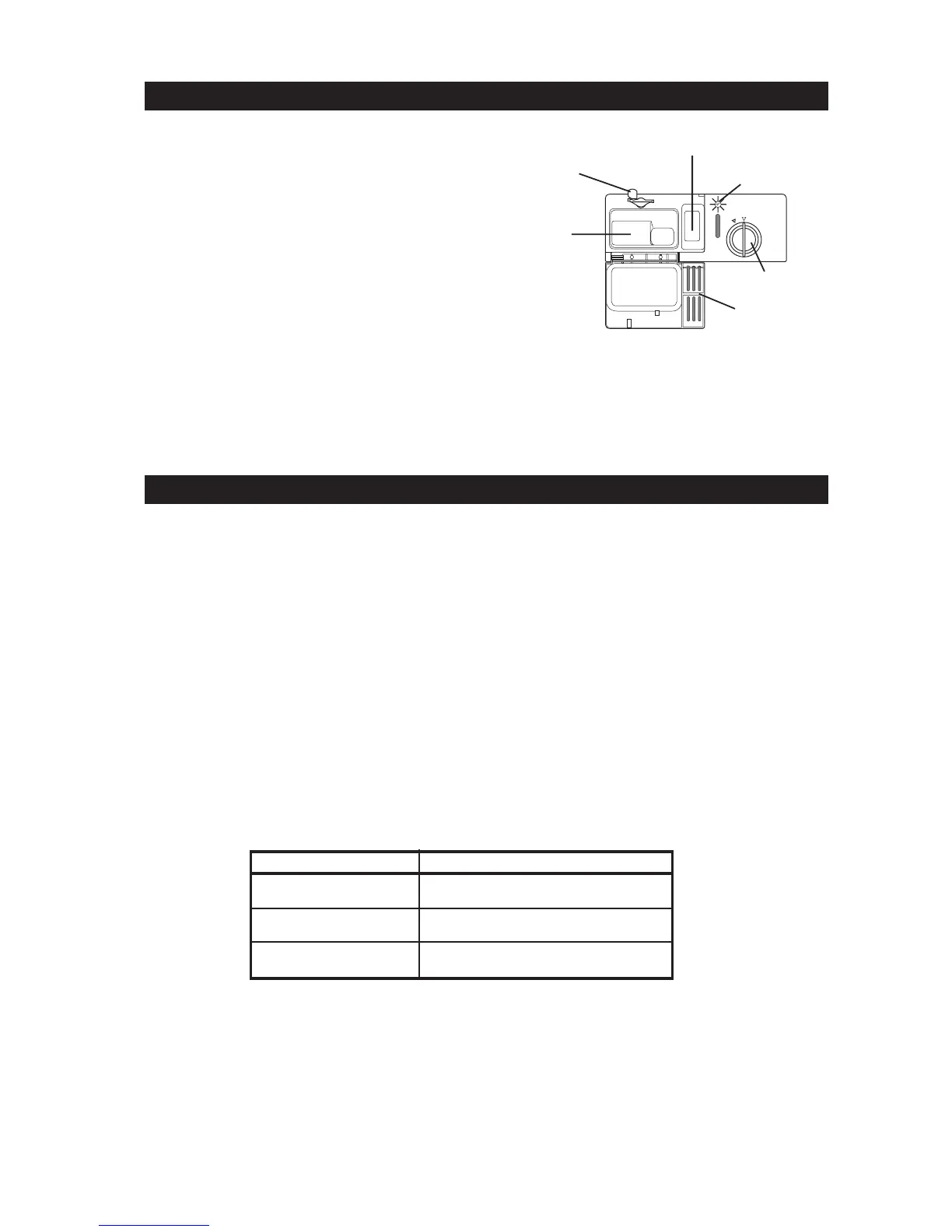
Measure and place detergent for the main wash into the
large detergent compartment. The detergent for prewash
goes into the small compartment to the right of the main
wash compartment. You should use one-half the
amount of detergent for the prewash that you use for the
main wash. The amount of detergent used for the main
wash and prewash combined should never be over
three tablespoons.
Always add the detergent just before starting the
dishwasher, otherwise it could get damp and won’t
dissolve properly.
DETERGENT DISPENSERDETERGENT DISPENSER
DETERGENT DISPENSERDETERGENT DISPENSER
DETERGENT DISPENSER
WARNING!
Dishwasher detergent is corrosive! Take care to
keep it out of reach of children.
Rinse Aid
Compartment
Main Wash
Detergent
Compartment
Prewash Detergent
Compartment
Rinse Aid
Level Indicator
Detergent
Compartment Lid
Dispenser Lid
Lever
DISHWASHING DETERGENTDISHWASHING DETERGENT
DISHWASHING DETERGENTDISHWASHING DETERGENT
DISHWASHING DETERGENT
NOTE: We recommend that you do not add
prewash detergent for the Quick wash
program.
We recommend that you use only unscented, granular
automatic dishwashing detergent. Using the wrong
detergent could cause flooding and/or damage your
dishwasher. Do not use detergent that has been wet
and is clumped. Also, check the expiration date on the
container.
The amount of detergent needed can vary due to
differences in water hardness. To determine the water
hardness in your area, contact your local water utility or
area water softening company. The harder the water,
the more detergent you may need. Refer to the chart
below for the recommended detergent amounts based
on water hardness. Remember, you should adjust the
amount of detergent you use by small amounts until
you find the correct amount.
NOTE: We recommend that you do not add
prewash detergent for the Quick wash
program.
Twelve grains and higher is extremely hard water and
detergent alone may not be enough. You may need to
use a water softener to maximize the performance of
your dishwasher. Also, in areas with extremely hard
water (9+) you may need to wash at lower temperatures
to prevent hard water deposits from forming in tank and
wash system.
In hard water areas, both the dishes and the machine
can develop a white or gray film after a while. This can
be removed by replacing the prewash detergent with
two tablespoons of citric acid. If the water is very hard,
use a rinse aid that contains citric acid.
Different brands of dishwasher detergent have different
amounts of phosphorous for softening water. If you have
hard water and use a detergent with less than 8.7%
phosphorous content, you may need to use more
detergent or use a detergent with more than 8.7%
phosphorous content.
Dishwasher tablets
Break the tablet in two if the dispenser lid is difficult to
close. The detergent may be incorrectly dispensed if
the lid fits too tightly and cannot be opened properly.
3-in-1/ Multi-purpose detergent
Note!
Read the directions for use for such products carefully.
If anything is unclear, contact the detergent
NOTE: If you use a dishwashing detergent with a
rinse aid additive, you should not fill the
rinse aid dispenser. This could cause a film
on your dishes. rinse aid dispenser. This
could cause a film on your dishes.
* 12 grains and higher is extremely hard water.
RECOMMENDED DETERGENT AMOUNTS
BASED ON WATER HARDNESS
1 teaspoon
1 to 1-1/2 tablespoons
1 teaspoon
1 to 2 tablespoons
1 teaspoons
2 to 3 tablespoons
Soft
(0-3 grains per gallon)
Medium
(4-8 grains per gallon)
Hard
(9+ grains*)
Prewash
Main wash
Prewash
Main wash
Prewash
Main wash
DETERGENT AMOUNTS
WATER HARDNESS



 To Next Page