710
KDS
Astec Mobile Screens Maintenance 32 KDS 710
All Conveyors
Be certain to maintain all safety procedures while working on conveyors. Some maintenance
may require conveyors to be running, such as training the belt. Allow only authorized person-
nel to operate the equipment and perform maintenance on the plant.
Training the Belt
Although the belt is trained at the factory, many variations
can cause the belt to become misaligned. The belt should
be running directly down the center of the idlers. Several factors
can effect the way the belt tracks, and depending on the operating
conditions, variations of these factors can occur.
Physical variations can include: alignment of pulleys (head and
tail) and idlers. In rare cases, the squareness of the belt splice can
cause serious variations in the conveyors path.
Operating variations include: the size of load and levelness of belt.
A loaded belt may also run differently than an empty belt. In order
to properly train the belt, reduce the number of both physical and
operating variables.
If the belt needs to be trained use the following procedures. NOTE:
the effects of training the belt will not be immediate. Allow
several complete rotations of the belt before making further
adjustments.
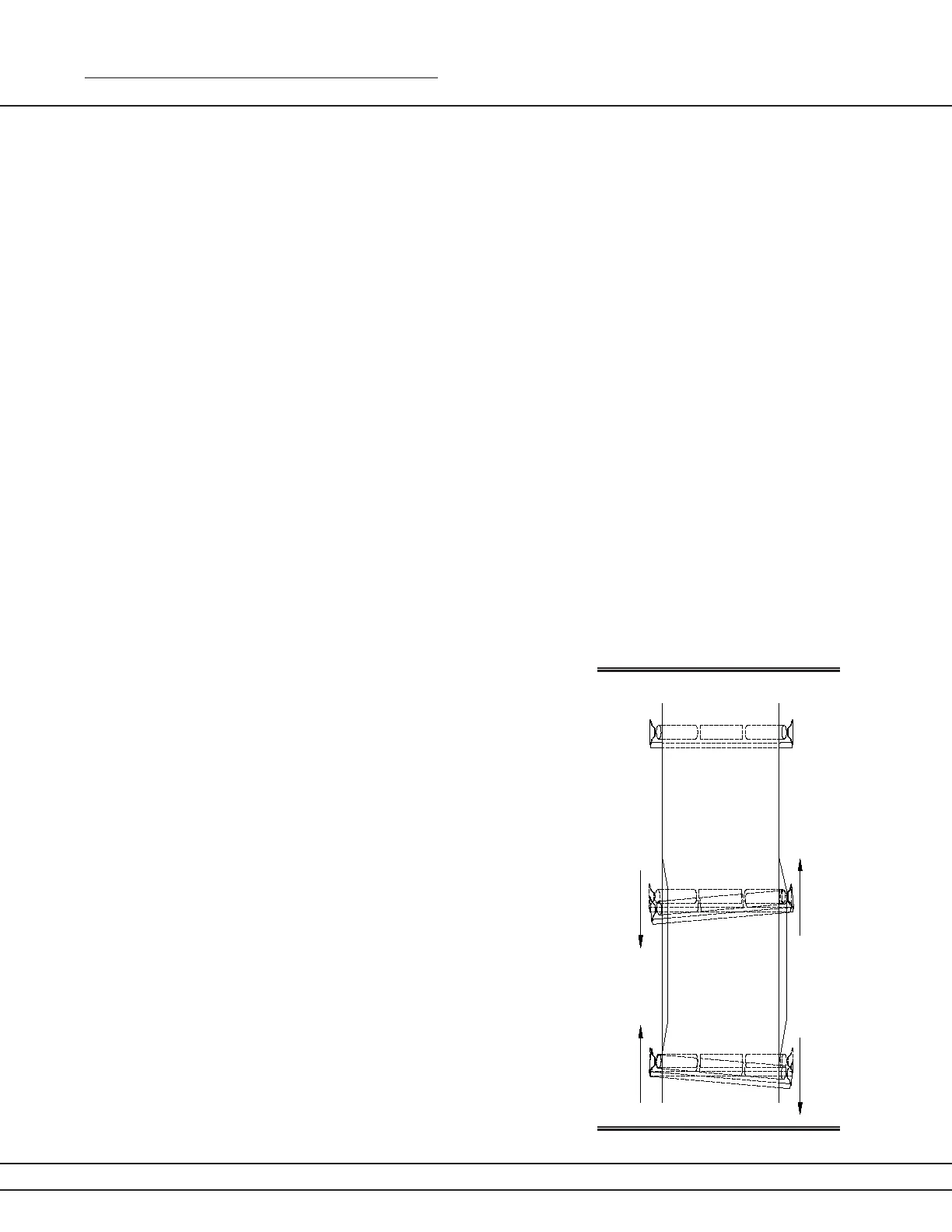
1. Use an accurate steel square to check the idlers. Improperly
aligned idlers are a common cause of belt misalignment. Start
Hydraulic Maintenance
The hydraulic tank uid level should be visible in the sight meter at all times. Do not allow the hydraulic
uid level to fall below this line. If the amount does fall below this line, add uid until visible. Operating the
plant with an insufcient level of hydraulic oil can cause premature wear or damage to equipment.
All motors must have a constant supply of hydraulic oil in order to maintain good running condition.
Damage to hydraulic pumps can occur if hydraulic oil level does not stay within satisfactory levels.
If adding hydraulic oil, be certain to lter the oil before adding it to the hydraulic oil tank. Even new
hydraulic oil contains impurities.
Condensation in the hydraulic tank can occur during certain operating conditions. Keeping the tank
full will minimize the amount of condensation. If excess condensation is detected, drain hydraulic oil
tank and ll will new hydraulic oil.
At certain times, hydraulic oil will need to be replaced. Additionally, the hydraulic oil return lter and
high pressure lter, along with the breather will need to be replaced at certain intervals of operating.
Refer to Appendix A for suitable hydraulic oils and a detailed maintenance schedule.
Figure 32a


 To Next Page
 Loading...