ambience so use screens if the sound of the room isn’t
sympathetic to the instrument.
Every guitar is dierent and its interaction with the room will
also aect the sound to a degree. A hard oor helps maintain a
lively tone so if you have carpet in your recording area, try
placing a sheet of hardboard, ply-wood or MDF on the oor
under the instrument.
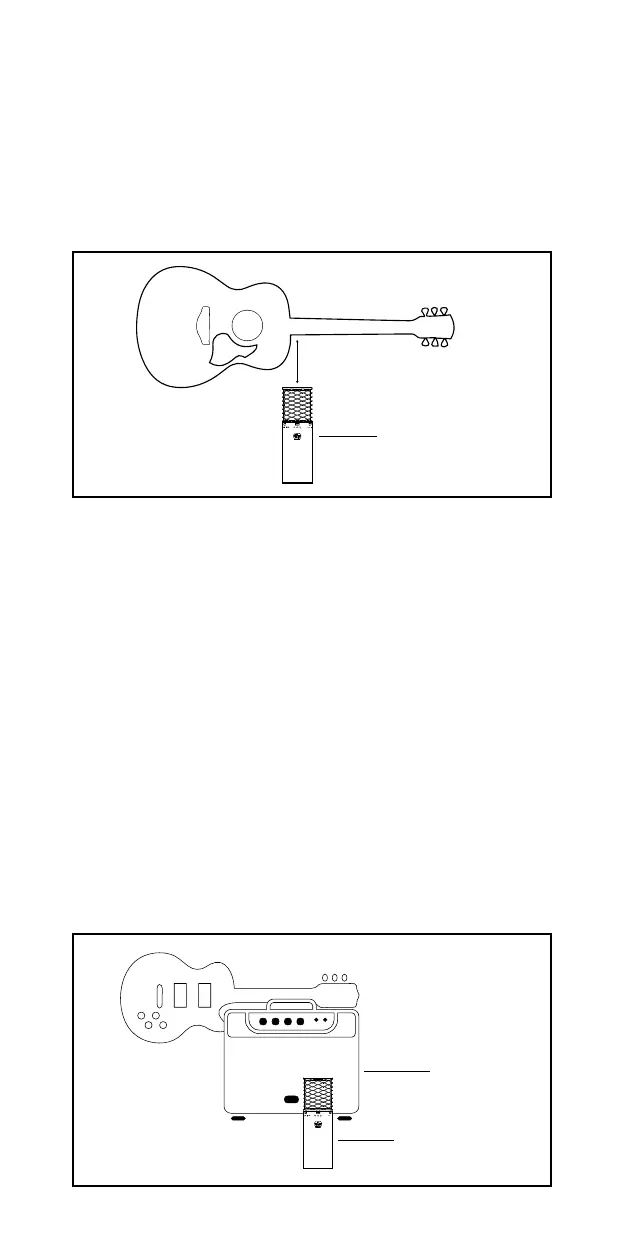
The key to a great sound is experimentation, but a good starting
point is to have your microphone about 200 to 300mm from the
body of your guitar (aimed at the point where the guitar neck
joins the main body), and to listen to the sound you get on good
isolating headphones while moving the body of the guitar in
relation to the mic until you get a sound you like. Isolating
headphones are crucial to this process to eliminate the sound of
the guitar in the room from what you’re hearing.
Electric Guitar
There are many ways to record the electric guitar but the classic
approach is to use a cardioid pattern microphone fairly close
to the amplier’s speaker grille. Some engineers like the mic
to be almost touching the grille while others may back it o by
150mm or more so make a few test recordings and see what
sounds right to you. If there’s too much signal level, use the pad
switch to attenuate the microphone output. The tonality will
also be aected by whether the mic is aimed at the centre of the
speaker or towards the edges, so again experimentation is the key.
Microphone
200-300mm
Spirit
-10dB
0dB
Microphone
Guitar
Amplifier
Spirit
-10dB
0dB
13


 To Next Page
 Loading...