
 Need help?
Do you have a question about the Audiovox Electronics ACA400 and is the answer not in the manual?
Product is for safe driving assistance; driver is responsible for safe operation and passengers.
Warns about high voltage, voiding warranty through improper installation, and excessive force.
Describes the camera's design, mounting advice, and compatibility with monitors via RCA.
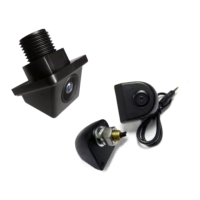
Lists the specific items included in the package for both the ACA400 and ACA500 camera models.
Guidance on choosing the best mounting location and performing pre-drilling checks for obstructions.
Specific steps for drilling holes for ACA400 (22mm) and ACA500 (5/16"), surface prep, and camera mounting.
Instructions for connecting the camera's power wire to the vehicle's reverse lamp and ground.
Details on running the video extension cable and a diagram illustrating the complete camera wiring.
Addresses common problems like no video signal, blurry images, and constant camera power with solutions.
Outlines the 12-month limited warranty, what it covers, exclusions, and the extent of the company's liability.
This document describes the Audiovox ACA400 and ACA500 reverse cameras, providing installation instructions, wiring diagrams, and troubleshooting tips. These cameras are designed to assist drivers by offering a broader rear view when the vehicle is in reverse, thereby enhancing safety during backing maneuvers.
The Audiovox ACA400 and ACA500 are wired reverse cameras intended to integrate with a vehicle's existing monitor or TFT screen. Their primary function is to provide a clear video feed of the area behind the vehicle, which is displayed on a compatible screen in the cabin. This visual aid helps drivers detect obstacles, pedestrians, or other vehicles that might be in their blind spot, reducing the risk of accidents during reversing. The cameras utilize a 1/4" CMOS color sensor to capture high-resolution images, ensuring a clear and detailed view. The compact design, featuring a zinc alloy die-cast body, allows for discreet and secure mounting on various vehicle types, including cars, trucks, and vans.
The cameras are designed for durability and reliability in diverse environmental conditions. They feature a waterproof housing and are rated IP67, indicating strong resistance to dust and water ingress. This ensures continued functionality even when exposed to rain, snow, or car washes. The wide 150-degree view angle provides extensive coverage of the rear area, minimizing blind spots and offering a comprehensive perspective to the driver. With a minimum illumination requirement of less than 0.3 Lux, the cameras are capable of providing a usable image even in low-light conditions, such as at night or in dimly lit parking areas. The operating temperature range of -30°C to +70°C further underscores their robust design, allowing them to perform effectively in extreme hot or cold climates.
The installation process for both the ACA400 and ACA500 models involves careful selection of a mounting location to ensure optimal rear visibility. It is crucial to avoid placing the camera directly next to or under reverse/backup lamps or license plate lamps, as these light sources can "blind" the camera at night, impairing its effectiveness. Before drilling any holes, installers are strongly advised to "ALWAYS CHECK AND DOUBLE CHECK" for obstructions, wires, sensors, or double metal to prevent damage to the vehicle or the camera. The camera should be mounted flush against the surface to ensure proper installation and weatherproofing.
For the ACA400, a 22mm hole saw is provided to create the mounting hole, while the ACA500 requires a 5/16" drill bit. After drilling, any burrs or sharp edges must be carefully removed, and the hole should be coated with rust preventative to protect the vehicle's body. The ACA400 also features double-sided tape on its base for secure insertion into the mounting location. Once the camera is physically installed, the cable connector is routed through the hole, and the camera is inserted. The included hardware is then used to secure the camera in place, with a caution against overtightening.
Wiring the camera involves connecting its power wire to the vehicle's reverse lamp. This typically means locating the reverse lamp in the tail light assembly and attaching the camera's red wire to the positive 12-volt wire of the reverse lamp, ensuring power is supplied only when the vehicle is in reverse gear and the white lamp is illuminated. The black wire is connected to a negative 12-volt ground. An important note is provided regarding a trigger wire: if a trigger wire is needed at the front of the vehicle or if the camera is to be powered from the front, the additional red wire on the video extension cable should be used. It is explicitly stated not to connect this trigger wire to both the reverse lamp and the front power source, as this could cause the reverse lamp to turn on whenever the camera is powered.
The extension cable, which carries the video signal, is then routed from the camera to the monitor's location. The yellow RCA connector on the extension cable is connected to the video input of the monitor. The use of a video cable with RCA type ends is critical for optimal picture quality; using an audio cable for this connection will result in poor image quality.
The Audiovox ACA400 and ACA500 cameras are designed for low maintenance, primarily due to their robust construction and weatherproofing. The IP67 rating ensures that the camera unit itself is well-protected against environmental elements like dust and water, reducing the need for frequent cleaning or protection from the elements.
However, regular visual inspection is recommended to ensure continued optimal performance. Drivers should periodically check the camera lens for any dirt, mud, snow, or debris that might obstruct the view. If the video image appears blurry or unclear, the first troubleshooting step is to clean the camera lens. A soft, damp cloth can typically be used for this purpose, avoiding abrasive materials that could scratch the lens.
Beyond lens cleaning, the manual emphasizes the importance of inspecting the components and cabling regularly for any signs of damage. This includes checking for frayed wires, loose connections, or physical damage to the camera housing or mounting hardware. Any damage to the cabling could lead to signal loss or intermittent operation, while damage to the housing could compromise its waterproof integrity.
In case of troubleshooting issues, such as no video signal appearing while reversing or the camera staying on when not in reverse, the manual directs users to check the wiring connections. This includes verifying the reverse trigger wire connection to the monitor, the rear view camera's wiring connection, and the RCA connection. For issues with video image quality, confirming that a video cable (not an audio cable) was used for the extension is a key step. These checks are generally straightforward and can often be performed by the user or an installer to maintain the camera's functionality. The product's warranty also covers defects in material or workmanship, providing a pathway for repair or replacement if issues arise that are not related to improper installation or misuse.
 General
| Category | Automobile Accessories |
|---|---|
| Manufacturer | Audiovox Electronics |
| Model | ACA400 |
| Waterproof Camera | Yes |
| Night Vision | Yes |
| Type | Backup Camera |
| Camera Mounting | License Plate |

 To Next Page