Need help?
Do you have a question about the AVAIR AV-508 and is the answer not in the manual?
Lists key electrical and physical specifications of the microphone, including output voltage, impedance, and power source.
Details the power switch operation for ON/OFF and the ON AIR indicator LED function for receiving and transmitting.
Explains the PTT switch for short QSOs and the LOCK switch for extended QSOs, including releasing the lock.
Describes the UP/DOWN switches for frequency adjustment and the high-sensitivity ceramic microphone element.
Provides details on the microphone output connector and the pin configuration for interconnecting cables.
Covers the FM/SSB audio quality selector switch and brand-specific selector switches for different transceivers.
Explains output adjustment volume, battery cover installation, and use of external power adaptors.
Highlights safety and operational precautions, including SWR, earthing, power switch usage, and environmental placement.
Details the pinout for standard microphone connectors, identifying functions like PTT, MIC input, and DC power.
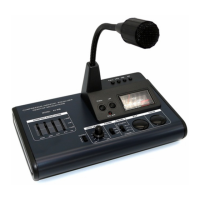
The AVAIR AV-508 is a desktop microphone designed for amateur radio transceivers, offering high-quality audio capture and versatile control features. It incorporates a high-sensitivity condensed microphone element, ensuring clear and improved voice quality for various communication needs, whether whispering or speaking loudly. The microphone is built to maintain a constant voice level, providing consistent audio output regardless of the user's speaking volume.
One of the key features of the AV-508 is its FM/SSB Audio Quality Selector Switch. This switch allows users to optimize the microphone's output for different transmission modes. In FM mode, the microphone produces clear voice quality with wide frequency characteristics, making it suitable for general communication. When switched to SSB (Single Sideband) mode, it delivers sharp and crisp voice quality, which is particularly effective for "DX" (long-distance) communication, where clarity and intelligibility are paramount.
The microphone is equipped with electronic switches for intuitive operation. The POWER SWITCH (1) is used to turn the device on and off. When powered "ON," the "ON AIR" indicator (2) begins to flash, signaling that the microphone is active. Pushing the switch again turns the power "OFF." The "ON AIR" indicator (2) also serves as an LED TX INDICATOR. When the power switch is "ON," this LED flashes to indicate a receiving condition. During transmission, the LED lights up continuously, providing a clear visual cue that the microphone is actively transmitting.
For controlling transmission, the AV-508 features a PTT (Push-To-Talk) SWITCH (3) and a LOCK SWITCH (4). The PTT Switch (3) is designed for short-duration QSOs (conversations). Users push it to transmit (TX) and release it to receive (RX). This switch also functions to release the "LOCK" switch. For longer transmissions, the LOCK SWITCH (4) is used. When pushed, the "ON AIR" indicator lights up continuously, indicating that the microphone is locked into transmit mode. To return to receiving mode, the PTT Switch (3) must be pushed.
The microphone also includes UP/DOWN SWITCHES (5), which are used for frequency adjustment. These switches allow users to increase or decrease the frequency of their transceiver, providing convenient control directly from the microphone. For detailed instructions on their use, users are advised to refer to the manual of their specific transceiver.
At the heart of the AV-508's audio performance is its CONDENSED MIC. (6), a high-sensitivity ceramic microphone. This component is specifically chosen for its ability to deliver clear and superior voice quality, enhancing the overall communication experience.
For connectivity, the microphone features a MIC OUTPUT CONNECTOR (7). Users are required to use a suitable interconnecting cable, which is available separately, to connect the microphone to their transceiver. The manual provides pin connection information for the microphone output connector, ensuring correct wiring. The AV-508 is compatible with various amateur radio transceivers, and specific cable models are recommended for KENWOOD (AV-24K, AV-73K/I), ICOM (AV-24I, AV-73K/I), and YEASU (AV-24Y, AV-73Y) devices.
An important control for audio output is the OUTPUT ADJUSTMENT VOLUME (10). This feature allows users to fine-tune the microphone's output voltage. The device is factory-adjusted to provide a 10mV RMS output voltage. If adjustment is needed, users can carefully turn the slot of a variable resistor using a 3mm wide screwdriver. Turning it clockwise increases the output. It is crucial to perform this adjustment with the Compressor Level Switch (9) set to the "HIGH" position for accurate calibration.
The AV-508 also includes a SELECTOR SWITCH FOR DIFFERENT BRAND (9), which simplifies compatibility with various transceiver brands. This switch has options for "KENWOOD/YAESU" (for KENWOOD or YAESU transceivers) and "ICOM" (for ICOM ONLY), ensuring proper electrical interfacing with the selected brand.
Powering the microphone is achieved via a BATTERY COVER (11). Users can remove this cover to insert two UM3 batteries into the designated space. It's important to note that the batteries are not included with the microphone. The microphone operates on DC3V power.
Maintenance and usage considerations are also outlined. When using an external power adapter, it is recommended to use the AVAIR PS-3 external power adapter, which is optionally available, to ensure proper operation. Users should be cautious about high SWR (Standing Wave Ratio) of the antenna and incomplete earthing, as these factors can lead to RF feedback noise, depending on the coaxial cable layout. To conserve power and prevent issues, it is advised to turn the power switch "OFF" after each QSO. For long-term storage, specifically if the microphone will not be used for more than three months, it is better to remove the batteries to prevent leakage or damage. Finally, to ensure the longevity and proper functioning of the microphone, it should not be placed near high-temperature areas or under direct sunlight.
The microphone's internal components include a ceramic microphone, one IC, eleven transistors, and six diodes. It has an output voltage range of 0-30mV (RMS) and an output impedance of 500-100k ohms. The compressor level can be set to 45dB (HIGH) or 10dB (LOW), offering flexibility in managing audio dynamics. The power consumption is minimal, drawing 2mA in RX mode and 3mA in TX mode.
 General
| Type | Condenser |
|---|---|
| Polar Pattern | Cardioid |
| Impedance | 200 ohms |
| Connector | XLR |
| Max SPL | 130dB (at 1kHz ≤ 1% T.H.D) |
| Power Supply | 48V Phantom Power |

 To Next Page