EasyManua.ls Logo

Avanti 64933 - User Manual

Avanti 64933
19 pages
Print Icon
To Next Page IconTo Next Page
Loading...
!"#"$%&'(%)*+#"$*%,$-%.$$/-00)))1.,(+&(2(*"3.$14&5
65,"7%&'(%$*4.8"4,7%#'//&($%,$-%/(&9'4$#'//&($:.,(+&(2(*"3.$14&5
Owners Manual & Safety Instructions
Save This Manual Keep this manual for the safety warnings and precautions, assembly,
operating, inspection, maintenance and cleaning procedures. Write the product’s serial number in the
back of the manual near the assembly diagram (or month and year of purchase if product has no number).
Keep this manual and the receipt in a safe and dry place for future reference. 21b
When unpacking, make sure that the product is intact
and undamaged. If any parts are missing or broken,
please call 1-888-866-5797 as soon as possible.
Copyright
©
2018 by Harbor Freight Tools
®
. All rights reserved.
No portion of this manual or any artwork contained herein may be reproduced in
any shape or form without the express written consent of Harbor Freight Tools.
Diagrams within this manual may not be drawn proportionally. Due to continuing
improvements, actual product may differ slightly from the product described herein.
Tools required for assembly an d se rv ic e may n ot b e in cl uded.
Read this material before using this product.
Failure to do so can result in serious injury.
SAVE THIS MANUAL.
NOTICE
;<6=>%?@@6A?=B6<C
;7*,8%$.*%D/(,E%F'8%
?@@6A?=B6<C%,2$*(%6!6GC%
'#*%,89%).*8%"$%)"77%+*%"97*%
2&(%5&(*%$.,8%HI%5"8'$*#1
A*7,E*9%&(%"8,9*J',$*%
47*,8"83%)"77%/*(5,8*8$7E%
47&3%$.*%D/(,E%F'81
Question and Answer IconNeed help?

Do you have a question about the Avanti 64933 and is the answer not in the manual?

Summary

Warning Symbols and Definitions

Important Safety Instructions

Personal Safety

Guidelines for staying alert, dressing properly, and maintaining balance while operating the tool.

Tool Use and Care

Service and Maintenance

Specific Safety Instructions

Symbol Definitions

Grounding and Electrical Safety

Double Insulated Tools

Explanation of tools with double insulation and their plug types, suitable for grounded or ungrounded outlets.

Extension Cord Selection

Guidance on selecting and using appropriate extension cords based on gauge, length, and tool amperage.

Specifications

Set-Up: Before Use

Assemble Spray Gun

Instructions for correctly aligning and attaching the Spray Gun Handle to the Spray Gun Body.

Attach Casters

Procedure for attaching the swivel casters to the front and back of the sprayer unit.

Additional Setup Steps

Attach Storage Hook

Steps for attaching the storage hook to the sprayer handle.

Attach Air Hose

Procedure for connecting the air hose to the sprayer unit.

Adjust Handle

Instructions on how to adjust the sprayer's handle for user comfort.

Components Overview

Sprayer Model Components

1.0 mm Sprayer Components

Details components specific to the 1.0 mm sprayer model.

3.0 mm Sprayer Components

Details components specific to the 3.0 mm sprayer model.

Operating Instructions

Workpiece and Work Area Setup

Steps for preparing a clean, well-lit workspace and masking surrounding areas.

Spray Gun Setup and Adjustment

Steps for setting up and adjusting the spray gun before operation.

Material Preparation and Filling

Instructions for straining and checking the viscosity of paint materials before filling the cup.

Spraying Adjustments and Testing

Fan Pattern Adjustment

Explains the process of identifying and adjusting spray patterns.

Test Spray Procedure

Guidance on performing test sprays to check consistency and make adjustments.

Spraying Technique

Correct Gun Angle

Demonstrates proper gun angle and movement to achieve even spray application and avoid clogs.

Paint Stroke Triggering

Explains the correct way to depress and release the trigger for smooth paint application and build-up prevention.

Cleaning and Waste Disposal

Cleaning After Every Use

Instructions for cleaning the spray gun and cup immediately after each use.

Waste Disposal Guidelines

Guidelines for safely disposing of cleaning solvents and waste materials according to regulations.

User-Maintenance Instructions

Tool Inspection

Checklist for inspecting the tool's general condition before each use for safety and proper operation.

Tool Storage

Instructions for storing the tool in a dry, secure area away from children.

Air Filter Maintenance

Troubleshooting - Spray Pattern Diagnosis

General Troubleshooting

Summary

Warning Symbols and Definitions

Important Safety Instructions

Personal Safety

Guidelines for staying alert, dressing properly, and maintaining balance while operating the tool.

Tool Use and Care

Service and Maintenance

Specific Safety Instructions

Symbol Definitions

Grounding and Electrical Safety

Double Insulated Tools

Explanation of tools with double insulation and their plug types, suitable for grounded or ungrounded outlets.

Extension Cord Selection

Guidance on selecting and using appropriate extension cords based on gauge, length, and tool amperage.

Specifications

Set-Up: Before Use

Assemble Spray Gun

Instructions for correctly aligning and attaching the Spray Gun Handle to the Spray Gun Body.

Attach Casters

Procedure for attaching the swivel casters to the front and back of the sprayer unit.

Additional Setup Steps

Attach Storage Hook

Steps for attaching the storage hook to the sprayer handle.

Attach Air Hose

Procedure for connecting the air hose to the sprayer unit.

Adjust Handle

Instructions on how to adjust the sprayer's handle for user comfort.

Components Overview

Sprayer Model Components

1.0 mm Sprayer Components

Details components specific to the 1.0 mm sprayer model.

3.0 mm Sprayer Components

Details components specific to the 3.0 mm sprayer model.

Operating Instructions

Workpiece and Work Area Setup

Steps for preparing a clean, well-lit workspace and masking surrounding areas.

Spray Gun Setup and Adjustment

Steps for setting up and adjusting the spray gun before operation.

Material Preparation and Filling

Instructions for straining and checking the viscosity of paint materials before filling the cup.

Spraying Adjustments and Testing

Fan Pattern Adjustment

Explains the process of identifying and adjusting spray patterns.

Test Spray Procedure

Guidance on performing test sprays to check consistency and make adjustments.

Spraying Technique

Correct Gun Angle

Demonstrates proper gun angle and movement to achieve even spray application and avoid clogs.

Paint Stroke Triggering

Explains the correct way to depress and release the trigger for smooth paint application and build-up prevention.

Cleaning and Waste Disposal

Cleaning After Every Use

Instructions for cleaning the spray gun and cup immediately after each use.

Waste Disposal Guidelines

Guidelines for safely disposing of cleaning solvents and waste materials according to regulations.

User-Maintenance Instructions

Tool Inspection

Checklist for inspecting the tool's general condition before each use for safety and proper operation.

Tool Storage

Instructions for storing the tool in a dry, secure area away from children.

Air Filter Maintenance

Troubleshooting - Spray Pattern Diagnosis

General Troubleshooting

Overview

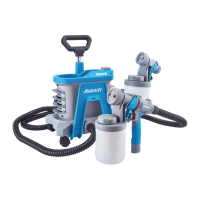
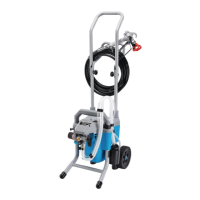
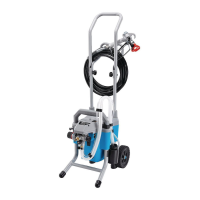
The Avanti Portable HVLP Paint & Stain Sprayer, model 64933, is a household-use-only tool designed for applying water-based or oil-based low viscosity paints, stains, and varnishes. It is a double-insulated device, meaning it does not require grounding and can be used with either two or three-wire extension cords.

Function Description:

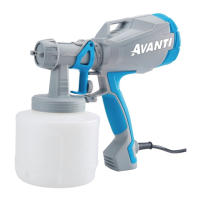
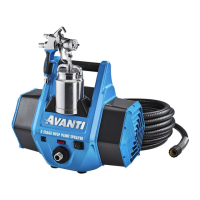
The sprayer utilizes High Volume Low Pressure (HVLP) technology to atomize and apply coating materials. It consists of a main unit housing the power/airflow switch, hose storage, and a viscosity cup storage slot, connected via an air hose to a spray gun. The spray gun itself features a cup for holding the material, an air cap, a lock ring, a spray width adjustment knob, a fan pattern adjustment ring, a trigger, and a fluid control knob. The device is designed for ease of use with adjustable settings for spray pattern, fluid control, and airflow, allowing for customized application based on the material and desired finish.

Important Technical Specifications:

  • Electrical Rating: 120VAC/60Hz/8.5A
  • Cup Capacity:
    • 1.0mm Finish Sprayer: 32 fl. oz.
    • 3.0mm Paint Sprayer: 48 fl. oz.
  • Sprayer Types: The manual details two primary sprayer configurations: a 1.0mm sprayer for thin materials like stain, and a 3.0mm sprayer for thicker materials such as latex paint, which typically requires thinning.
  • Extension Cord Compatibility: The manual provides a detailed table for recommended minimum wire gauge for extension cords based on nameplate amperes and length, ensuring proper power delivery and preventing tool damage. For outdoor use, extension cords marked with "W-A" (or "W" in Canada) are recommended.

Usage Features:

  • Assembly: The spray gun handle attaches to the body with a clockwise turn and secures with a clip. Casters (two locking swivel casters for the front/air outlet side and two swivel casters for the back/power cord side) are attached for mobility. The air hose connects to both the main unit's air outlet and the spray gun's air inlet, secured by lining up tabs to grooves and turning clockwise. The handle height is adjustable by pressing a button.
  • Material Preparation: Users must strain materials through a paint strainer or cheesecloth and check viscosity using the included viscosity cup. Recommended viscosity times are provided: < 50 seconds for 1.0mm sprayer and < 100 seconds for 3.0mm sprayer for water-based paint, primer, oil-based paint, varnish, sealer, and wood stain. Materials should be thinned according to manufacturer directions if necessary. The cup should be filled no higher than the 32 oz. mark for the 1.0mm sprayer and the 48 oz. mark for the 3.0mm sprayer.
  • Adjustments:
    • Fan Pattern: For the 3.0mm sprayer, the air cap can be turned to select cone, horizontal, or vertical patterns, then locked with the lock knob. For the 1.0mm sprayer, the fan pattern adjustment ring is turned.
    • Fluid Control: The fluid control knob adjusts material flow; clockwise for more, counterclockwise for less.
    • Airflow: The airflow control knob adjusts air volume; clockwise for maximum, counterclockwise to reduce overspray.
    • Spray Width: The spray width knob adjusts the width of the spray pattern; right to increase, left to decrease.
  • Spraying Technique: The manual emphasizes maintaining a correct gun angle (upright and at a right angle to the workpiece), moving the arm rather than just the wrist, and keeping a consistent distance (2" to 12") from the workpiece. It advises applying two thin coats rather than one thick coat, overlapping 1/3 to 1/2 on the second coat. To prevent paint buildup, users should start moving the spray gun before fully depressing the trigger and release the trigger while still moving the spray gun after passing the workpiece. Keeping the cup half-filled is recommended to prevent spattering.

Maintenance Features:

  • Immediate Cleaning (Crucial): The most critical maintenance instruction is to clean the spray gun body and cup IMMEDIATELY after EVERY use and when it will be idle for more than 30 minutes. Delayed or inadequate cleaning will permanently clog the spray gun, especially with water-based paints that harden quickly.
  • Cleaning Procedure:
    1. Unplug the unit and designate a waste container.
    2. Loosen the lid to relieve pressure, remove the cup, and scrape excess paint back into its container.
    3. Fill the cup 1/4 full with solvent (water for water-based materials, mineral spirits for oil-based), replace the cup, shake the spray gun for several seconds, then pour solvent into the waste container and wipe the cup clean. Repeat this process until the cup is clean.
    4. Fill the cup 1/4 full with solvent, plug in the unit, and spray solvent into the waste container while shaking the gun slightly until clean solvent comes out.
    5. Unplug the unit, separate the spray gun handle from the body, and remove the cup, suction tube, lid, check valve, lock ring, air cap, and nozzle.
    6. Inspect and soak parts in solvent, using brushes and toothpicks (not metal objects) to remove paint.
    7. Wipe down the spray gun body with a clean cloth and solvent.
    8. Ensure all parts are dry and free from residual paint before reassembling.
    9. Important: Do not use any lubricant, as it will mix with paint and cause poor results.
  • Air Filter Maintenance: The air hose is removed, and air inlet covers (left side, right side, bottom) and filters (A, B, C) are removed. Filters are inspected, and if necessary, washed in warm water with mild detergent, rinsed, squeezed dry, and reinstalled.
  • Troubleshooting: The manual includes detailed troubleshooting charts for spray pattern diagnosis (heavy/light center, heavy top/bottom, right/left only, jerky/fluttering spray) and general issues (sputtering, not spraying, overspray). Solutions often involve adjusting knobs, thinning paint, cleaning parts (air cap, nozzle, check valve), tightening connections (lock ring, cup, lid, air cap), or refilling the paint cup.
  • Storage: The device should be stored in a dry, secure area out of reach of children.
  • Safety during Maintenance: Always disconnect the air supply before performing any inspection, maintenance, or cleaning procedures. Do not use damaged equipment.

Avanti 64933 Specifications

General IconGeneral
BrandAvanti
Model64933
CategoryPaint Sprayer
LanguageEnglish

Related product manuals