This document serves as a user manual for AvaValley Wine Refrigerators, providing comprehensive information on their function, installation, operation, maintenance, and troubleshooting. The manual covers various models, including single and dual temperature units, with options for glass doors, solid drawers, and different shelving types.
Function Description:
AvaValley Wine Refrigerators are designed to store wine and beverages at optimal temperatures. They feature precise temperature control for single or dual zones, allowing users to create ideal conditions for different types of wine. The units are equipped with reversible hinges for flexible installation, removable shelves for customizable storage, and internal LED lighting for visibility. Some models offer solid drawers for additional storage or specific beverage types. The refrigerators utilize a refrigerant system to maintain consistent internal temperatures, with a defrost system to prevent ice buildup.
Important Technical Specifications:
The manual lists several models with varying capacities and configurations:
- Single Glass Door Models:
- #342WRC20SZ: 20 Bottles
- #342WRC32SZ: 32 Bottles
- #342WRC46SZ: 46 Bottles
- #342WRC128SZ: 128 Bottles
- #342WRC165SZ: 165 Bottles
- #342WRC220SZ: 220 Bottles
- Single Solid Drawer Models:
- #342BRC52SZ: 52 Cans
- #342BRC78SZ: 78 Cans
- #342BRC84SZ: 84 Cans
- Dual Solid Drawers Model:
- Dual Temperature Glass Door Models:
- #342WRC20DZ: 17 Bottles
- #342WRC32DZ: 32 Bottles
- #342WRC46DZ: 46 Bottles
- #342WRC128DZ: 128 Bottles
- #342WRC165DZ: 165 Bottles
- #342WRC220DZ: 220 Bottles
- Dual Glass Doors Models:
- #342WBRC20DZ: 20 Bottles/51 Cans
- #342WBRC32DZ: 32 Bottles/126 Cans
- Glass Door/Solid Drawer Combo Model:
- #342DSR20DZ: 22 Bottles/70 Cans
The units use a flammable refrigerant and require trained service personnel for repairs. Electrical specifications include the requirement for a dedicated, grounded, and properly-sized electrical outlet. The unit operates with coils kept below 32°F (0°C) and utilizes an evaporator fan for defrosting.
Usage Features:
- Installation: The manual provides detailed instructions for installation, emphasizing the importance of a temperature-controlled environment (between 75°F and 60% relative humidity) and proper ventilation. It recommends maintaining a minimum of 4 inches of clearance between products and the fan. The unit should be placed on a strong, level surface, away from direct sunlight and heat sources.
- Changing Door Swing Direction: A step-by-step guide with illustrations is provided for reversing the door swing, requiring a Phillips head screwdriver, utility knife, and a soft surface. This involves removing hinges, the glass door, and the stop plate, then reattaching them on the opposite side.
- Temperature Adjustment: The digital controller allows users to adjust the temperature. The controller locks after 10 seconds of inactivity and can be unlocked by holding the unlock button for 5 seconds. Temperature can be set in 1°F or 1°C increments. Each cooling compartment in dual-zone models is independently controlled. The unit retains previous temperature settings after a power interruption.
- Celsius & Fahrenheit Switch: A dedicated button allows switching the temperature display between Celsius and Fahrenheit.
- Interior Light: The internal LED lighting can be turned on or off using a dedicated light button.
- Loading Product: To optimize storage, bottles should be spread evenly across shelves, avoiding concentration of weight. Bottles should not touch the back of the cabinet or the bottom step. For maximum capacity, bottles can be laid face forward and staggered with another row facing back. Larger bottles may affect maximum capacity. Users are advised not to pull out more than one sliding shelf at a time.
- Safety Information: The manual highlights several safety precautions, including avoiding overloading outlets, not using extension cords, keeping hands away from moving parts, unplugging the unit before maintenance, and waiting 10 minutes after unplugging before plugging it back in to prevent compressor damage. It also warns against storing flammable and explosive materials inside the unit.
Maintenance Features:
- Cleaning:
- Fan Blades & Motor: Clean fan blades and motor with a soft cloth. For more thorough cleaning, use a damp cloth to clean the fan blades, ensuring the fan motor is protected from moisture.
- Interior: Use warm water and a mild soap to clean the interior. Do not use steel wool, caustic soap, abrasive cleaners, or bleach. Door gaskets should be washed regularly with mild soap and water, and checked for proper seal after cleaning. Removable shelves and shelf brackets should be periodically removed and cleaned.
- Condenser Coil: A dusty condenser may lead to high energy consumption and compressor damage. The condenser coil should be cleaned at least once per month. Instructions for cleaning the condenser coil involve disconnecting power, removing the front cover and base cover, using a soft brush/vacuum to remove dirt, and then reassembling.
- Defrost System: The unit features an automatic defrost system. During compressor downtime, the evaporator fan circulates air, raising the coil temperature above freezing point and melting accumulated frost. Run-off water is drained into an evaporator pan and evaporated.
- Troubleshooting Guide: The manual includes a troubleshooting section that lists common problems, possible causes, and corresponding solutions. This covers issues such as the compressor not running, units running for long periods, cabinet temperature being too warm, condensation, and interior light not working. Solutions range from checking power cords and thermostat settings to cleaning the condenser coil, defrosting the evaporator coil, and replacing bulbs. For low refrigerant levels, contacting a service technician is recommended.

 Need help?
 General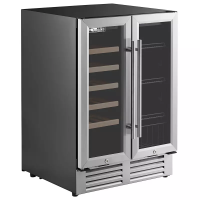

 To Next Page