
 Need help?
Do you have a question about the AVG ARBM188WE and is the answer not in the manual?
This document describes the AVG ARBM188WE & ARBM188SE bottom mount refrigerators, providing guidance on installation, usage, and maintenance.
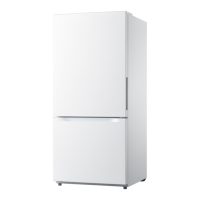
The AVG ARBM188WE & ARBM188SE refrigerators are designed for domestic use, offering a combined refrigeration and freezing solution. They feature a bottom-mount freezer compartment and an upper refrigerator compartment. The appliance is equipped with a self-defrosting system for the refrigerator section, eliminating the need for manual defrosting. The freezer compartment is also designed for frost-free operation.
The refrigerator is designed to store a variety of foods, including fruits, vegetables, beverages, and other items, for short-term consumption. The freezer compartment is suitable for storing frozen foods for extended periods. The appliance incorporates a temperature control panel that allows users to adjust the temperature settings for both the refrigerator and freezer compartments. An alarm function is included to alert users to an open door or a temperature anomaly.
The refrigerator has a total height of 1686 mm (66.4 inches), a width of 750 mm (29.5 inches), and a depth of 720 mm (28.34 inches) for the cabinet. The depth including the door is 800 mm (31.5 inches), and with the door open at 90 degrees, the depth extends to 1464 mm (57.64 inches).
The appliance operates on a 115V / 60Hz AC power supply. It uses ISOBUTENE (R600a) as a refrigerant, which is an environmentally compatible natural gas, but is combustible and explosive. Therefore, proper ventilation and installation are crucial.
The temperature control system includes LED indicators for various functions and error codes. The refrigerator temperature can be set to 8°C, 4°C, or 2°C, while the freezer temperature can be set to -16°C, -19°C, or -24°C. The display panel shows the current temperature settings and alerts for "ALARM OFF" or "FREEZER" status.
The appliance requires specific clearances for proper ventilation and operation. A minimum of 25.4 mm (1 inch) of clearance is needed on both sides, and 50.8 mm (2 inches) at the rear of the appliance. This ensures adequate air circulation and cooling efficiency.
Installation: Before connecting the appliance, it is essential to allow the refrigerant to flow back to the compressor for at least 2 hours. The refrigerator should be placed on a level and strong enough floor to support its weight and contents. It should be located away from direct sunlight, heat sources (like stoves or radiators), and areas with extreme cold ambient temperatures to prevent power consumption issues. A properly grounded electrical outlet is required.
Temperature Control: Users can adjust the refrigerator temperature by pressing the "Fridge" control button (B) and the freezer temperature by pressing the "Freezer" control button (C). The display will show the selected temperature. An "ALARM OFF" button (A) is available to silence alarms, such as those for an open door or temperature fluctuations.
Food Storage: The refrigerator compartment includes glass shelves, vegetable crispers, and door bins for organized storage. The freezer compartment has drawers for different types of frozen foods. It is recommended to store raw meat and fish on the lowest shelf to prevent cross-contamination. Cooked foods should be covered. Ample space should be left around food items to allow for proper air circulation.
Door Reversal: The appliance allows for door reversal, enabling users to change the door's opening direction to suit their kitchen layout. This process involves removing the top hinge cover, unscrewing hinges, detaching the door, and reinstalling components on the opposite side.
Energy Saving Tips: To optimize energy efficiency, users are advised to avoid opening the door too often, ensure the unit is sufficiently ventilated, set the thermostat to the middle position, allow hot foods to cool before placing them in the refrigerator, and organize food to minimize door opening times.
Cleaning: Regular cleaning of the interior and exterior of the appliance is recommended. The interior can be cleaned with a solution of baking soda and lukewarm water, using a soft sponge or cloth. Shelves and bins should be removed for thorough cleaning. The exterior can be wiped with a soft, damp cloth. It is important to avoid using abrasive cleaners or solvents.
Defrosting: The appliance features a self-defrosting system, so manual defrosting is generally not required. However, any frost buildup in the freezer should be removed with a soft towel.
Troubleshooting: The manual provides a comprehensive troubleshooting guide for common issues such as the appliance not functioning, odors, compressor operation problems, light not working, door not closing properly, and unusual noises. It offers solutions like checking power supply, ensuring proper food storage, verifying door seals, and levelling the appliance. For more complex issues, contacting authorized service personnel is recommended.
Lamp Replacement: If the internal lamp needs replacement, it is advised to contact an authorized service center or professionals.
Disposal: The appliance should be disposed of in an environmentally friendly manner, following local and regional regulations. It should not be treated as household waste. This involves recycling and collection systems for proper disposal.
Warranty: AVG products come with a ONE YEAR limited warranty from the original delivery date, covering repairs and replacement of parts due to manufacturing defects. The warranty does not cover damages from misuse, improper installation, rust, food loss due to freezer failure, or cosmetic issues. It is important to register the product and keep proof of purchase.
 General
| Brand | AVG |
|---|---|
| Model | ARBM188WE |
| Category | Refrigerator |
| Language | English |

 To Next Page