The B&G V20S Fixed Mount VHF is a marine radio designed to facilitate search and rescue, offering a range of features for communication and safety at sea.
Function Description
The V20S is a digital maritime distress call (DSC) VHF radio. It provides a reliable means of communication for vessels, supporting both voice communication and digital selective calling for distress, urgency, safety, and routine calls. The device is designed to be user-friendly, with a clear display and intuitive menu navigation. It integrates GPS functionality, allowing for automatic transmission of position data during distress calls. The radio supports various channel banks, including USA, Canada, and International, and offers dedicated weather channels where available.
Key functions include:
- Prominent channel display: Easy visibility of the active channel.
- Built-in GPS receiver and antenna: For accurate position reporting.
- External GPS antenna connection: For enhanced GPS performance.
- Adjustable contrast settings for the LCD: Optimizes display visibility.
- Adjustable keypad backlighting: For use in low-light conditions.
- Waterproof and submersible: Rated to IPX7 for durability in marine environments.
- GPS latitude and longitude (LL) and time display: When connected to a GPS source.
- Choice of High (25 W) or Low (1 W) transmission power: For optimal communication range and power efficiency.
- 4 key handset mic with built-in speaker: For convenient operation.
- Powerful 4 W external audio output: Ensures clear audio.
- Access to all currently-available marine VHF channel banks: USA, Canada, International, including weather channels where available (model dependent).
- Dedicated CH16/9 key: For quick access to the priority (international distress) channel.
- TRI key to select DUAL/TRI scan: For monitoring multiple channels.
- Dedicated Wx (Weather) key: For quick access to weather channels.
- DSC (Digital Selective Calling) capability: Meets Global DSC Class D Standards.
- Separate CH70 receiver: Built-in for continuous DSC watch.
- DISTRESS call button: Automatically transmits MMSI and position data upon acknowledgment.
- Contacts list: Stores up to 50 names with MMSI numbers.
- MMSI storage: For three favourite groups.
- Group Call and All Ships Call facility: For broad communication.
- LL position polling information: Allows requesting position from other vessels.
- Weather alert facility: Available where supported (US mode).
- ATIS facility: For inland waterways (EU mode).
- DSC Auto-Switch: Disables and enables DSC test function.
The device supports various DSC call types, including individual, group, all ships, position request, and position report calls. It also includes a "Track Buddy" feature to track up to 5 vessels from the contacts list, sending recurring position requests at an adjustable time interval.
Important Technical Specifications
General:
- Power supply: 12 V DC battery system
- Nominal operating voltage: + 13.6 V DC
- Low battery alert: 10.5 V DC +/- 0.5 V
- Over voltage protection: > 15.8 V +/- 0.5 V
- Current drain (Transmit): ≤ 6 A @ 25 W / 1.5 A @ 1W (12 V DC)
- Current drain (Receive): Less than 450 mA in standby
- Replacement Fuse: 8 A, Glass type 3 AG; 32 mm (1.25")
- Temperature range: -20 °C to +55 °C (-4 °F to 131 °F)
- Usable channels: International, USA, Canada, Weather (country specific)
- Mode: 16K0G3E (FM) / 16K0G2B (DSC)
- DSC mode: Class D (Global) with dual receiver (individual CH70)
- Standards - EU: EN60950-1, IEC 60529, EN 60945, EN 301 843-1 V2.1.1, EN301 843-2 V2.1.1, EN 301 025 V2.1.1, EN 300 698 V2.1.1
- Standards - US/CAN: FCC Part 80, RSS-Gen Issue 4, RSS-182 Issue 5
- Standards - INT: AS/NZS 4415.1:2003
- Frequency range (Transmitter): 156.025 - 157.425 MHz
- Frequency range (Receiver): 156.050 - 163.275 MHz
- Channel spacing: 25 kHz
- Frequency stability: ± 5 ppm
- Frequency control: PLL
Physical:
- LCD display (viewing): 42 mm x 34 mm (1.65"x 1.3"), FSTN
- Contrast control: Yes
- Backlight control: Yes
- VHF antenna connector: SO-239 (50 ohm)
- GPS antenna connector: SMA (female)
- Waterproof: IPx7
- Dimensions: W=166.7 mm (6.56") x H=89.2 mm (3.5") x D=161.4 mm (6.35") - without bracket
- Weight: 1.18 kg (2.6 lbs)
- Compass safe distance: 0.5 m (1.5')
- NMEA 0183 port: Yes
- NMEA 0183 input: RMC, GGA, GLL, GNS
- NMEA 0183 output: Yes, DSC (for DSC call), DSE (for enhanced position)
- NMEA 2000 port: Yes
- External speaker: Yes
Transmitter:
- Frequency error: ≤± 1.5 KHz
- Output power: 25 W (23 ± 2) / 1 W (0.8 ± 0.2)
- Transmitter protection: Open / short circuit of antenna
- Max Frequency deviation: ≤± 5
- Spurious & harmonics Hi/Lo: ≤ 0.25 µW
- Modulation Distortion ±3KHz: ≤ 10 %
- S/N at 3KHz Deviation: ≥ 40 dB
- Audio Response at 1KHz: +1 to -3dB of 6 dB/octave from 300 hz to 3 KHz
- DSC TX deviation at 1.3K: 2.6 ± 0.26 KHz
- DSC TX deviation at 2.1K: 4.2 ± 0.42 KHz
- ATIS TX deviation at 1.3 KHz: 1.3 ± 0.13 KHz
- ATIS TX deviation at 2.1 KHz: 2.1 ± 0.21 KHz
Receiver:
- 12dB SINAD sensitivity: 0.25 µV (distant) / 0.8 µV (local)
- 20db SINAD sensitivity: 0.35 µV
- Adjacent CH selectivity: more than 70 db
- Spurious response: more than 70 db
- Intermodulation rejection: more than 68 db
- Residual noise level: more than -40 db unsquelched
- Audio output power: 2 W (with 8 ohm at 10% distortion)
- External speaker: 4 W (with 4 ohm external speaker)
Built-in GPS Receiver:
- Receiving frequency: 1575.42 MHz
- Tracking code: C/A code
- Number of channels: 72 channels
- Horizontal accuracy: <10 m
- Position fixing time: Warm start: 30s, Cold start: 90s
- Position update interval: 1 second typical
Usage Features
The V20S offers a range of features designed to enhance usability and safety:
Menu Navigation and Display:
- Rotary knob and buttons: For intuitive menu navigation and selection.
- Highlighted options: Clearly indicates selected menu items.
- Scroll bar: Shows relative position in long lists.
- Alphanumeric data entry: For channel names, MMSI, and other information.
- LCD symbols and meanings: Icons on the display provide quick status updates for transmitting (TX), transmission power (HI), weather channel stored (WX), weather alert enabled (?), receiver busy (BUSY), missed DSC call (envelope), duplex channel selected (DUPLEX), local mode enabled (LOC), channel can only be received (RX ONLY), DSC functionality enabled (DSC), DSC functionality enabled with auto switching turned off (DSC with X), ATIS enabled (ATIS), low battery warning (battery icon), USA channel bank (USA), International channel bank (INT), Canada channel bank (CAN), weather channel bank replaces channelbank icon temporarily (WX), channel saved in MY CHANNELS list (star), Track your Buddy feature active (TYB), TRI watch or DUAL scan active (TRI), and GPS simulator active (SIM).
- Typical display: Shows channel number, missed calls, busy status, volume, current channel saved in 'My Channels', track buddy status, current channel skipped during a scan, volume level indicator, time (derived from GPS), latitude/longitude, squelch level, channel number (2 or 4 digits), USA channel bank, DSC functionality, and weather alert function.
Key Functions (Buttons and Knobs):
- Channel knob / Press to Select: Turn for channel selection, menu scrolling, alphanumeric entry, and backlight adjustment. Short press to make selections, long press to open MY CHANNELS.
- VOL / SQL (Volume / Squelch): Turn to adjust volume and squelch. Short press to select control, long press to open SHORTCUTS.
- EXIT: Press to exit menus, clear incorrect entries, and return to previous screen.
- DSC CALL / MENU SELECT: Short press to enter DSC Call Menu, long press to open MENU SELECT page.
- Power / Backlight: Short press to adjust backlight, long press to turn radio on or off.
- Weather Channel: Short press for US/CAN weather channels, long press to store current channel as weather channel.
- SCAN: Short press to enter ALL SCAN mode. Long press (non US/CAN models) to store current channel as the weather channel.
- TRI (WATCH): Short press to start DUAL WATCH or TRI WATCH, long press to set current channel as watch channel.
- 16 / 9 (radio and handset): Short press to channel 16, long press to channel 9.
- DISTRESS: Short press to start a distress call, long press to initiate an 'undesignated' distress call.
- H/L (handset mic only): Toggles between high (25 W) or low (1 W) transmission power.
- +/- (handset mic only): Channel change.
- PTT (handset mic only): Push-to-talk button.
Radio Setup:
- Local/Dist: Improves sensitivity for local or distant use.
- UIC: Selects between USA, International, or Canadian channel banks.
- Power output: Toggles between high (25 W) or low (1 W) transmission power.
- CH name: Edits or deletes channel names.
- Key beep: Adjusts key beep volume.
- Units: Selects speed units (KNOTS, MPH, KPH) and compass course display (MAGNETIC or TRUE).
- Int speaker/Ext speaker: Turns internal or external speaker on/off.
- GPS: Manual entry or automatic reception of GPS position data.
- Vessel call sign: Enters vessel call sign.
- Menu timeout: Sets inactivity timeout for menu display.
- Time offset: Adjusts UTC time offset.
- Time format: Selects 12 or 24 hour format.
DSC Setup:
- DSC Function: Enables/disables DSC functionality.
- User MMSI: Enters MMSI number.
- ATIS function (EU ATIS radios only): Enables/disables ATIS for inland waterways.
- Sea/Inland mode (EU ATIS radios only): Toggles between DSC (Sea) and ATIS (Inland) modes.
- ATIS ID (EU ATIS radios only): Enters ATIS number.
- Individual acknowledge ("INDIVIDUAL ACK"): Configures automatic or manual acknowledgment for individual calls.
- Position request acknowledge ("POS ACK"): Configures automatic or manual acknowledgment for position requests.
- Auto channel switch ("AUTO SWITCH"): Automatically switches channels after a DSC call.
- Test acknowledge ("TEST ACK"): Configures automatic or manual acknowledgment for test calls.
- Receive distress while off: Enables the radio to raise an alert for DSC distress calls even when the DSC feature is turned off.
- DSC timeout: Sets the timeout for returning to normal operational mode after a DSC call.
- Distress/Non Distress: Sets timeout for distress calls.
Alarms:
- GPS alert: Warns if GPS source is not outputting valid position data.
- GPS alert function: Turns on/off alerts for missing GPS data.
- Alert volume: Selects HIGH, LOW, or OFF.
- Screen flash: Selects ON or OFF.
- WX alert (US/CAN only): Warns if a special weather station alert has been received.
- WX alert function: Turns on/off automatic switching to the last used weather channel, audible alarm, screen message, and flashing backlight.
- DSC Alarm: Sets alert volume and screen flash for incoming DSC call types (SAFETY, ROUTINE, URGENCY).
Reset:
- Returns factory defaults, clears MMSI, buddy list, and customized channel names.
Maintenance Features
The manual provides guidance on installation and wiring to ensure proper functioning and longevity of the device.
Installation:
- Checklist: Items supplied in the box, including VHF radio, bracket for gimbal mounting, gasket for recessed mounting, sun cover, documents (user's manual, warranty card, mounting template), knobs for bracket, bezel trim, 8 A (3 AG) spare fuse, bulkhead mount for hand mic, and screws.
- Mounting options: Bracket mount (on top, or hanging underneath any flat horizontal surface) and flush mount (recessed into a cavity).
- Selecting a suitable mounting location: Be at least 1 m (3') from the antenna, allow easy access to the rear for connections, be at least 45 cms (1.5') from a compass to avoid magnetic deviation, have a suitable space close by for installing the microphone bulkhead mount, provide easy access to the controls on the front panel, and if intending to use the built-in GPS antenna, it must be in a location that provides optimal GPS performance.
- Viewing angle: The VHF radio has a large LCD screen with optimal horizontal and vertical viewing angles.
- Built-in GPS considerations: The built-in GPS antenna is mounted in the front face of the radio. Optimal GPS performance requires a clear view of the sky. If the radio is mounted in an alloy or ferrous boat, or below decks, an external GPS antenna is recommended.
- Bracket installation: Provides an adjustable viewing angle with a 20° tilt range.
- Flush installation: Detailed steps for cutting the mounting hole and securing the radio.
- Install the hand mic bulkhead bracket: Steps for mounting the microphone bracket.
- Install the external GPS-500 Antenna (optional): Instructions for pole mount and surface mount, including wiring.
- Connect the radio wiring: All wiring should be done with the vessel power supply turned off. Proper polarity is crucial. The manual provides a wiring diagram for battery connections, NMEA 0183 and NMEA 2000 connections, and external speaker connection.
- First startup configuration: Guides the user through selecting region and country, entering MMSI, ATIS ID, vessel call sign, and GPS source.
Regulatory Compliance:
- Disclaimer: Navico continuously improves products, and the user is responsible for ensuring the manual version is current.
- Copyright: Copyright © 2018 Navico Holding AS.
- Warranty: The warranty card is supplied as a separate document.
- RF emissions statements: Complies with CE under RED Directive 2014/53/EU.
- United States (FCC Rules): Device must not cause harmful interference and must accept any interference received. Includes warnings about unauthorized modifications and RF exposure limits.
- Canada (Industry Canada's licence-exempt RSSs): Device must not cause interference and must accept any interference received. Includes Industry Canada Statement regarding radio transmitter operation and antenna gain.
- Australia & New Zealand: Complies with level 2 devices of the Radiocommunications (Electromagnetic Compatibility) standard 2017 and Radiocommunications (VHF Radiotelephone Equipment – Maritime Mobile Service) Standard 2014.
- Countries of intended use in the EU: Lists countries where the device is intended for use.
- Notes on MMSI and DSC: Emphasizes the importance of MMSI for DSC functionality and provides guidance on obtaining and entering MMSI numbers.
- About this manual: Reference guide for installing and operating the V20S VHF radio.
- Warning: Used when it is necessary to warn personnel that they should proceed carefully to prevent risk of injury and/or damage to equipment/personnel.
The V20S is a robust and feature-rich VHF radio designed for reliable marine communication and safety, with comprehensive specifications and user-friendly operation.

 Need help?
 General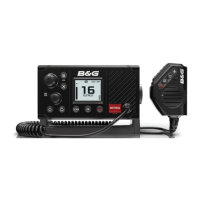

 To Next Page