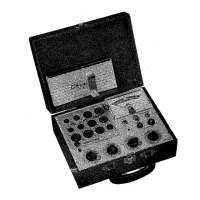
The DYNA-JET Model 606 Tube Tester is a comprehensive instrument designed for testing various types of electron tubes, primarily for use in radio and television sets, but also capable of testing industrial, voltage regulator, thyratron, and many European hi-fi tubes. Manufactured by the B&K Division of Dynascan Corporation, this device ensures tubes are operating at their full capability under simulated real-world conditions.
Function Description
The primary function of the Model 606 is to evaluate the quality and integrity of electron tubes through a series of automated and manual tests. It performs:
- Shorts and Leakage Tests: Automatically checks for shorts and leakage between all elements of a tube, detecting resistances down to approximately one megohm. This is indicated by a neon lamp located below the meter. The test covers all possible combinations of shorts, including grid-to-cathode leakage upon insertion, and other element shorts by rotating the "C" switch.
- Grid Emission and Gas Test: This is a highly sensitive test designed to detect grid emission, gas contamination, or obscure grid-to-cathode leakage. It can reveal as little as 2 to 3 microamperes of current in the grid circuit and can be adjusted for a sensitivity exceeding 100 megohms. This test is crucial for identifying tubes that could cause issues in critical circuits like AGC, sync, IF amplifier, and RF tuner stages. The test works by biasing the tube's grid beyond cut-off through a 5.6 megohm resistor. If gas or grid contamination is present, current flows, creating a voltage drop across the resistor, which in turn causes a 6BN8 DC amplifier to conduct and register a deflection on the meter in the "Grid Emission-Reject" area.
- Quality Test (Cathode Emission Test): This test determines the full capability of cathode emission under current loads that simulate actual operating conditions. It ensures that a tube passing this test will have adequate emission for proper circuit operation. The results are displayed on a "Good-Bad" scale on the meter. Each section of a multi-section tube is checked separately for quality.
Important Technical Specifications
- Power Requirements: Operates on 105-125 volts, 50-60 cycle A.C.
- Shorts Sensitivity: Approximately 1 megohm, adjustable to over 100 megohms for grid emission.
- Grid Emission Sensitivity: Detects 2 to 3 microamperes of current in the grid circuit, adjustable to over 100 megohms.
- Controls:
- Heater Switch: Sets the filament voltage for the tube under test (e.g., 6 volts, 15-20 volts).
- "A" Control: A setting specified in the tube chart.
- "B" Switch: A setting specified in the tube chart.
- "C" Switch: A setting specified in the tube chart, also used to cycle through element combinations for shorts testing.
- Grid Emission Button: Initiates the grid emission test.
- Quality Button: Initiates the quality (cathode emission) test.
- Indicators:
- Shorts Indicator (Neon Lamp): Glows to indicate shorts or leakage.
- Meter: Displays "Good-Bad" for quality tests and "Grid Emission-Reject" for grid emission tests.
- Sockets: Multiple sockets are provided to accommodate various tube bases.
Usage Features
The Model 606 is designed for straightforward operation, guided by a tube chart provided with the instrument.
- Setup Procedure:
- Look up the tube type in the chart.
- Set the Heater switch to the indicated voltage.
- Set "A", "B", and "C" controls to the positions specified in the chart.
- Insert the tube into the correct socket.
- Testing Sequence:
- Warm-up and Initial Shorts Check: Allow the tube to warm up. The Shorts indicator will automatically check for grid-to-cathode shorts and leakage upon insertion. If it glows, the tube is rejected.
- Grid Emission Test: Depress the Grid Emission button. Any meter deflection into the "Grid Emission-Reject" area indicates a defective tube.
- Quality Test: If the tube passes the Grid Emission test, depress the Quality button. The meter will display a reading on the "Good-Bad" scale. For some critical tube types, the chart specifies a minimum acceptable numerical reading even if it doesn't reach the "Good" area.
- Comprehensive Shorts Check: Rotate the "C" switch through all its positions. Observe the Shorts lamp; if it glows (except for instantaneous flashes due to capacitor discharge or "normal" shorts indicated in the chart for specific tube types), the tube is rejected.
- Multi-Section Tubes: For multi-section tubes, the chart provides separate settings for each section, allowing individual testing.
- Safety Precaution: Always set the Heater switch to the correct filament voltage before inserting the tube to prevent burning out the filament.
Maintenance Features
The manual provides instructions for maintaining the tester's accuracy and functionality.
- Grid Emission Sensitivity Adjustment:
- The factory setting is for 25 megohms leakage to read in the "Grid Emission-Reject" area.
- To check/adjust: Set "B" to 6, "C" to 1. Connect a 20 megohm resistor between Pins 1 and 7 of socket No. 1. Push the Grid Emission button and adjust the control (screwdriver adjustment above and right of the Quality button) for a reading of 20 on the meter.
- For increased sensitivity (over 100 megohms): With "B" at 6 and "C" at 1, push the Grid Emission button and, with no resistor in the socket, adjust the control until the meter just reads zero.
- Shorts Test Circuit Sensitivity Adjustment:
- The factory setting is for a nominal 1 megohm sensitivity.
- To check/adjust: Remove the panel. Locate the short sensitivity control (across the short lite socket base). Place a 1 megohm external resistor between pin #3 and pin #8 of socket #8 (with "B" at 6 and "C" at 3). Rotate the control until the short light just comes on, starting from the end where the light is off. Re-assemble the tester, ensuring the resistor is removed before testing tubes.
- Tube Chart Subscription Service: B&K offers a subscription service ($2.50/year) for updated tube charts, mailed quarterly (new charts in January and July, supplementary sheets in April and October) to ensure the tester remains current with new tube types. Individual charts can also be purchased for $1.50.
- Warranty Service:
- Refer to the maintenance section for applicable adjustments.
- Check common electronic parts (tubes, batteries) and adjust as needed.
- Defective parts under warranty should be sent prepaid to the factory with model/serial number and purchase date for free exchange.
- For unresolved issues, pack the product securely (double-packed), include a detailed list of troubles, name, and address, and forward prepaid to the nearest B&K authorized service agency or the Service Department in Chicago.

 Need help?
 General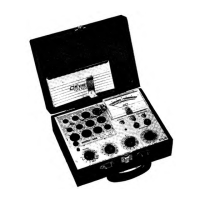

 To Next Page