EasyManua.ls Logo

Batco 2500 Series - User Manual

Default Icon
52 pages
Print Icon
To Next Page IconTo Next Page
Loading...
Part Number: P1511025 R0
Revised: Jun/11
Read this manual before using product. Failure
to follow instructions and safety precautions can
result in serious injury, death, or property
damage. Keep manual for future reference.
PITSTOP
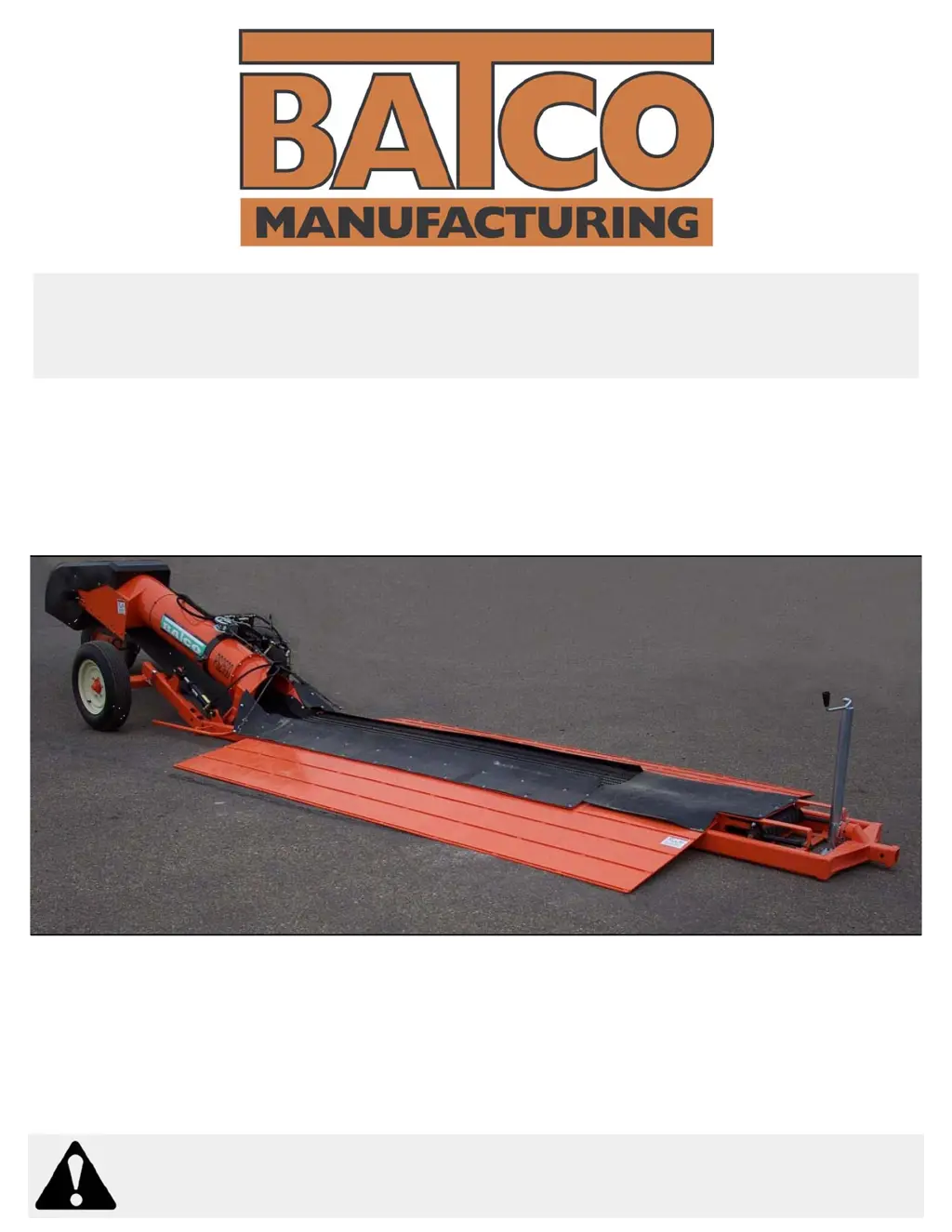
2500 SERIES
OPERATION MANUAL

Questions and Answers

  • T
    Tammy BookerAug 2, 2025
    What to do if my Batco Automobile Accessories conveyor will not run?
    • A
      Andrew DixonAug 2, 2025
      If the conveyor will not run, the conveying belting might be loose and needs tightening and aligning. Alternatively, the drive belts could be loose and require tightening and alignment. Another potential cause is the belt being frozen to the tube due to high humidity and extreme cold; in this case, move the conveyor to an area with lower humidity to allow the belt to dry. Finally, check valve may be installed incorrectly, change its orientation.
  • S
    Samuel GarciaAug 5, 2025
    Why is my Batco 2500 Automobile Accessories conveyor belt loose?
    • D
      Derrick GonzalezAug 5, 2025
      The belt may become loose over time because it stretches. To resolve this, re-tension the belt.
  • B
    brownalishaAug 10, 2025
    What to do if my Batco Automobile Accessories conveyor has low conveying capacity?
    • J
      Jonathon CortezAug 10, 2025
      A low conveying capacity may be due to an incorrect belt speed; adjust the belt speed to the correct range. Alternatively, the conveyor belt or the drive belt might be slipping. If the conveyor belt is slipping, tighten and align it. If the drive belt is slipping, set the correct tension and alignment.
  • V
    vincentkathleenAug 15, 2025
    Why is grain leaking from the conveyor hopper of my Batco 2500 Automobile Accessories?
    • B
      Brady BentleyAug 15, 2025
      Grain may leak from the conveyor hopper if the belt is not tracked (centered); in this case, track the belt. Also, check the flashing for wear and replace it if required, since incorrectly installed or worn flashing may also cause grain leakage.
  • Z
    Zoe WatsonAug 19, 2025
    What causes excessive belt edge fraying in Batco 2500 Automobile Accessories?
    • S
      Susan CardenasAug 19, 2025
      Excessive belt edge fraying may be caused by belting that is not aligned. To fix this, align and tension the belting.
  • C
    cookangelicaAug 23, 2025
    What to do if grain is leaking from the conveyor spout between the belt and tube of my Batco Automobile Accessories?
    • A
      Alexander WhiteAug 23, 2025
      If grain is leaking from the conveyor spout between the belt and tube, it may be because the belt is not tracked. You should track the belt to resolve this issue.
  • R
    ryan52Aug 27, 2025
    Why is grain leaking from the conveyor spout between the hood and belt of my Batco 2500?
    • H
      Heather WileyAug 27, 2025
      Grain leaking from the conveyor spout between the hood and belt may be due to the belt speed being too fast, causing the hood to plug. To resolve this, decrease the belt speed.

Summary

Safety First

General Safety

General safety practices and personal protective equipment requirements for safe operation.

Assembly Safety

Safety precautions and guidelines for assembling the conveyor unit.

Operational Safety

Key safety measures to follow during the operation of the conveyor.

Transport Safety

Guidelines and regulations for safely transporting the conveyor unit.

Storage Safety

Procedures for safely storing the conveyor when not in use.

Maintenance Safety

Safety precautions to follow when performing maintenance on the conveyor.

Hydraulic Safety

Specific safety instructions for the hydraulic system components.

Electric Motor Safety

Safety considerations for units equipped with electric motors.

Tire Safety

Important safety information regarding tire mounting and maintenance.

Safety Decal Locations

Identification and placement of safety decals on the equipment.

Machine Components

Controls Overview

Location and function of the conveyor's operating controls.

Matching Equipment Requirements

Specifications for compatible hydraulic and electrical power sources.

Assembly

Electric Top Drive Assembly

Step-by-step instructions for assembling the electric top drive unit.

Hydraulic Drive Kit Installation

Procedure for installing the hydraulic drive kit components.

Electric Wet Kit Installation

Instructions for assembling and installing the electric wet kit.

Transport

Pre-Transport Checklist

Essential checks before preparing the conveyor for transport.

Transport Procedure

Detailed steps for safely moving the conveyor between locations.

Placement

Set-Up Conversions

Instructions for converting the conveyor from transport to operating configuration.

Operation

Pre-Operation Checklist

Key checks to perform before operating the conveyor each time.

Starting the Conveyor

Procedures for starting both hydraulic and electric drive models.

Conveyor Shutdown

Steps for safely shutting down the conveyor for hydraulic and electric models.

Truck Positioning

Guidance on positioning trucks for loading and unloading with the conveyor.

Emergency Shutdown Procedures

Actions to take in an emergency situation to stop the machine.

Operating Tips

Helpful advice for efficient and safe conveyor operation.

Storage

Storage Procedures

Steps for protecting the conveyor during periods of storage.

Maintenance

Maintenance Schedule

Overview of recommended maintenance intervals and tasks.

Maintenance Checklist

A checklist to record scheduled maintenance activities.

Fluids and Lubricants

Specifications for required grease and hydraulic oil types.

Conveyor Belt Tension

Instructions for adjusting and maintaining proper conveyor belt tension.

Conveyor Belt Alignment

Steps to ensure the conveyor belt is properly aligned for optimal performance.

Belt Relacing Procedure

Detailed guide for replacing worn or damaged conveyor belt lacing.

Hydraulic Oil Level Check

Procedure for checking and maintaining the hydraulic oil level.

Troubleshooting

Troubleshooting Guide

Common problems, their causes, and solutions for the conveyor.

Appendix

Mechanical Specifications

Technical details and dimensions of the conveyor unit.

Batco 2500 Series Specifications

General IconGeneral
Model2500 Series
BrandBatco
Drive TypeHydraulic
Frame MaterialSteel
Belt MaterialRubber
Transport Height13 ft 6 in