Even if you are having a complete new central heating
system, your installer must clean and treat your system with
chemicals and fit a magnetic filter. At each annual service they
will check the water in the system, to make sure there is no
build-up of sludge and debris.
Protect your central heating system
Power flushing – a power flush is a cleaning process
that removes sludge, rust and debris from the pipes
and radiators in your heating system.
Inhibitor – once the heating system has been
cleaned, it should be treated with an inhibitor to
protect it and prevent further corrosion.
Magnetic filter – will collect magnetic debris in the
system water.
Limescale prevention – in hard water areas, a scale
prevention device on the mains water will ensure
limescale does not build up in your heating system.
What is sludge?
Corrosion occurs naturally when metal and water meet. If left
untreated in your heating system, corrosion can form into
black iron-oxide sludge (Magnetite) and other debris. This can
build up in your heating system causing:
• Damage to your ASHP
• Damage to radiators that could cause leaks
• Damage to radiator valves
• Blocked pipework in the central heating system.
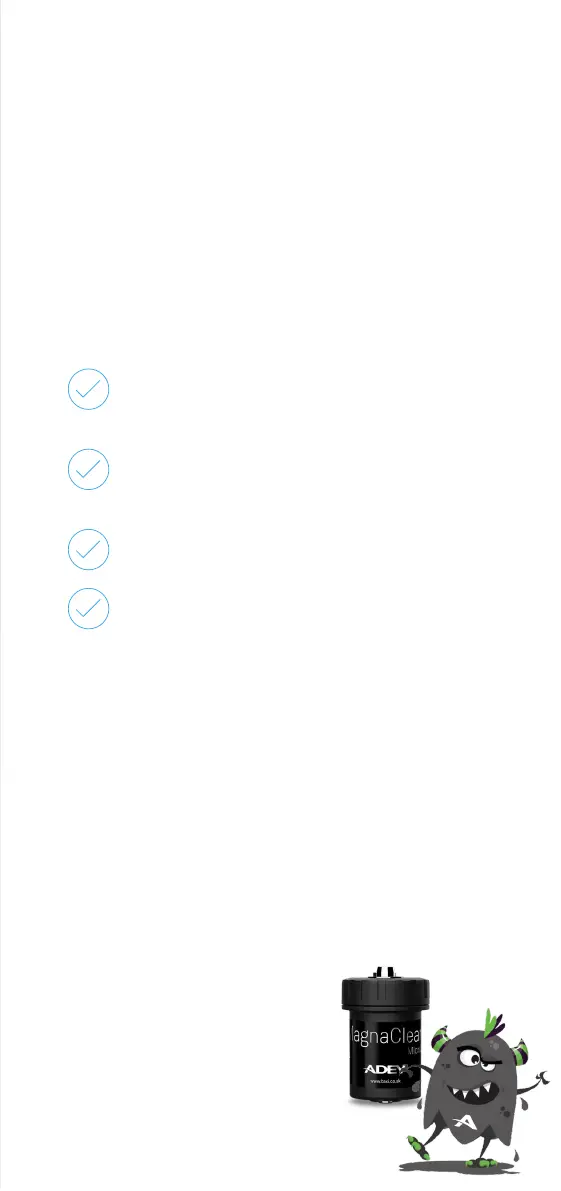
Why you need a magnetic filter
A magnetic filter will attract the magnetic debris in the
system water, helping to protect it
from sludge.
Note: Your warranty does not
cover damage to your ASHP
caused by sludge.
Getting the most from
your heating system


 To Next Page