7
Pack Adjustments
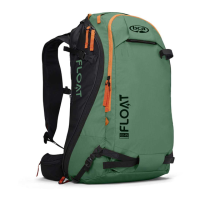
Your pack should be properly fitted before you head into avalanche terrain. The
forces of an avalanche can rip the pack from your back if it is not secured to your
body.
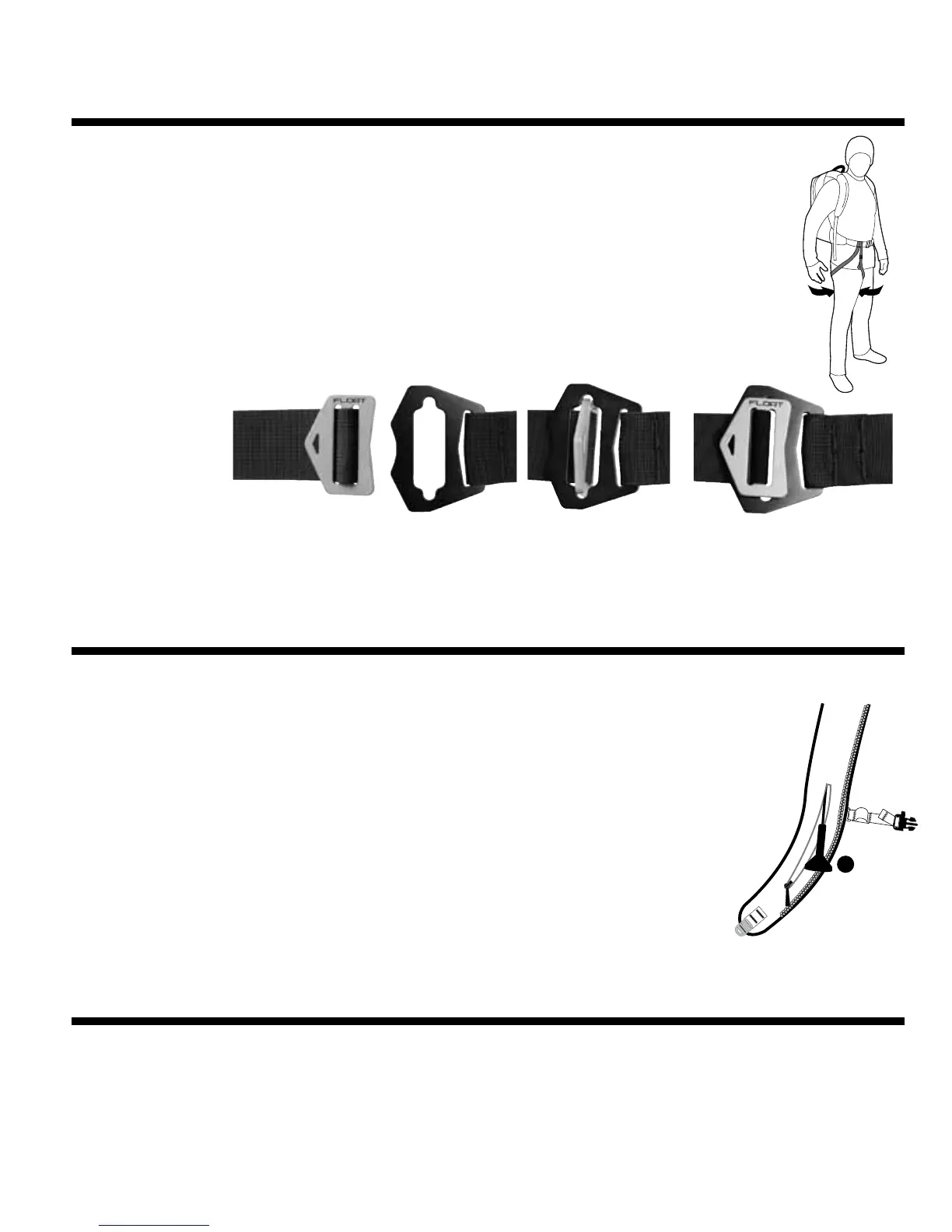
Attaching Leg Strap
The leg strap is an important component of this system, and must always be worn
by passing it between your legs and threading the loop over one end of the waist
buckle. For more information please reference the Components and Features section
in this manual.
Waist Buckle
There are two parts to the buckle: male and female. Insert the male part into the widest opening of
thefemalepart.Tightenthewaiststrapuntilsnug.Whenattachedcorrectly,thewebbingandthe
buckle should lay flat against your body. WARNING: The waist belt must be fastened for the
system to function.
Deployment
Before entering avalanche terrain, unzip the pocket where the trigger handle
is stored (see image on right). In case of an avalanche, pull the trigger handle
quickly in a downward motion, reaching across your body with the hand
opposite the trigger. Try skiing or riding to the flanks of the avalanche to escape
the debris. In the event that you are buried, preserve your airway by covering
your mouth with your hand or elbow when the avalanche slows down.
What to Expect
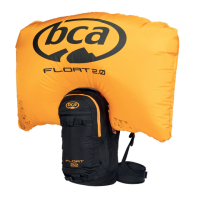
The airbag should exit the backpack and fill completely in approximately
three seconds. The airbag will continue to build pressure for a few seconds
longer until the system pressure equalizes. The airbag will hold air for several
minutes until the threat of the avalanche has passed.
After Deployment
Releasetheairfromtheairbagbypressingthereleasevalvewithyourfinger.Tolocatethevalve
open the mesh cover on the ejector
|, the valve is underneath the orange release valve cover .
Neverusehardorsharpobjectstoholdthereleasevalveopen.Makesurethereleasevalvereturns
totheoriginalpositionafterdeflation.Re-packtheairbagintotheairbagcompartment.See“Packing
the Airbag” below for details.
Using the Avalanche Airbag
12


 To Next Page
 Loading...