EN
21
Freezing fresh food
•Wraporcoverthefoodbefore
placing them in .
•Hotfoodmustcooldowntothe
room temperature before putting
them in the refrigerator.
•Thefoodstuffthatyouwantto
freeze must be fresh and in good
quality.
•Foodstuffmustbedividedinto
portions according to the family’s
daily or meal based consumption
needs.
•Foodstuffmustbepackagedin
an airtight manner to prevent them
from drying even if they are going to
be kept for a short time.
•Materialstobeusedfor
packagings must be resistant to
cold and humidity and they must
be airtight. The packaging material
of the food must be at a sufficient
thickness and durability. Otherwise
the food hardened due to freezing
may puncture the packaging. It is
important for the packaging to be
closed securely for safe storage of
the food.
•Frozenfoodmustbeused
immediately after they are thawed
and they should never be re-frozen.
•Pleaseobservethefollowing
instructions to obtain the best
results.
Recommendations for
preservation of frozen food
•Pre-packedcommerciallyfrozen
food should be stored in accordance
with the frozen food manufacturer's
instructions in a frozen food storage
compartment.
•Toensurethatthehighquality
supplied by the frozen food
manufacturer and the food retailer is
maintained, following points should
be noted:
1.Put packages in the freezer as
quickly as possible after purchase.
2.Ensure that contents of the
package are labeled and dated.
3. Do not exceed "Use By", "Best
Before" dates on the packaging.
Defrosting
The freezer compartment defrosts
automatically.
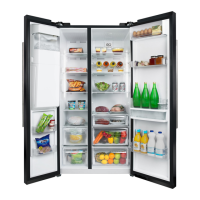
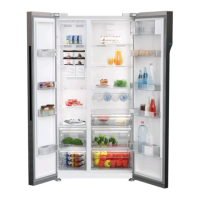
Placing the food
Freezer
compartment
shelves
Various frozen
food such as meat,
fish, ice cream,
vegetables and etc.
Egg section Egg
Fridge
compartment
shelves
Food in pans,
covered plates and
closed containers
Door shelves
of fridge
compartment
Small and
packaged food and
drinks (such as milk,
fruit juice and beer)
Crisper
Vegetables and
fruits
Freshzone
compartment
Delicatessen
products (cheese,
butter, salami and
etc.)



 To Next Page