The 5KW Air parking heater is a compact, fuel-powered heating system designed for vehicles, providing warmth to the driver's cab and passenger compartment whether the engine is running or not. It operates as a small fuel furnace controlled by a single-chip microprocessor. The furnace body, which acts as a heat exchanger, is enclosed within a hood-shaped case that serves as an independent air passage. Cold air is drawn into this passage by a heat-supplying fan, heated, and then blown out, creating a separate heating system that complements the vehicle's original heating. The heater is fully automatically controlled, emphasizing energy efficiency, environmental protection, safety, and reliability, with easy installation and maintenance.
Technical Specifications:
- Heat Power: 5000 W
- Fuel Type: Gasoline or Diesel
- Rated Voltage: 12V/24V
- Fuel Consumption:
- Gasoline: 0.19~0.66 L/h
- Diesel: 0.19~0.60 L/h
- Rated Power Consumption: 15~90 W
- Working (Environment) Temperature: -40°C~+20°C
- Working Height Above Sea Level: ≤5000m
- Weight of Main Heater: 5.9 kg
- Dimensions (mm): 425×148×162
- Mobile Phone Control: Optional, no limitation
Usage Features:
The heater offers various control options, including a standard control switch and an optional LCD control switch or GSM remote controller.
- Control Switch (Fig. 6): Features a control knob for turning the heater on/off, regulating heating temperature or power, eliminating trouble-induced locking, and converting working modes.
- LCD Control Switch (Optional, Fig. 7): Provides digital display of set temperature, heat starting time, heat time, fault information, and power level. It also allows for eliminating fault codes.
- GSM Remote Controller (Optional, Fig. 8): An extended function device that enables starting and stopping the heater via calls or messages to a SIM card number, offering voice and short message control.
- Power Supply: Connects directly to 12V/24V batteries. Batteries older than two years or frequently lacking charge should be replaced to ensure normal operation.
- Fuel Supply: Can draw fuel from the vehicle's fuel tank or an optional 5L independent fuel tank, regulated by a fuel pump.
- Operating Modes:
- Constant Temperature Mode: Activated by pressing the air conditioner (constant temperature) button. Heating temperature is continuously adjustable from 5°C to 35°C using the control knob.
- Constant Power Mode: Activated by pressing the heating (constant power) button. Heating power is continuously adjustable between 1KW and 2KW using the control knob.
- Ventilation Mode: Engages by pressing the ventilation mode key. The heater circulates air without heating, and wind capacity can be continuously regulated.
- Shutdown: Manual shutdown is achieved by pressing the illuminated button on the control switch. The fuel pump stops immediately, while the fan continues to run for 180 seconds to cool down. Direct power cut-off is not allowed.
- Fuel Priming: After installation, in Ventilation mode, short-connecting the external temperature sensor 3 times continuously will activate the fuel pump (4Hz) to prime the fuel system, stopping after the fourth cycle. This is only effective once per power-on.
Maintenance Features:
- Troubleshooting Display: The green LED on the control switch indicates trouble types through a series of flashes (Table 2). Each cycle consists of a 2-second extinguishing period followed by slow flashes (0.5-second interval), with the number of flashes representing the specific trouble.
- Fault Locking: The heater enters a locked status (glow plug, fuel pump, and fan motor stop, LED flashes) for protection in cases of ignition failure, combustion issues, circuit faults (glow plug, fan motor, fuel pump, sensors), overheating, or abnormal power voltage/fan speed.
- Burner Replacement: The burner is a quick-wear part and should be replaced after every 800 hours of operation.
- Fuel Filter Replacement: The fuel filter, fuel pipe, and clamps should be changed every 2 years.
- Heat Exchanger and Overheating Sensor Replacement: The heat exchanger has a lifespan of 10 years and must be replaced by the manufacturer or an authorized agent after this period, along with the overheating sensor.
- Pre-Season Check: Before each heating season, qualified professionals should check for:
- Pollution or foreign matter in air inlet/outlet.
- External cleanliness of the heater.
- Corrosion or loose connections for electrical contacts.
- Clogging or damage to air inlet/exhaust pipes.
- Leakage on the fuel pipe.
- Long-Term Storage: If the heater is not used for an extended period, it's recommended to run it for at least 10 minutes every four weeks to prevent mechanical malfunctions.
- Airflow Maintenance: Air inlet and outlet vents must be kept clean and unblocked to ensure smooth airflow and prevent overheating.
- Fuel Type Change: When switching to low-temperature fuel, run the heater for at least 15 minutes to fill the fuel pipe and pump with the new fuel.
- Refueling: Always turn off the heater by turning the control switch anticlockwise to "0" before refueling.
Safety and Protection:
- Flame Sensor (Glow Plug): Monitors furnace cavity temperature to confirm ignition and continuous combustion.
- Overheating Sensor: Cuts off the fuel pump circuit if the heat exchanger temperature exceeds 182°C, shutting down the heater for overheating protection.
- Temperature Sensor: Measures air inlet temperature to adjust working status and output power. An optional external temperature sensor can be used.
- Installation Requirements:
- Not allowed in locations with flammable or explosive substances.
- Not allowed in closed spaces (e.g., garages without ventilation) to prevent poisoning.
- Not allowed in bedrooms.
- Special rules apply for installation in vehicles carrying dangerous goods.
- Fuel tanks, compression tanks, fire extinguishers, clothes, paper, etc., must not be placed near the heater or opposite the hot air vent.
- Proper sealing is crucial between the main heater and the vehicle's installation surface, using a special gasket.
- Inclination angles for gasoline (A) and diesel (B) heaters must not exceed specified limits (Fig. 13) to ensure normal operation.
- Air inlet and exhaust pipes must come outwards and downwards from the heater (Fig. 24) or have a 5mm hole for condensation discharge. The sum of all curve angles for each pipe must not exceed 270°.
- Exhaust pipes must be arranged to prevent re-entry of exhaust into the vehicle and avoid contact with passengers.
- Electrical Welding: Detach the positive wire of the power supply from the battery and connect it to earth to protect the controller from damage.
- Ambient Temperature: The heater is designed for transport and storage in temperatures ranging from -40°C to 85°C.
- Unauthorized Modifications: The manufacturer is not responsible for damages caused by installation or operation violating regulations or if the heater is opened without authorization.

 Need help?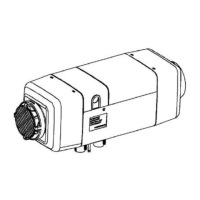

 To Next Page
 General