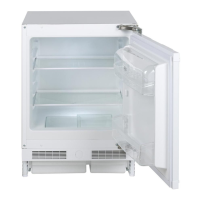
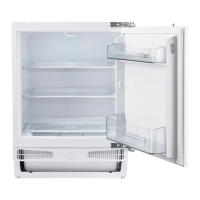
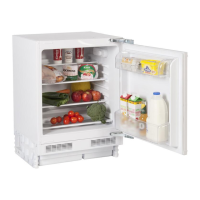
This document provides a comprehensive user manual for a built-in refrigerator-freezer, covering its operation, maintenance, and safety guidelines.
Function Description
This appliance is a built-in refrigerator-freezer designed for domestic use, specifically for cooling and storing food. It features separate compartments for refrigeration and freezing, utilizing Frost Free technology to prevent ice buildup. The refrigerator compartment is intended for general food storage, while the freezer compartment is for long-term storage of frozen food and ice production. The appliance operates on 220-240 V at 50Hz and requires a properly installed, fused socket with an efficient ground connection.
Usage Features
- Thermostat Setting: The refrigerator-freezer has an automatic temperature control system, adjustable via a thermostat knob with settings from 1 to 5. Turning the knob from 1 to 5 decreases the temperature. Settings 4-5 are for further cooling, 2-3 for normal use, and 1 for less cooling, which can save energy in winter months.
- Temperature Considerations: The internal temperature is influenced by ambient temperature, the temperature of freshly stored food, and how often the door is opened. It is recommended to adjust the thermostat setting accordingly. The appliance is designed to operate efficiently in ambient temperatures between 16°C and 38°C (ST/N climate class).
- Initial Use: When first switching on the appliance or after transportation, it should be kept in an upright position for at least 3 hours before plugging into the mains to ensure efficient operation and prevent compressor damage. For optimal performance, it's advised to run the appliance without food for 24 hours initially, or if immediate use is necessary, avoid placing a large quantity of food inside. A 5-minute delay function protects the compressor during power interruptions or re-plugging.
- Frost Free Technology: Unlike static refrigerators, this appliance uses Frost Free technology. Dry and cold air is circulated homogeneously and evenly throughout the fridge and freezer compartments by a blower fan. This prevents humidity and freezing, eliminating the need for manual defrosting of the freezer compartment.
- Food Storage in Refrigerator Compartment:
- Always wrap or store food in closed containers.
- Allow hot food and drinks to cool to room temperature before placing them in the refrigerator.
- Avoid storing packaged food and cups directly against the lamp and cooling compartment cover.
- Store fruits and vegetables loosely in the crisper containers.
- The fresh dial, located in front of the crisper, can be adjusted to control humidity. In the closed position, it helps preserve fresh fruit and vegetables longer. If condensation appears on the glass shelf, opening the fresh dial will control humidity and extend food life.
- Food Storage in Freezer Compartment:
- Use the deep freeze compartment for long-term storage of frozen food and ice production.
- When freezing fresh food, place it in the upper basket without exceeding the declared freezing capacity. Avoid placing fresh food directly next to already frozen food; wait at least 24 hours after freezing before placing them together.
- Divide food like meat, minced meat, and fish into single-serving portions before freezing.
- Never refreeze thawed food, as it can pose a health risk.
- Do not place hot meals in the deep freeze before they have cooled, as this can affect other frozen food.
- When purchasing frozen food, ensure it was frozen under appropriate conditions and that the packaging is intact.
- Observe storage conditions on the package; if no instructions are provided, consume food within the shortest possible time.
- Transport frozen food quickly to the fast freezing shelf.
- Avoid buying frozen food with humidified or foul-smelling packaging, as this indicates spoilage.
- Storage duration for frozen food varies based on environmental temperature, door opening frequency, thermostat settings, food type, and time elapsed since purchase. Always follow packaging instructions.
- Accessories:
- Ice Tray (in some models): Fill with water and place in the freezer. Once frozen, twist the tray to remove ice cubes.
- Bottle Holder (in some models): Prevents bottles from slipping or falling, and reduces noise when opening/closing the door.
Maintenance Features
- Cleaning:
- Always disconnect the appliance from the power supply before cleaning.
- Do not clean by pouring water directly onto the appliance.
- Ensure no water enters the lamp housing or other electrical components.
- Clean the refrigerator periodically with a solution of bicarbonate of soda and lukewarm water.
- Clean accessories separately with soap and water; do not use a dishwasher.
- Avoid abrasive products, detergents, or soaps. Rinse with clean water and dry thoroughly. Reconnect the plug with dry hands after cleaning.
- Clean the condenser with a broom at least twice a year to improve energy efficiency and productivity.
- Defrosting: The refrigerator features fully automatic defrosting. Defrost water flows through a collection spout into a vaporization container below the condenser, where it evaporates. No manual defrosting is required.
- Troubleshooting (Before Calling Service):
- Appliance not operating: Check for power supply, ensure the general switch is on, and test the socket with another appliance.
- Poor performance: Check if the appliance is overloaded, if the thermostat is set too low (adjust to a suitable value), if doors are closed properly, if the condenser is free of dust, and if there is enough space around the rear and side walls for ventilation.
- Noise: Some bubbling sound from the cooling gas is normal. Check if the appliance is level, if anything is touching the rear, or if objects on the appliance are vibrating.
- Water in lower part of refrigerator: Check if the defrost drain hole is clogged and clean it if necessary.
- Energy Saving Tips:
- Install the appliance in a cool, well-ventilated room, away from direct sunlight and heat sources (radiators, cookers). Use an insulating plate if necessary.
- Allow warm food and drinks to cool outside the appliance before placing them inside.
- Thaw frozen food in the refrigerator compartment; the low temperature will help cool the fridge.
- Cover drinks and other liquids to prevent humidity increase, which prolongs working time. Covering also preserves smell and taste.
- Avoid keeping doors open for long periods or opening them too frequently to prevent warm air entry and unnecessary compressor operation.
- Keep covers of temperature compartments (crisper, chiller) closed.
- Ensure door gaskets are clean and pliable; replace if worn.
- LED Lighting: If the refrigerator has LED lighting, contact the help desk for replacement, as this should only be done by authorized personnel.

 Need help?
 General

 To Next Page