8
If the dishes are heavily soiled, place an additional detergent dose in the pre-wash detergent
compartment. This detergent will take effect during the pre-wash phase.
The dispenser must be refilled before the start of each washing cycle following the instructions
provided in the Wash Cycle Table. Your dishwashers uses less detergent and rinse aid than
conventional dishwashers. Generally, only one tablespoon of detergent is needed for a normal wash
load. Also, more heavily soiled items need more detergent. Always add the detergent just before
starting dishwasher, otherwise it could get damp and will not dissolve properly.
Only use branded detergent aid for dishwasher.
Keep your detergent fresh and dry.
Don't put powder detergent into the dispenser until you're ready to wash dishes.
2. Load Dishwasher Baskets
Attention!
Scrape off any large amounts of leftover food. It is not necessary to rinse the dishes under running
water. Place objects in the dishwasher in the following way:
- Items such as cups, glasses, pots/pans, etc. are placed upside down.
- Curve items, or those with recesses, should be at a slant so that water can run off.
- They are stacked securely and can not tip over.
- They do not prevent the spray arms from rotating while washing takes place.
Very small items should not be washed in the dishwasher as they could easily fall out of the Baskets.
The upper and lower baskets can not be pulled out in the same time when the dishwasher is Loading,
or it may lead to dumping.
To prevent water dripping from the upper basket into the lower basket, we recommend that you empty
the lower basket first and then the upper basket.
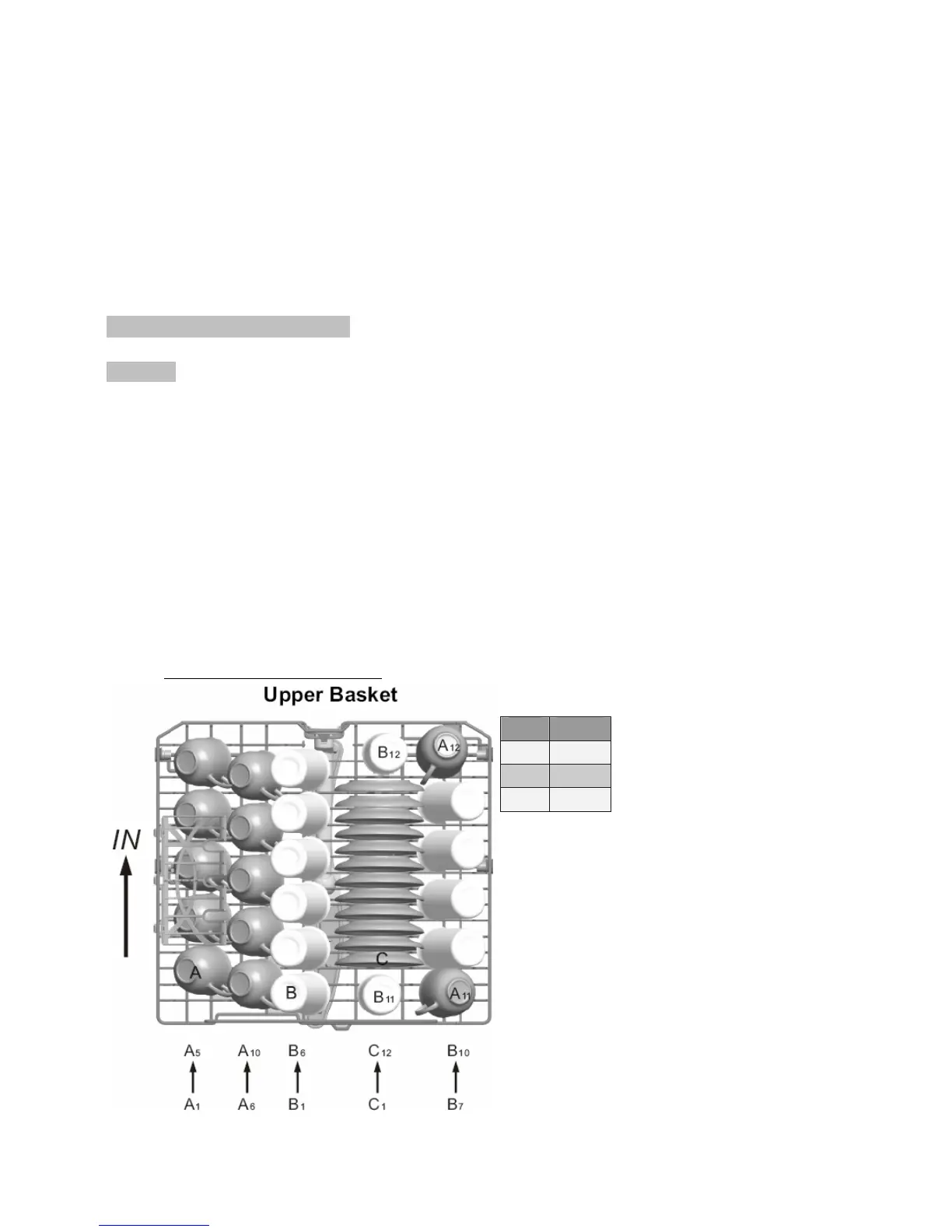
2.1 Loading The Upper Basket
Type Item
A Cup
B Glass
C Saucer
The upper basket is designed to hold more delicate
and lighter dishware such as glasses, coffee, tea
cup/saucers, as well as plates, small bowls or
shallow pans (as long as they are not too dirty).
Position the dishes and cookware so that they do
not get moved by the spray of water.


 To Next Page