12
ENEN
3. Maintenance
Some maintenance is necessary in order to use the BERG product and have fun with it for a long time. This chapter
describes how, how often, and which maintenance must be carried out.
3.1 Maintenance scheme
Daily Monthly Yearly
Wheels / Tires
• Check for wear
• Check the tire pressure and if
necessary increase the pres-
sure.
Brake
• Check the brake pads for wear
and replace if neccesary.
• Check if the brake is working
properly.
Frame
• Clean and check all nuts and
bolts.
• Check the frame for any cracks
and fractures.
Steering
• Check all nuts and bolts.
• Lubricate the moving parts.
Plastic Parts
• Clean the plastic parts and
check for damage.
3.2 Maintenance activities
3.2.1 Frame
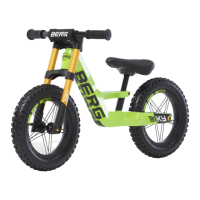
The frame is powder-coated. To prevent it from corrosion, it is important to store the balance bike indoors, and
clean it regularly. If you want to conserve the frame with grease, only use acid free substances. You can treat
damaged areas with paint.
• Check the bolts and nuts for rust and replace them to prevent them from breaking which can cause injuries.
3.2.2 Wheels / Tires
• Regularly check the rims and tires for any damage (for example cuts, cracks and bulges). Attention: damaged
rims and tires can lead to accidents! The tires must not come into contact with oil, grease or fuel.
• Check the tire pressure if your BERG balance bike has pneumatic tires. The correct tire pressure is shown on
the outside of the tire. If the tires are at the correct pressure the product will be light and easy to handle. If
the pressure is too low, the tires will leak quicker and will suer excessive wear and tear. If the tire pressure
is too high, the tire can for example come loose from the rim, resulting in dangerous situations. Attention:
remember that in bright sunlight and at high temperatures the tire pressure increases!
3.2.3 Steering
The steering equipment must be checked every month for the following:
• Damage, rust, wear and tear.
• All the nuts and bolts must be tightened.
3.2.4 Brake
• Regularly check the brake for any wear and whether if it is working properly. Use the instructions shown in
chapter 2.2.1 to adjust the brake.
• Replace the brake pads when they show extensive wear.
Attention: Dirty brake pads can lead to accidents! The brake pads must not come into contact with substances
like oil, grease or fuel.
3.2.5 Plastic parts
• The plastic parts must be checked regularly for damage and breakage.
• In the case of breakage, do not use the product but immediately replace the part concerned with an original
part, in order to guarantee the safety of the user.


 To Next Page