EasyManua.ls Logo

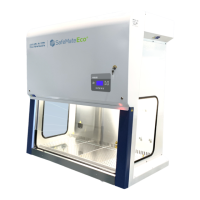
BIOAIR SafeMate Eco + ABC - User Manual

BIOAIR SafeMate Eco + ABC
95 pages
Print Icon
To Next Page IconTo Next Page
Loading...
Australian Biosafety Cabinet
Class II Biological Safety Cabinets
OPERATING MANUAL
PART 1: USER
PART 2: INSTALLATION AND MAINTENANCE
SafeMate Eco+ ABC
ORIGINAL INSTRUCTION
80.021.210 Revision 00 April 2021
BioAir S.p.A.
Head Offices and Manufacturing Plant: Via Lombardia, 12 - 27010 Siziano (PV) Italy
+39 0382 6672.1
www.bioair.it - info@bioair.it
BioAir has a Quality System certified in compliance with EN ISO 9001

Table of Contents

Questions and Answers

Summary

PART 1: USER

GENERAL INFORMATION

Provides an introduction and context for the manual's content and purpose.

FOREWORD TO MANUAL

Provides an introduction and context for the manual's content and purpose.

MARKING

Details the labels and markings on the apparatus for identification and safety.

MEANING OF SYMBOLS

Explains the various warning and informational symbols used throughout the manual.

GLOSSARY

Defines technical terms and acronyms used in the manual for clarity.

WARRANTY AND LIABILITY

Outlines the terms and conditions of the manufacturer's warranty and liability.

CABINET DEFINITION

Provides the official classification and definition of the biological safety cabinet.

INTENDED USE

Specifies the proper applications and purposes for which the cabinet is designed.

NOT ALLOWED USE

Lists prohibited uses and materials that should not be handled in the cabinet.

DECLARATION OF CONFORMITY

States the compliance of the product with relevant safety and performance standards.

APPROVALS AND CERTIFICATIONS

Lists obtained marks and certifications relevant to the cabinet's performance.

CONTACTS

Provides information on how to contact the manufacturer or distributors for support.

ASSESSMENT OF RISKS

Identifies potential hazards and their risk categories associated with cabinet operation.

General Hazard

Identifies general risks associated with operating the cabinet, categorized as low risk.

Misuse Hazard

Details risks arising from improper use, compromising safety and potentially causing biological hazards.

Biological Hazard

Highlights risks related to biological contamination, compromising protection and safety.

Biological Hazard

Discusses biological risks from spills and maintenance, emphasizing decontamination.

Biological Hazard

Addresses biological risks related to cabinet obstructions and maintenance.

Biological Hazard

Discusses biological risks during maintenance and potential contamination exposure.

UV-C Radiations Hazard

Warns about the dangers of UV-C radiation exposure to eyes and skin.

Pinch Hazard

Identifies risks of crushing body parts or damaging objects due to window movement.

Pinch Hazard

Details risks of window jamming and sudden drops, causing damage or injury.

Pinch and Electric Shock Hazards

Covers risks from cleaning operations involving mechanical parts and live electrical components.

Spread of Fire Hazard

Warns about fire risks associated with optional flammable gas use and airflow failure.

Liberated Gases and Explosion Hazard

Addresses risks from flammable gas use, noting the absence of gas detection.

Liberated Gases and Explosion Hazard

Discusses risks from inert gases leading to under-oxygenation and potential injury.

Decontamination Risks

Highlights hazards associated with decontamination procedures, particularly using hydrogen peroxide.

INSTALLATION

Details procedures and precautions for installing the biological safety cabinet.

FLOOR STAND

Provides instructions and warnings for installing the cabinet on its designated floor stand.

CONNECTING TO THE MAINS

Guides on safely connecting the cabinet to the electrical power supply.

Mains supply cord

Details the specifications and safe handling of the detachable power supply cord.

Mains socket

Specifies requirements for the electrical socket and its safe accessibility for disconnection.

Appliance mains inlet and main fuses

Describes the cabinet's power inlet and the location and function of main fuses.

CONNECTION OF GAS LINES (OPTIONAL)

Explains how to connect optional technical gas lines to the cabinet.

EXHAUST AIR TREATMENT

Covers options for treating or ducting the cabinet's exhaust air.

FINAL PROCEDURES

Outlines the steps to complete after installation before the cabinet can be used.

TECHNICAL DATA

Presents specifications and technical details for the cabinet and its components.

USE ENVIRONMENTAL CONDITIONS

Specifies the recommended operating environment for the cabinet.

TRANSPORT AND STORAGE CONDITIONS

Details the conditions for safe transportation and storage of the cabinet.

WEIGHT AND DIMENSIONS

Lists the physical specifications, including weight and overall dimensions.

PERFORMANCES

Presents key performance metrics and standards met by the cabinet.

MATERIALS

Describes the materials used in the construction of the cabinet components.

GLASS PARTS

Details specifications for the cabinet's glass components, including windows.

FILTERS

Provides technical data for the HEPA and EXHAUST filters used in the cabinet.

LIGHTING

Specifies technical details for the cabinet's internal lighting system.

UV-C LAMP

Lists technical specifications for the UV-C germicidal lamp.

OUTLET

Details information regarding the cabinet's electrical outlets.

SERVICE SOCKETS

Provides technical data for the internal service sockets.

CONNECTOR VFC

Describes the VFC output connector and its specifications.

OPTIONAL ACCESSORIES FEATURES

Lists features and specifications for optional accessories.

ORDINARY OPTIONALS

Lists standard optional accessories available for the cabinet.

OPERATING PRINCIPLE

Explains the fundamental principles of operation for the biological safety cabinet.

OPERATING INSTRUCTIONS

Provides detailed guidance on how to operate the cabinet safely and effectively.

CABINET DESCRIPTION

Provides an overview of the cabinet's components and their locations.

Lighting

Explains the cabinet's internal lighting system and how to operate it.

Service sockets

Describes the internal service sockets and their activation controls.

Front window

Details the operation and safety features of the sliding front window.

UV-C germicidal lamp

Explains the function and safety precautions for the UV-C germicidal lamp.

Gases utilities (optional)

Covers the installation and use of optional gas and vacuum utilities.

Working chamber

Describes the internal working area, including surfaces and grilles.

INTAKE GRILLES

Explains the function and importance of keeping the intake grilles unobstructed.

CONTROL PANEL

Details the components and functions of the cabinet's control panel.

Quarter-turn locks

Explains the use of quarter-turn locks for accessing the control panel.

Start;stop switch

Describes the key switch used to turn the cabinet on and off.

Alarm pilot light

Explains the function of the visual alarm indicators on the control panel.

Service outputs and inputs

Details the technical service access ports on the control panel.

Key pad

Describes the functions of the keypad buttons and their operation modes.

Display

Explains the information presented on the cabinet's alphanumeric display.

Normal keys function

Details the standard functions accessible via the keypad keys.

Advanced keys function

Explains how to access advanced settings and information using specific key combinations.

OPERATING PROCEDURES

Guides users through the different operating modes and procedures.

MODE 1 ACCESS

Details the steps to access and operate the cabinet in SAFE OPERATING MODE 1.

Lighting ON;OFF

Explains how to control the cabinet lighting via the keypad.

Sockets ON;OFF

Describes how to activate/deactivate the internal service sockets.

Solenoid GAS valve ON;OFF

Explains control of the flammable gas solenoid valve via the keypad.

Run hours meter

Describes how to view cabinet run hours for maintenance tracking.

ECO MODE

Explains the energy-saving ECO MODE and its operational limitations.

IRREGULARITIES AND ALARMS

Lists common alarms and irregularities and how to respond to them in MODE 1.

MODE 2 ACCESS

Details the steps to access and operate the cabinet in STAND BY MODE 2.

Lighting ON;OFF

Explains how to control lighting in MODE 2.

Sockets ON;OFF

Explains how to control service sockets in MODE 2.

Language selection

Guides on how to change the display language in MODE 2.

Date and time setting

Explains how to set the date and time in MODE 2.

Activation and programming of UV-C cycle

Details how to activate and program the UV-C decontamination cycle.

SHUTDOWN

Provides instructions for properly shutting down and disconnecting the cabinet.

GENERAL RULES - GUIDELINES

Provides general guidelines for safe operation and maintenance of the cabinet.

FEATURES OF LOCATION:

Specifies requirements for the cabinet's installation location.

WORKING POSTURE:

Advises on correct posture for operators working at the cabinet.

WORKING PROCEDURES:

Outlines safe working practices and procedures for using the cabinet.

CLEANSING AND DECONTAMINATION

Covers procedures for cleaning and decontaminating the cabinet.

CLEANSING

Provides instructions for cleaning the cabinet's surfaces.

Painted surfaces

Guidelines for cleaning painted surfaces of the cabinet.

Stainless steel surfaces

Instructions for cleaning and disinfecting stainless steel surfaces.

Glass surfaces

Recommendations for cleaning and disinfecting the front window glass.

Complete cleaning of the front window

Detailed procedure for thoroughly cleaning the front window.

Equalizer fabric of LAF filter

Procedure for cleaning the LAF filter fabric if contaminated.

DAILY DECONTAMINATION

Suggests routine decontamination methods, such as UV-C radiation.

BIOLOGICAL DECONTAMINATION

Refers to validated methods for biological decontamination procedures.

LAMPS REPLACEMENT

Outlines procedures and safety precautions for replacing cabinet lamps.

UV LAMP

Specific procedure for replacing the UV-C lamp, including safety.

FLUORESCENT LAMPS

Specific procedure for replacing fluorescent lamps, including safety.

IN CASE OF BREAKAGE OF LAMPS

Instructions for handling lamp breakage and associated risks.

DISPOSAL OF LAMPS

Guidelines for the safe disposal of used lamps.

PART 2: INSTALLATION AND MAINTENANCE

INSTALLATION

Details procedures and precautions for installing the biological safety cabinet.

HANDLING AND UNPACKING

Instructions for safely handling and unpacking the cabinet upon delivery.

POSITIONING

Guidelines for selecting a suitable location and positioning the cabinet.

INSTALLATION OF OPTIONAL EQUIPMENT

Covers the installation of accessories such as floor stands and gas taps.

FLOOR STAND

Detailed steps for assembling and mounting the cabinet on its floor stand.

ASSEMBLING OF GASES AND FLUIDS TAPS

Instructions for installing gas and fluid taps within the working chamber.

Ducting of exhausted air flow

Options and procedures for connecting the cabinet to exhaust ducting systems.

VFC output (auxiliary contact)

Explains the VFC output for remote control or status signaling.

Alarm mute inlet

Describes the input for silencing alarms during tests.

Data output port

Details the optional data output port for parameter monitoring.

DISPOSAL OF THE PACKAGING

Guidelines for disposing of the cabinet's packaging materials.

CONNECTION TO THE MAINS

Step-by-step guide for connecting the cabinet to the mains power supply.

Mains socket

Specifications and placement requirements for the mains socket.

Mains supply cord

Details on the mains supply cord, its connection, and specifications.

CONNECTION TO THE GAS LINES (OPTIONAL)

Instructions for connecting optional gas lines to the cabinet.

Vacuum;Inert gases line

Specifics for connecting vacuum and inert gas lines.

Flammable gas line

Specifics for connecting the flammable gas line, including solenoid valve.

PERFORMANCE TEST

Outlines essential performance tests to be conducted after installation.

FILTERS INTEGRITY TEST (DOP TEST)

Procedure for testing the integrity of HEPA and exhaust filters.

AIRFLOWS TEST

Covers tests for measuring various airflow parameters of the cabinet.

INFLOW air:

Method for measuring inflow air velocity at the front aperture.

DOWNFLOW air (LAF):

Method for measuring downflow air velocity within the working space.

CONTAINMENT AT THE FRONT APERTURE:

Procedure to detect aerosol penetration at the front aperture.

WORK ZONE INTEGRITY:

Procedure to detect aerosol particles generated outside the work aperture.

Smoke pattern test:

Method for visualizing airflow patterns using smoke.

Working area air cleanliness test

Procedure for testing the air cleanliness within the working area.

Check of the alarm thresholds:

Procedure for verifying and checking the cabinet's alarm thresholds.

Manual control of the fan:

Instructions for manually controlling the fan for testing purposes.

BIOLOGICAL DECONTAMINATION

Covers procedures for biological decontamination of the cabinet.

DECONTAMINATION BY MEANS OF H2 O2

Details the procedure for decontamination using hydrogen peroxide.

REQUIRED EQUIPMENT

Lists the necessary equipment for the H2O2 decontamination process.

MICRONEBULIZER

Information on the micronebulizer device used for H2O2 dispensing.

CONTAINMENT BAG

Describes the containment bag used to enclose the cabinet during decontamination.

RICIRCULATION TUBE

Details the flexible hose used for connecting the nebulizer.

DECONTAMINATING SOLUTION

Information about the hydrogen peroxide solution used for decontamination.

PROCESS CHEMICAL INDICATORS

Explains the use of chemical indicators to verify decontamination effectiveness.

VARIE

Lists miscellaneous items required for the decontamination process.

DECONTAMINATION PROCEDURE

Step-by-step guide for performing the decontamination process.

PREPARATION OF THE CABINET

Steps to prepare the cabinet before starting the decontamination cycle.

ACTIVATION OF THE DECONTAMINATION CYCLE

Procedures for activating and managing the decontamination cycle.

REMOVAL OF THE DECONTAMINATION SYSTEM

Instructions for safely removing the decontamination system after use.

Automatic cycle for alternative fumigation

Guides on using the automatic cycle for alternative decontamination methods.

SERVICE AND MAINTENANCE

Covers scheduled maintenance, troubleshooting, and parts information.

ROUTINE CHECKS

Schedule and description of routine maintenance checks for the cabinet.

FILTERS REPLACEMENT

Procedure and warnings for replacing the cabinet's filters.

REPLACEMENT OF VARIOUS PARTS

Guidelines for replacing electrical, mechanical, and electromechanical parts.

CALIBRATION AND PC BOARD SETTING

Explains access to calibration and PC board settings, requiring training.

TROUBLE SHOOTING

Provides guidance on identifying and resolving common operational issues.

SPARE PARTS LIST

Lists common and critical replacement parts for the cabinet.

WIRING DIAGRAM

Provides the electrical wiring diagram for service personnel.

BIOAIR SafeMate Eco + ABC Specifications

General IconGeneral
UV LightOptional
Power Supply220-240V, 50/60Hz
Filter TypeHEPA H14
CertificationEN12469
Alarm SystemYes
Noise Level<65 dB
TypeClass II Biological Safety Cabinet