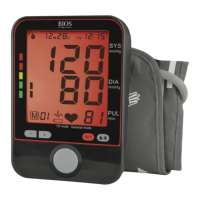
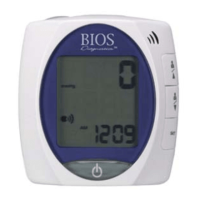
3.4 Measuring Your Blood Pressure
After following the guidelines described in the previous section and placing the cuff
around your upper arm, you are now ready to measure your blood pressure. Follow these
steps to record your measurement.
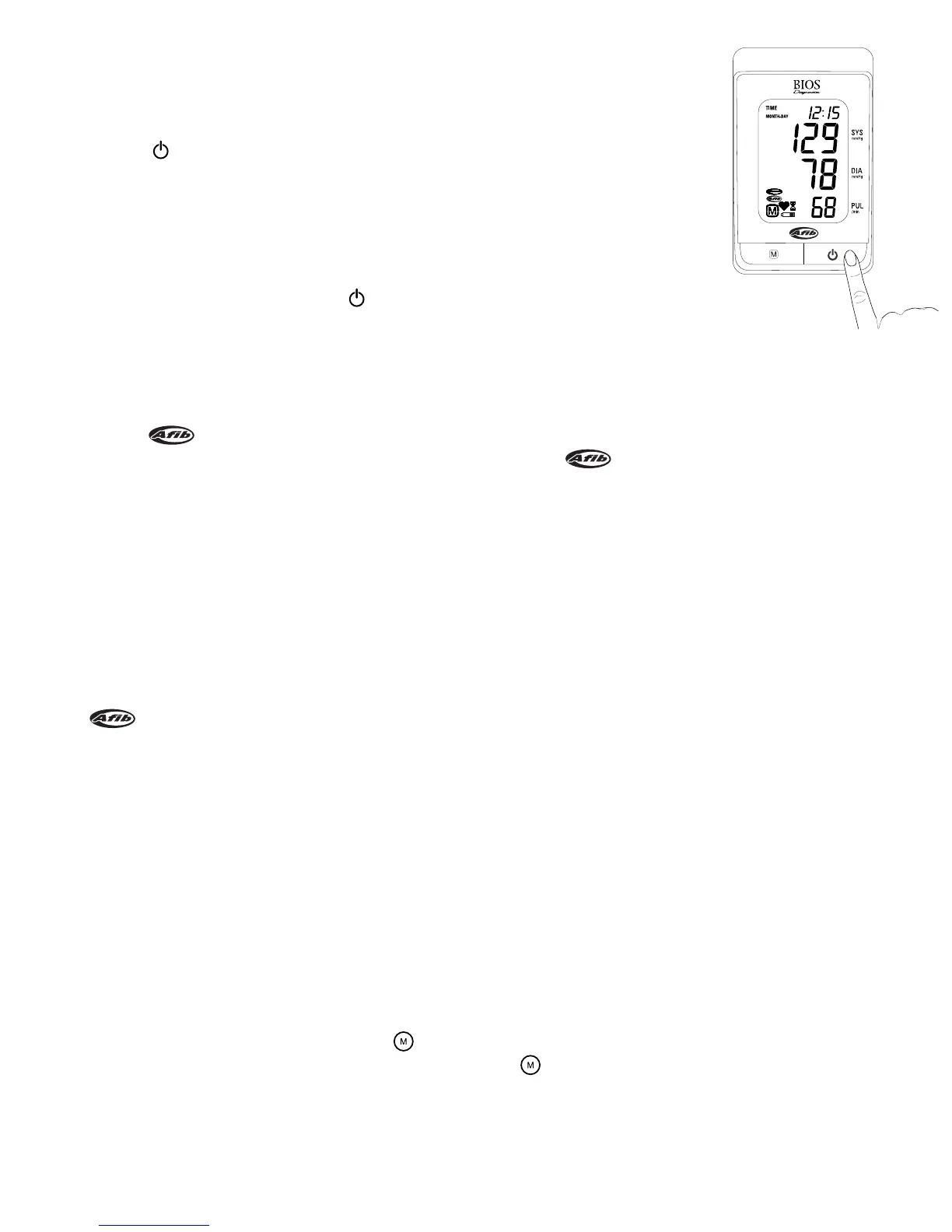
1. Press the button to turn on the device and start measurement. The LCD screen is
turnedon.Thecuffbeginstoinatewhiletheincreasingcuffpressureisdisplayedon
thescreen.Afterthesuitableinationpressureisreached,thecuffstopsinatingand
the pressure gradually falls. A long beep sounds when the measurement is completed.
The systolic and diastolic blood pressure values along with the pulse rate are displayed
on the screen. The measurement is displayed for approximately 1 minute.
2. Switch off the device by pressing the
button to preserve the batteries. If no button is
pressed for 1 minute, the instrument switches the display off.
NOTE: The time will continuously be displayed on the screen.
3.5 Appearance of the Atrial Fibrillation Indicator (only in MAM mode)
This symbol indicates that atrial fibrillation was detected during the measurement. If AFIB is present during
blood pressure measurement, the AFIB Indicator is displayed. The AFib willash8timesrapidlyoncethe
measurementiscompleteandthenstopashing.Inthiscase,theresultmaydeviatefromyournormalblood
pressure. It is highly recommended to take an additional measurement an hour later to increase the specificity of the
detection.Inmostcases,thisisnocauseforconcern.However,ifthesymbolappearsonaregularbasis(e.g.several
times a week with measurements taken daily) we advise you to visit your doctor. Please, provide the following
explanation:
Information for the doctor on frequent appearance of the atrial fibrillation indicator
This instrument is an oscillometric blood pressure monitor that also analyses pulse frequency during measurement.
The instrument is clinically tested.
The symbol is displayed after the measurement, if atrial fibrillation occurs during measurement. If the symbol
appears more frequently (e.g. several times per week on measurements performed daily) we recommend the
patient to seek medical advice. The instrument does not replace a cardiac examination, but serves to detect atrial
fibrillation at an early stage.
• Sometimesthedevicewilldetectatrialbrillationevenwhenitisnotthere.Thiscanhappenifthearmmoves
during the reading or another rhythm problem is present. Keep the arm still during the reading. Visiting your
doctor with this device may be necessary to check out any rhythm problems.
• Thisdevicemaynotdetectatrialbrillationinpeoplewithpacemakersordebrillators.
3.6 Viewing Previously Recorded Values
The blood pressure monitor automatically stores your measurements. It can store up to 200 measurements. When
more than 200 measurements are made, the oldest readings are deleted to make space for the new ones.
To view the previously stored values, press the button. The last measurement is displayed. The date and time of
the measurement are also displayed after the reading. Press the button repeatedly to view all the measurements
that are recorded on the device.
Note: Blood pressure measurements are not stored when an error is encountered during
measurement.


 To Next Page