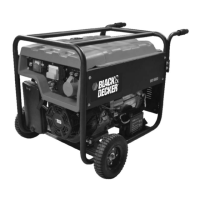
The Black & Decker BD 5500 is a robust and versatile generator designed for a variety of power needs, from domestic use to more demanding applications. This manual provides comprehensive guidance on its operation, maintenance, and safety, ensuring optimal performance and longevity.
Function Description
The BD 5500 is a synchronous generator, meaning it produces a stable and consistent power output, making it suitable for sensitive electronic devices as well as heavy-duty tools. It features multiple output options, including 230V/400V AC and 12V DC, offering flexibility for different electrical loads. The generator is powered by a single-cylinder, air-cooled, 4-stroke OHV engine, known for its reliability and efficiency. Key operational components include a fuel gauge, voltmeter, circuit breaker, and various sockets for power output. It is equipped with an overload cut-out to protect both the generator and connected appliances from damage due to excessive current. The choke lever and fuel cock facilitate easy starting, while the engine stop switch ensures safe shutdown. The BD 5500 is designed for portability, featuring wheels and a transport handle for easy movement.
Important Technical Specifications
- Generator Type: Synchronous
- Ingress Protection (IP): IP23M
- Rated Voltage (Urated): 3~400 Vac./230 Vac. / 12V d.c.
- Continuous Rated Power (S1): 3.6 kW
- Maximum Power (Pmax): 5.5 kW
- Frequency: 50 Hz
- Power Factor: Cosφ=1
- Performance Class: G1
- Engine Model: PD188F
- Engine Design: Single-cylinder forced air-cooled 4-stroke OHV
- Spark Plug: LG F6TC
- Displacement: 389 cm³
- Tank Capacity: 28 L
- Engine Oil: Approx. 1.1 L (15W40/<0 °C: 5W30)
- Weight: 91 kg
- Guaranteed Sound Power Level (LWA): 97 dB(A)
- Max. Temperature: 40 °C
- Max. Altitude (above mean sea level): 1000 m
Usage Features
The BD 5500 is designed for straightforward operation, with clear instructions for assembly, starting, and power output management.
Assembly: The generator requires initial assembly, including attaching the wheels, support feet, and transport handle. This process involves securing components with bolts and nuts, ensuring stability and ease of movement.
Starting the Engine:
- Preparation: Ensure the generator is on a stable, level surface. Check the oil level (between "H" and "L" marks on the dipstick) and fuel level. The fuel tank capacity is 28 liters, and the recommended engine oil is 15W40 or 5W30 for temperatures below 0°C.
- Fuel Cock: Turn the fuel cock to the "ON" position.
- Choke Lever: Move the choke lever to the "ON" position (for cold starts).
- Engine Switch: Turn the engine switch (11) to the "START" position.
- Recoil Starter: Pull the recoil starter handle (13) firmly and smoothly until the engine starts.
- Warm-up: Once the engine starts, gradually move the choke lever back to the "OFF" position as the engine warms up.
- Electrical Start (if equipped): For models with an electric starter, turn the key to "START" and release once the engine fires.
Connecting Appliances:
- The generator provides multiple sockets: 230V/400V AC and 12V DC.
- Always ensure the total power consumption of connected appliances does not exceed the generator's rated output to prevent overload.
- Use appropriate extension cables (minimum 1.5 mm² for up to 50 m, and 2.5 mm² for up to 100 m) that are approved for outdoor use.
- The generator is equipped with a circuit breaker (7) that will trip in case of an overload, protecting the generator and connected devices.
Safety Features:
- Overload Protection: The circuit breaker automatically shuts off power in case of overload.
- Low Oil Sensor: The engine will automatically shut down if the oil level is too low, preventing engine damage.
- Exhaust System: The exhaust gases are very hot during operation. Always ensure adequate ventilation and keep flammable materials away from the exhaust.
- Carbon Monoxide Warning: Operate the generator only in well-ventilated outdoor areas to avoid the risk of carbon monoxide poisoning.
- Fuel Safety: Gasoline is highly flammable. Refuel in a safe, well-ventilated area with the engine off and cool. Do not smoke or use open flames near the generator.
Maintenance Features
Regular maintenance is crucial for the BD 5500's performance and lifespan. The manual outlines a detailed maintenance schedule and procedures.
Daily/Before Each Use:
- Check the engine oil level.
- Check the fuel level.
- Inspect the air filter for cleanliness.
- Check for any loose bolts or nuts.
- Ensure the generator is clean and free of debris.
First Month or 20 Hours:
- Change the engine oil.
- Check and clean the air filter.
- Inspect the spark plug.
Every 3 Months or 50 Hours:
- Change the engine oil.
- Check and clean the air filter.
- Inspect the spark plug.
Every 6 Months or 100 Hours:
- Change the engine oil.
- Check and clean the air filter.
- Inspect and adjust the spark plug.
- Check the spark arrestor.
- Inspect the fuel tank and filter.
Every Year or 200 Hours:
- Change the engine oil.
- Clean/replace the air filter.
- Inspect and replace the spark plug.
- Check and adjust valve clearance (recommended every 300 hours).
- Clean the combustion chamber.
- Replace the fuel tank and filter.
- Replace the fuel tube (every 2 years or as needed).
Specific Maintenance Procedures:
- Oil Change (B12-B14): Drain the old oil by removing the oil drain plug (10) and then refill with the recommended oil (approx. 0.6 L) through the oil filler cap (9).
- Air Filter Maintenance (B10-11): Remove the air filter cover, clean the filter elements with compressed air or replace them if necessary.
- Spark Plug Maintenance (B9): Remove the spark plug (22) with the spark plug wrench (24), clean it with a wire brush, and adjust the electrode gap if necessary. Replace if worn.
- Carburetor Maintenance (B15): For long-term storage, drain the fuel from the carburetor to prevent fuel deterioration and clogging.
- Storage: For periods longer than 3 months, ensure the fuel tank is empty and the carburetor is drained. Store the generator in a clean, dry, and well-ventilated area.
Troubleshooting: The manual includes a troubleshooting guide for common issues such as the engine not starting or low/no voltage output, providing potential causes and remedies. For example, if the engine does not start, check for low oil, fouled spark plug, no fuel, or low battery voltage.
By following these guidelines, users can ensure the BD 5500 generator remains a reliable power source for years to come.

 Need help?
 General

 To Next Page