
 Need help?
Do you have a question about the Bradford White AeroTherm and is the answer not in the manual?
Warning about electrical shock when draining the water heater.
Warning about hot water scald hazard during draining.
Step-by-step instructions for safely draining the water heater.
Guidance for leaving the water heater idle for extended periods to conserve energy.
Recommendations for operating the water heater during vacation periods to prevent freezing.
Highlights the impact of filter cleanliness on heater efficiency and potential issues.
Instructions on how to remove, clean, and reinstall the air filter.
Alerts to consequences of a dirty filter, including reduced efficiency and system damage.
Explains issues and alarms related to a clogged condensate drain tube.
Recommendation for periodic inspection and clearing of drain lines to prevent clogs.
Guidance on inspecting and replacing the anode rod every 3 years.
Detailed steps for removing, inspecting, and reinstalling the anode rod.
Information on managing the anode depletion sensing feature and alarms.
General safety warning regarding repairs and interpretations of manual.
This document describes the operation and maintenance of a Bradford White heat pump water heater, focusing on its function, usage, and maintenance features.
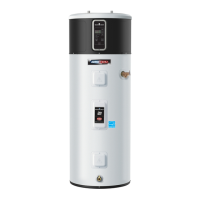
The Bradford White heat pump water heater is designed to efficiently heat water for residential use. Unlike traditional electric water heaters, it utilizes heat pump technology to extract heat from the surrounding air and transfer it to the water in the tank, significantly reducing energy consumption. In Hybrid, Heat Pump, and High Demand/Boost modes, the unit actively moves air through its system, with a filter in place to protect the evaporator from dirt and dust. The unit also incorporates an anode rod, a sacrificial component designed to protect the glass-lined tank from corrosion, thereby extending the life of the water heater. Some models feature an anode depletion sensing system that alerts the user when the anode rod is nearing the end of its life. The water heater also includes a condensation drain system to manage the moisture extracted from the air during the heat pump operation.
The water heater offers several operational modes, including Hybrid, Heat Pump, High Demand/Boost, and Electric/Standard. These modes allow users to optimize the unit's performance based on their hot water needs and energy saving preferences. For instance, the Electric/Standard mode might be used when the heat pump function is compromised, such as by a dirty filter.
For extended shutdown periods or vacations, especially those exceeding the built-in vacation mode options, it is recommended to turn off the power and water supply and drain the water heater. This conserves energy and prevents the buildup of hydrogen gas. Power to the unit can only be shut off at the circuit breaker or disconnect switch, as there is no dedicated power button on the appliance itself. If the unit has an anode depletion sensing feature and cannot be drained, keeping the power on in vacation mode ensures the feature continues to operate properly while still conserving energy. If the water heater is to be subjected to freezing temperatures, it is crucial to drain both the water heater and its associated piping. After a prolonged shutdown, the unit's operation and controls should be checked by qualified service personnel, and the tank must be completely filled before restarting.
Regular maintenance is crucial for the optimal performance and longevity of the Bradford White heat pump water heater. Key maintenance tasks include draining the water heater, cleaning the air filter, clearing the condensation drain tube, and inspecting/replacing the anode rod.
Draining the Water Heater: To drain the unit, first shut off power to prevent electric shock. Attach a garden hose to the drain valve at the bottom of the unit and direct it to a suitable drain. Turn off the cold water supply, then admit air into the tank by opening a hot water faucet or lifting the relief valve handle. Finally, open the drain valve using a flat slot screwdriver. It is important to ensure no one is exposed to the hot water released, as it can cause scalding.
Cleaning the Air Filter: The air filter, located at the top of the unit, protects the evaporator from dirt and dust, and a clean filter is essential for high efficiency. The filter should be cleaned at least once a year, or when the red light above the Filter button illuminates and an audible beep sounds. If the filter becomes too dirty, the unit will automatically switch to Electric/Standard mode, losing energy savings. To clean, leave the power on, squeeze the two tabs on the filter, and lift it out. The filter can be vacuumed, wiped with a damp cloth, or rinsed with warm water. Once clean and dry, align it into the slots at the top of the unit and push it down into place. After reinstallation, press and hold the FILTER button to reset the filter fault. If a heating cycle is active, the unit will finish in electric mode before reverting to its previous setting.
Clearing the Condensation Drain Tube: The main drain tube carries away condensate. If it becomes clogged, the heat pump will stop operating, display an F20 error, and an alarm will sound. Press any button to silence the alarm, then clear the obstruction by removing drain lines and connections. After clearing debris, reattach the lines and connections, and allow the water heater to run. Regular inspection of the drain lines for debris is recommended.
Anode Rod Maintenance: The anode rod should be inspected every three years (annually for artificially softened water) and replaced when more than 6 inches of core wire are exposed at either end. This inspection requires turning off electric power and cold water supply to prevent shock and leaks. Removing the anode rod, except for inspection or replacement, will shorten the tank's life and void the warranty. If an anode depletion sensing feature is present and indicates the rod is nearing its end of life, it should be replaced. To silence the alarm, press the Anode button once. After replacement, reset the alarm by pressing and holding the Anode button for 10 seconds until the control beeps and the LED turns off. If an Aluminum-Zinc anode rod is installed to address water odor, the anode depletion sensing feature must be disabled by pressing the Anode button once to silence the alarm, then three times to disable the feature. To re-enable the feature, press the Anode button three times. For models with devices that periodically cut power, anode rod inspection every 2-3 years is recommended due to potential compromise of the sensing feature's accuracy.
Servicing the anode rod involves disconnecting power, shutting off water, and partially draining the tank. The filter, trim ring, and front top cover must be removed. After reinstalling the trim ring and protecting edges with tape, insulation is removed to access the anode rod. Using a 1-1/16” socket and extension, the anode rod is unscrewed and lifted out for inspection. To install a new rod, seal its threads with soft set sealant, thread it into the port, and tighten to 50 ± 5 ft-lbs of torque. Plug in the anode wire if present and reinstall insulation. If a non-sensing anode rod is installed, the depletion sensing feature must be disabled, and the wire end taped. Finally, turn on the water supply, open a tap to remove air, check for leaks, and reassemble the unit. Reset the Anode button (if applicable) by pressing and holding for 10 seconds to indicate a new anode depletion sensing anode rod is installed.
 General
| Type | Heat Pump Water Heater |
|---|---|
| Voltage | 240V |
| Refrigerant | R-134a |
| Capacity | 50, 65, 80 Gallons |
| Efficiency | Up to 3.70 UEF |
| Operating Modes | Hybrid, Electric, Vacation |
| Warranty | 10 Years Limited |
| Energy Factor | 3.70 |
| Sound Level | 55 dB |
| Diameter | 22 inches |

 To Next Page
