Need help?
Do you have a question about the Brandt BWF48TCW and is the answer not in the manual?
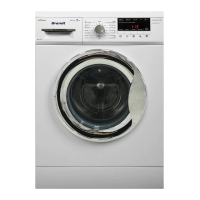
This document is a user manual for a Brandt Washing Machine, providing comprehensive instructions for its installation, operation, maintenance, and troubleshooting.
The Brandt Washing Machine is designed for household (domestic) use to wash textiles labeled "washing machine washable." It operates with cold water only and offers a variety of wash programs to suit different laundry needs, including Cotton, Eco Wash, Synthetic, Delicate, Sportswear, Mixed Wash, Wool, Baby Care, Quick Wash, Rinse&Spin, and Spin. Users can select desired wash temperatures and spin speeds, and utilize additional functions such as Prewash, Intensive, Soak Wash, Extra Rinse, and Less Iron. The machine features a delay start function, allowing users to set a specific time for the wash to begin. A child lock function is included to prevent accidental program changes.
Installation and Setup: The manual emphasizes the importance of proper installation to ensure safe and efficient operation. Key steps include removing four transit bolts from the rear of the machine before use to prevent excessive vibrations and damage during spinning. The washing machine should be installed on a flat, stable surface, away from direct sunlight or freezing temperatures, to avoid excessive vibrations and noise. It requires an additional space of approximately 120mm at the rear for hose connections. The four leveling feet on the underside must be adjusted to ensure the machine is level, and their lock rings tightened securely.
Water Connections: The machine connects to a cold water supply using a new water supply hose, ensuring rubber washer seals are fitted to prevent leaks. The drain hose should be mounted at a height of minimum 60 cm and maximum 100 cm from the ground, secured to prevent it from dropping out of the basin, and its tip should not dip into drained water to avoid backflow.
Power Connection: The washing machine requires an independent household dedicated mains socket, rated at 10 Amp 220V to 240V AC, with an earthed plug. Users are warned against using plug adapters or extension cables and to ensure the mains plug is firmly pushed into the socket.
Preparing Laundry: Before washing, laundry should be sorted by color, fabric type, and soiling level, following garment washing labels. Stains should be pre-treated. Delicate items like bras with metal wires, tights, and lace clothing should be placed in a cleaning net. Pockets must be checked for objects that could damage clothes or the machine. Loose strings should be tied, zippers closed, and clothing with zippers turned inside out. Large, heavy objects (e.g., buckles, large buttons) should be removed or clothing turned inside out to prevent damage to the glass door. Excess hair, animal fur, and sand should be brushed off. Clothes with raised fabric should be turned inside out, and non-colorfast items washed separately. The drum should not be overloaded, and clothes should be inserted one by one, ensuring no items are trapped in the door seal.
Adding Detergent and Softener: Detergent and softener are added to their respective compartments in the detergent drawer. The amount used should be based on laundry amount, soiling level, water hardness, and manufacturer's instructions. For slightly dirty clothes, pre-wash is not necessary, and a small amount of detergent can be placed in compartment 2 (II). Viscous fabric softener should be diluted with water to prevent overflow blockage, with a maximum level of 40ml. Liquid detergents can be used in all programs without prewash by fitting the liquid detergent level plate into the 2nd compartment.
Operating the Washing Machine: To start a wash, users pull the door handle, load laundry, close the door, and turn the Programme Selection Dial to choose a wash program. Temperature and optional functions can be selected. After adding detergent, the Power button is pressed, followed by the Start/Pause button. The machine will beep when the program is complete. If a setting needs to be changed after the wash has started, the On/off button should be pressed to turn the machine off, then the program, spin speed, and optional functions re-selected, and finally the Start/Pause button pressed again.
Child Lock: To activate the child lock, press and hold the Delay and Speed buttons simultaneously for 3 seconds while the machine is operating. The function button LEDs will blink to indicate activation. To deactivate, press and hold the Delay and Speed buttons again until the function buttons stop flashing.
General Cleaning: The manual advises unplugging the washing machine before any cleaning.
Cleaning the Drum: Any rust from metal articles inside the drum should be immediately removed with chlorine-free detergent. Steel wool should never be used. The drum should be washed once a month to prevent unusual odors.
Cleaning the Exterior: The exterior of the washing machine should be cleaned with a soft cloth and mild detergent, such as kitchen detergent. Water should not be splashed directly onto the machine, and cream cleansers, thinners, or products containing alcohol or kerosene should be avoided.
Cleaning the Detergent Drawer: The detergent drawer should be regularly removed by pulling and gently pressing the rear center part of the softener compartment. Old detergent residue should be washed out with water to prevent buildup and mold. The siphon plug within the drawer should also be removed and cleaned thoroughly before being refitted properly.
Cleaning the Door Seal and Window: After each wash, the window and door seal should be wiped to remove lint and stains, which can cause leaks if allowed to build up. Any coins, buttons, or other objects found in the door seal should be removed.
Cleaning the Drain Filter: The drain filter should be cleaned periodically. Users must be careful as water draining from the filter compartment may be hot after a high-temperature wash. To clean, the service flap is opened, a container placed underneath to catch water, and the drain filter carefully loosened and unscrewed. Lint and debris are removed before screwing the filter back in clockwise and closing the service flap.
Preventing a Frozen Water Supply Hose: If the washing machine is delivered in freezing weather, it should be left at room temperature for 24 hours before use. If the water supply hose freezes, 2 or 3 liters of warm water should be added to the drum, and a "Drain" only program run.
Cleaning the Filter Net of the Water Supply Hose: The filter net on the tap side of the water supply hose should be cleaned. This involves turning off the water supply, running a "Drain" program, turning off the power, removing the water supply hose from the tap, manually removing and cleaning the filter net with a small brush, returning the filter net to its original position, and re-connecting the hose, checking for leaks.
 General
| Loading Type | Front Load |
|---|---|
| Maximum Spin Speed | 1400 RPM |
| Washing Capacity | 8 kg |
| Energy Efficiency Class | A+++ |
| Noise Level (Spinning) | 74 dB |
| Width | 60 cm |
| Height | 85 cm |
| Spin Speed | 1400 RPM |
| Noise Level (Wash) | 58 dB |
| Quick Wash | Yes |
| Delay Start | Yes |
| Child Lock | Yes |
| Drum Material | Stainless Steel |
| Programs | Cotton, Synthetics, Delicates, Wool, Quick Wash |

 To Next Page