Alignment (Collimation) of the
Newtonian Optical System
All Bresser Newtonian telescopes are precisely collimated at the factory
before packing and shipment, and it is probable that you will not need to
make any optical adjustments before making observations. However, if
the telescope sustained rough handling in shipment, you may need to re-
collimate the optical system. Such re-collimation is not a difficult procedure
in any case.
The collimation procedure for the short focal length Newtonians is slightly
different from that of other Newtonian reflecting telescopes, because of the
„fast“ f/5 focal ratio of the primary mirror. In typical Newtonian reflectors with
more conventional focal ratios (i.e. longer focal ratios), when the observer
looks down the focuser tube (without an eyepiece in the focuser), the images
of the diagonal mirror, primary mirror, focuser tube, and the observer‘s eye
appear centered relative to each other. However, with the short focal ratio
primary mirror of the Newtonian, correct collimation requires that the diagonal
mirror be offset in 2 directions: (1) away from the focuser and (2) towards the
primary mirror, in equal amounts. This offset is approximately 1/8“ in each
direction. Note that these offsets have been performed at the factory prior to
shipment of your telescope. It is only necessary for you to confirm that the
telescope has not been badly jarred out of collimation, and to perform the
final fine-tuning of Step 4, below.
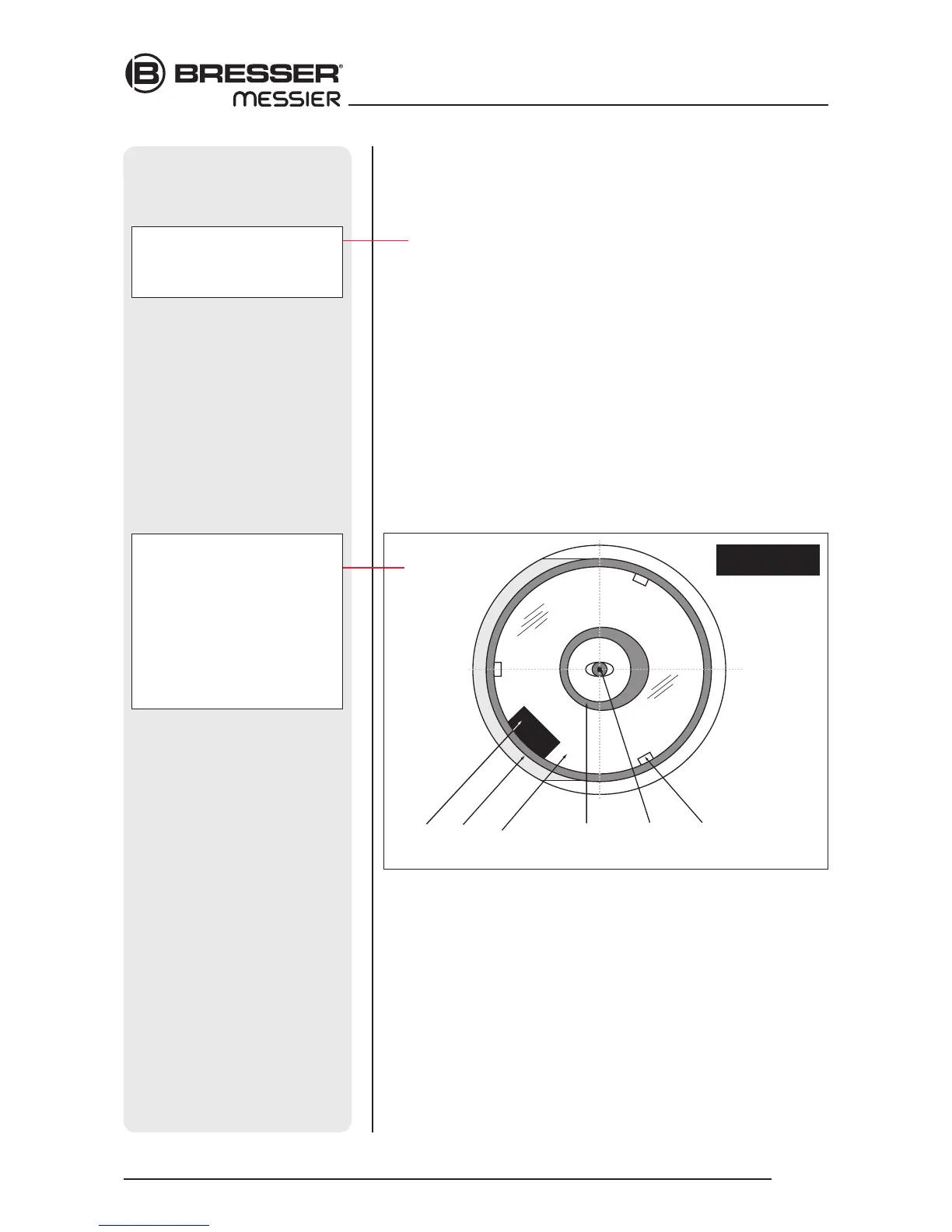
Fig. 31a shows a correctly collimated Newtonian telescope, as it appears
when viewed through the focuser with the eyepiece removed.
To check and, if necessary, set the optical collimation, follow these steps:
1. Observe through the focuser and orient your body so that the telescope‘s
primary mirror is to your right. The diagonal mirror will appear centered
as shown (2, Fig. 31a). If the diagonal appears off center, then adjust the
4 collimation screws on the plastic diagonal mirror housing.
2. If the reflection of the primary mirror (3, Fig. 31a) is not centered on the
surface of the diagonal mirror, adjust the 4 collimation screws on the
plastic diagonal mirror housing to center the reflection. As described
above, the 4 collimation screws (Fig. 31b) on the plastic diagonal mir-
ror housing are used for two different adjustments during the collimation
procedure.
b c d e f g
Fig. 31a
Note:
The AR-(refractor) models do not
need any collimation
b
Focuser drawtube
c
Secondary mirror
d
Reflection of primary mirror
e
Reflection of secondary mirror
f
Reflection of observer’s eye
g
Primary mirror clips







 To Next Page