
 Need help?
Do you have a question about the Briggs & Stratton 2100 Series and is the answer not in the manual?
Explains gross power ratings and SAE codes for engine models.
Provides a guide to visual symbols used for warnings and controls.
Defines DANGER, WARNING, CAUTION, and NOTICE for hazard severity.
Lists applications for which Briggs & Stratton engines are not intended.
Emphasizes the critical step of adding oil before first use to prevent engine damage.
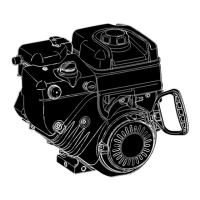
Identifies key engine parts and their functions for user reference.
Guides on selecting correct oil viscosity and fuel types for optimal performance.
Step-by-step instructions for safely refueling and checking/adding engine oil.
Procedures and safety precautions for initiating engine operation.
Recommends professional service for complex maintenance and repairs.
Information regarding the service and repair of emissions-related components.
Outlines required maintenance tasks based on operating hours/time.
Details on how to check, gap, and replace the spark plug for optimal ignition.
Guidance on inspecting exhaust components for damage or blockages.
Comprehensive steps for draining old oil and refilling with new oil.
Instructions for cleaning and replacing different types of air filters.
How to remove debris to prevent engine overheating.
Best practices for storing the engine, including fuel system preparation.
Technical data, tune-up specs, and common service part numbers.
Details the duration and terms of the manufacturer's warranty for consumers and commercial users.
Specifies conditions that void the warranty and limitations on liability.
Outlines owner's duties for maintenance and warranty claim procedures.
Lists specific components covered under the emissions control warranty.
Explains hours of operation for emissions compliance based on standards.
Reinforces the owner's duty to perform required maintenance for warranty validity.
Details coverage rules, part replacement, and exclusions for emissions systems.
 General
| Displacement | 420 cc |
|---|---|
| Fuel Type | Unleaded gasoline |
| Oil Type | SAE 30 |
| Engine Type | 4-stroke OHV |
| Oil Capacity | 1.1 liters |
| Starting System | Recoil |
| Cylinder Bore | 90 mm |
| Cylinder Stroke | 66 mm |
| Torque | 21.0 ft-lbs |




 To Next Page