DRIVING AND OPERATING 275
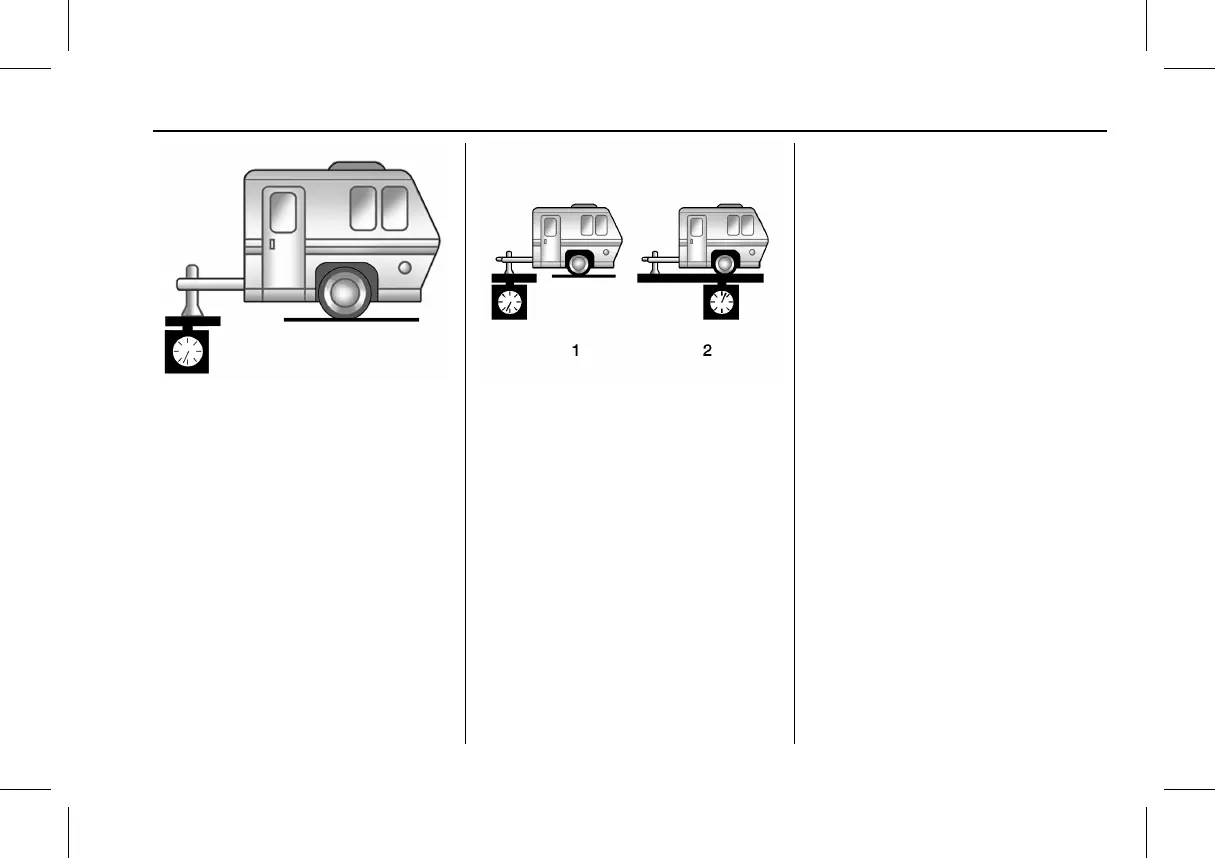
The trailer tongue weight contributes
to the Gross Vehicle Weight (GVW).
GVW includes the curb weight of your
vehicle, any passengers, cargo,
equipment, and the trailer tongue
weight. Vehicle options, passengers,
cargo, and equipment reduce the
maximum allowable tongue weight
the vehicle can carry, which also
reduces the maximum allowable
trailer weight.
Trailer Load Balance
The correct trailer load balance must
be maintained to ensure trailer
stability. Incorrect load balance is a
leading cause of trailer sway.
The trailer tongue weight (1) should
be 10–15% of the loaded trailer
weight (2). Some specific trailer types,
such as boat trailers, fall outside of
this range. Always refer to the trailer
owner’s manual for the recommended
trailer tongue weight for each trailer.
Never exceed the maximum loads for
your vehicle, hitch, and trailer.
After loading the trailer, separately
weigh the trailer and then the trailer
tongue and calculate the trailer load
balance percentage to see if the
weights and distribution are
appropriate for your vehicle. If the
trailer weight is too high, it may be
possible to transfer some of the cargo
into your vehicle. If the trailer tongue
weight is too high or too low, it may
be possible to rearrange some of the
cargo inside of the trailer.
Do not exceed the maximum
allowable tongue weight for your
vehicle. Use the shortest hitch
extension available to position the
hitch ball closer to your vehicle. This
will help reduce the effect of the
trailer tongue weight on the trailer
hitch and the rear axle.
If a cargo carrier is used in the trailer
hitch receiver, choose a carrier that
positions the load as close to the
vehicle as possible. Make sure the
total weight, including the carrier, is
no more than half of the maximum
allowable tongue weight for the
vehicle.
Ask your dealer for trailering
information or assistance.



 To Next Page