Need help?
Do you have a question about the Cambium PTP 700 Series and is the answer not in the manual?
Provides an overview of PTP 700 series features, uses, variants, and components.
Describes how the PTP 700 wireless link is operated, including modulation, power, and spectrum management.
Explains how the PTP 700 processes Ethernet data and manages Ethernet ports for data and management services.
Details how TDM traffic (E1 or T1) is carried over PTP 700 links using the Network Indoor Unit (NIDU).
Introduces the PTP 700 management system, including web interface, installation, configuration, security, and upgrades.
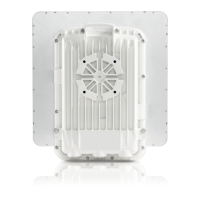
Describes the ODU, its hardware platform variants, regional variants, capacity variants, and ATEX/HAZLOC variants.
Details the AC+DC Enhanced Power Injector, its interfaces, part numbers, and specifications.
Covers antenna requirements, RF cable and connector specifications, and FCC/IC approved antennas.
Explains Ethernet standards, cable lengths, drop cable types, grounding kits, and LPU specifications.
Describes the PTP-SYNC unit, its role in TDD synchronization, part numbers, interfaces, and specifications.
Details the GPS receiver as an optional timing reference, its part numbers, and connection methods.
Explains the NIDU's function for TDM channels, its part numbers, interfaces, and specifications.
Provides diagrams illustrating typical PTP 700 site deployments for various installation scenarios.
Covers factors for link end site planning, including grounding, lightning protection, and equipment location.
Guides on planning PTP 700 links to conform to regulatory restrictions in the country of operation.
Discusses factors for planning links, including range, obstacles, path loss, and throughput.
Describes factors to consider when planning to use connectorized ODUs with external antennas in PTP 700 links.
Details the different configuration options for implementing TDD synchronization in the PTP 700 Series.
Outlines considerations for planning PTP 700 data networks, Ethernet interfaces, and layer two control protocols.
Covers factors to consider when planning PTP 700 TDM networks, including TDM bridging specifications.
Explains how to plan for PTP 700 links to be managed remotely using SNMP, including supported notifications and MIBs.
Details how to plan PTP 700 links to operate in secure mode, including SNTP, HTTPS/TLS, SNMPv3, and RADIUS operations.
Provides tables for system threshold, output power, and maximum link loss per channel bandwidth and modulation mode.
Offers tables and graphs for calculating data throughput rates based on link parameters and range adjustment.
Contains the end-user license agreements for PTP 700 Series products and third-party software.
Lists safety specifications and RF exposure guidelines for PTP 700, including electrical safety and EMC compliance.
Describes how PTP 700 complies with radio regulations in various countries, including type approvals and FCC/IC compliance.
 General
| Modulation | QPSK, QAM 16, QAM 64, QAM 256 |
|---|---|
| Channel Width | 5, 10, 20, 30, 40 MHz |
| Security | AES-128, AES-256 |
| Latency | 2 - 5 ms |
| Operating Temperature | -40°C to +55°C |

 To Next Page